
Cold Stress At Work
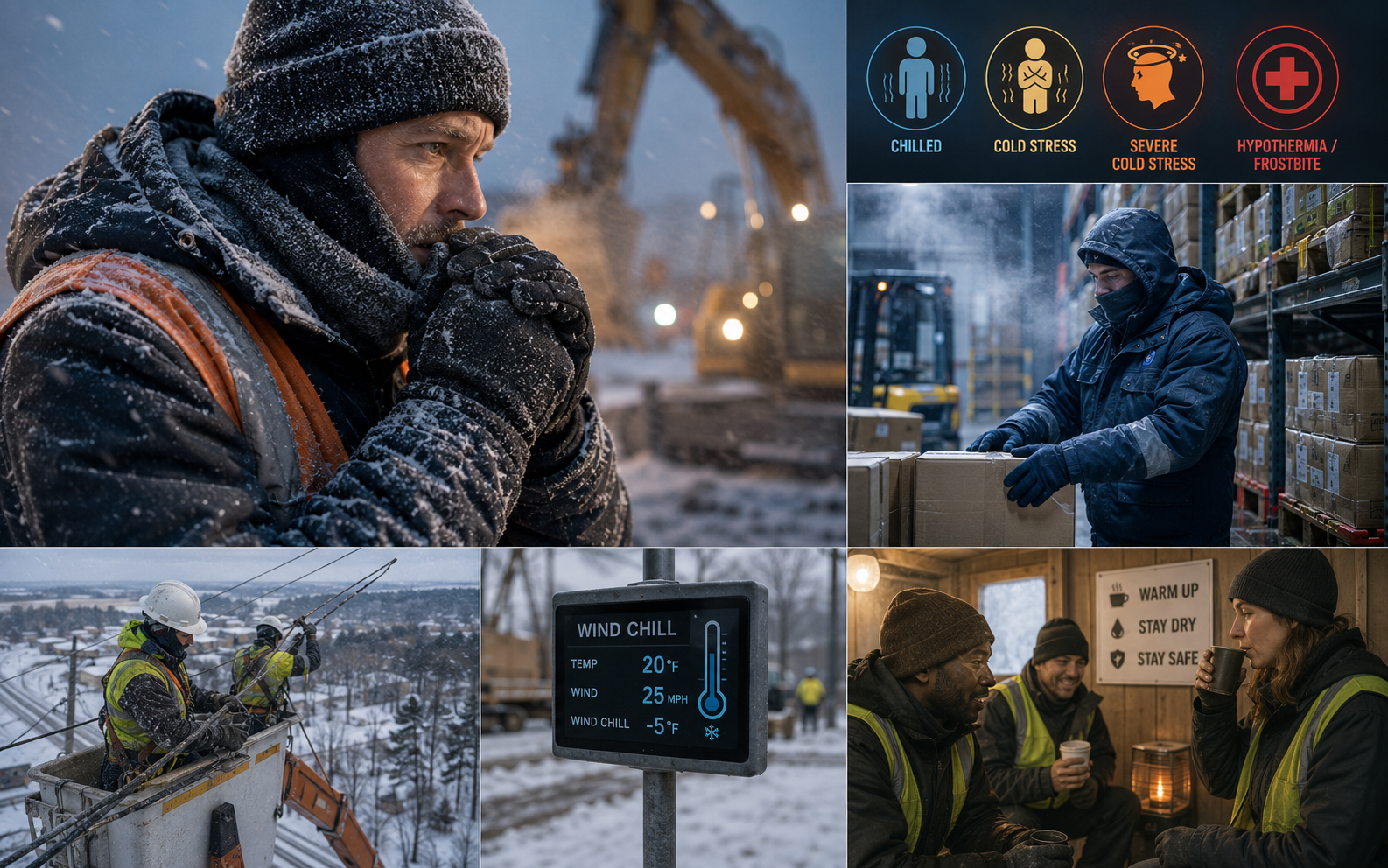
Cold stress is the strain the body experiences when it loses heat faster than it can produce it, and it affects far more workers than the dramatic cases suggest: cold-storage and freezer crews, utility and construction workers, delivery and logistics staff, and anyone working outdoors in winter. In the U.S., OSHA addresses cold hazards under the General Duty Clause and NIOSH publishes the reference guidance employers build programs on.
What does cold actually do to work?
Long before frostbite or hypothermia, cold degrades performance. Manual dexterity drops as hand and finger temperature falls, grip weakens, attention narrows, and error rates climb. For employers this is a quality and safety problem, not a comfort perk: a cold crew works slower, makes more mistakes, and takes more breaks. Wind and moisture multiply the effect; wind chill converts a manageable air temperature into a hazardous one.
What are the warning signs?
Early cold stress looks ordinary: shivering, clumsy hands, irritability, slowed thinking. Progression brings intense shivering or its ominous absence, confusion, slurred speech, and loss of coordination, which are emergency signs. Frostbite presents as numb, waxy, or discolored skin on fingers, toes, ears, and nose. Crews should be trained to watch each other, because the affected person is often the last to notice.
What controls actually work?
The standard hierarchy applies. Engineering controls first: wind barriers, heated shelters and cabs, insulated flooring over cold surfaces. Administrative controls next: work-warm-up schedules that shorten cold exposure as temperature and wind worsen, paired work, acclimatization for new workers, and warm liquids. Personal protection last but decisively: dry insulating layers, wind protection, insulated gloves and footwear, and warmth for the torso, because a warm core is what keeps blood flowing to the hands doing the work. Programs that treat worker warmth as equipment, not as a personal wardrobe choice, get the consistency that safety metrics reward.
FAQ (ADD FAQPAGE SCHEMA, SEE SETUP 3.3)
What is cold stress? The physiological strain caused when the body loses heat faster than it produces it. It ranges from reduced dexterity and attention to frostbite and hypothermia.
Is there an OSHA standard for cold? There is no specific OSHA cold standard; employers are covered by the General Duty Clause, and NIOSH publishes recommended practices that programs are commonly built on.
At what temperature does cold become a workplace hazard? There is no single threshold: wind, moisture, workload, and duration all matter. Guidance uses wind-chill-based schedules rather than a fixed temperature.
SOURCES (HYPERLINK THE TITLE TO THE URL SHOWN)