
Raynaud's: a practical guide to staying warm
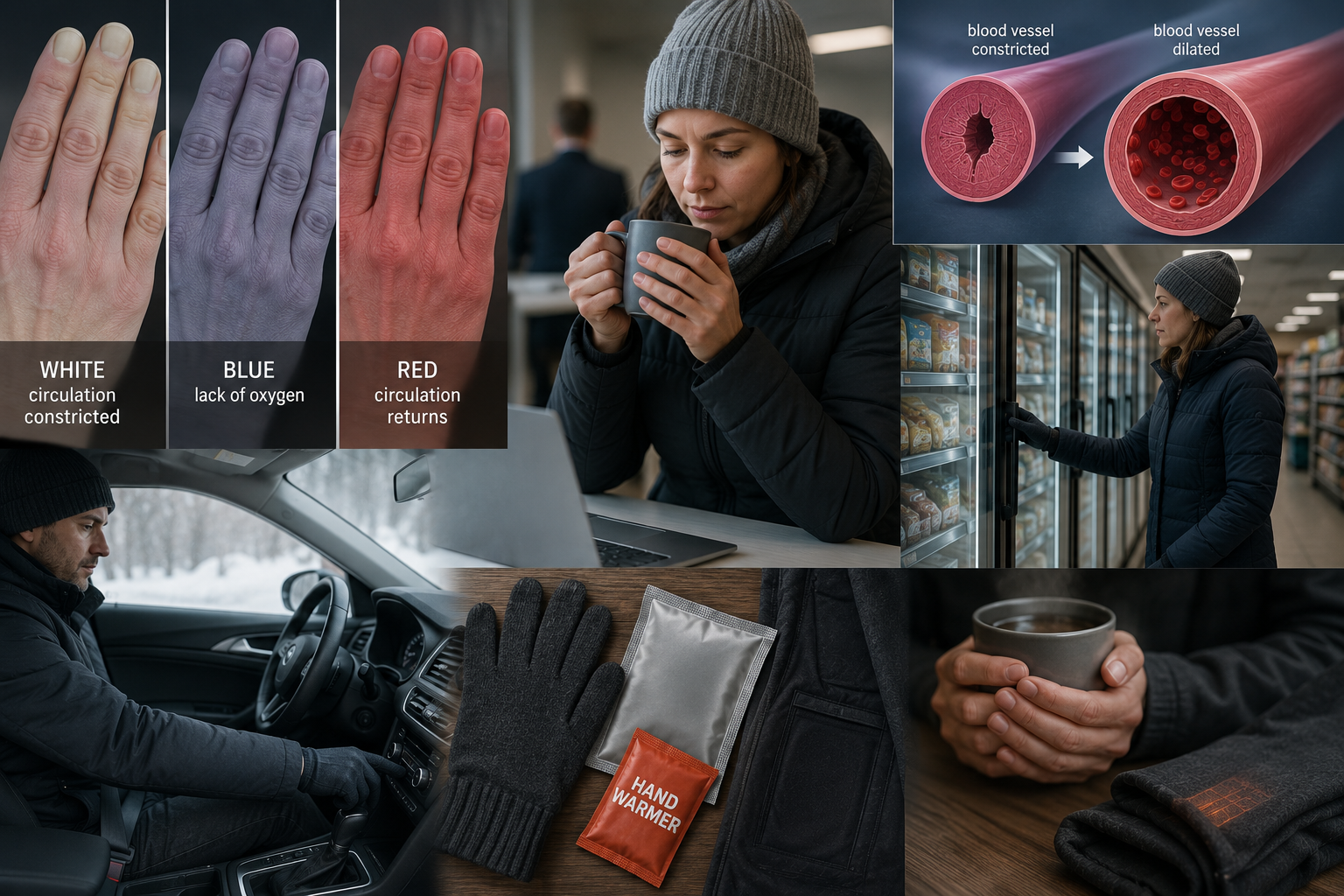
To stay warm with Raynaud's, keep your whole body warm, not just your hands. Dress in layers with a hat, wear gloves or mittens whenever you handle cold things or step into air conditioning, avoid sudden temperature changes, and carry warmers for long exposures. If an attack starts, move somewhere warm and run warm, not hot, water over your fingers.
What triggers a Raynaud's attack?
Cold is the main trigger, but not the only one. The NHS lists cold temperatures and stress or anxiety as common triggers, and notes that symptoms can last from a few minutes to a few hours. Mayo Clinic adds that moving abruptly between heat and air conditioning can set off an attack.
Other triggers are worth knowing. Smoking, vaping and secondhand smoke tighten blood vessels, and the NHS advises against too much caffeine from tea, coffee, cola and chocolate. NIAMS notes that some medications can trigger attacks, so check with your clinician before starting new ones and never stop a prescribed medicine on your own. Long-term use of vibrating tools is another known factor.
Why does keeping your core warm help with Raynaud's?
When your core cools, the body narrows blood vessels in the hands and feet to protect vital organs. With Raynaud's, that response is exaggerated. The Raynaud's Association advises warming the whole body, especially the core, not just the extremities, and NIAMS says keeping your entire body warm is important.
In practice that means a warm base layer, a vest or sweater over the torso, and a hat or hood. Gloves alone often fail if the rest of you is chilly.
Layers work better than one heavy garment because each traps a layer of still air, and you can add or remove them as conditions change. That flexibility matters with Raynaud's, since overheating indoors and then stepping into the cold creates exactly the sudden temperature swing that can trigger an attack. Mittens generally keep fingers warmer than gloves because the fingers share warmth inside one space.
Everyday situations: what helps
Most attacks happen in ordinary places. This table pairs common situations with practical steps drawn from NHS, Mayo Clinic, NIAMS and Raynaud's Association advice.
| Situation | What helps |
|---|---|
| Home | Keep rooms warm, wear socks and slippers, avoid going barefoot on cold floors |
| Kitchen | Use gloves, mittens or oven mitts to take food from the refrigerator or freezer |
| Office or air conditioning | Ask for a warmer setting, keep a sweater and thin gloves at your desk |
| Grocery freezer aisles | Put on gloves or mittens before you enter the refrigerated section |
| Cold drinks | Use insulated mugs or wrap the glass in a napkin |
| Car | Run the heater for a few minutes before driving, keep spare gloves in the car |
| Outdoors | Hat, scarf, boots, two layers of gloves or mittens, a coat with cuffs that close over them |
| Sleep | Mittens and socks in bed during winter, a warm bedroom |
| Travel | Pack extra layers and gloves in your carry-on, carry warmers, dress for cold terminals and cabins |
How to stay warm at home and at night
The NHS advises keeping your home warm and dressing warmly, especially your hands and feet. Socks indoors and a warm layer over your torso do more than turning up one radiator. Mayo Clinic notes that some people find it helpful to wear mittens and socks to bed in winter.
Avoid sudden changes, such as stepping from a hot shower into a cold bathroom or walking barefoot on a tiled floor. Warm the room first, and keep slippers by the bed.
How to stay warm at work, shopping and in the kitchen
Air conditioning is a common hidden trigger. Mayo Clinic suggests setting the air conditioner to a warmer temperature, and the Raynaud's Association recommends gloves in air-conditioned spaces. At a desk, fingerless gloves or thin liners let you type while keeping your hands covered.
Freezer aisles and refrigerated sections catch many people off guard. The Raynaud's Association recommends wearing gloves in the refrigerated section and when handling frozen or refrigerated foods, and notes that mittens protect even better. Keep a pair in your bag or coat pocket so you are never without them.
How to stay warm outdoors, in the car and while traveling
Outdoors, Mayo Clinic recommends a hat, scarf, socks and boots plus two layers of mittens or gloves, with coat cuffs that close over them. Earmuffs and a face covering help if your ears or nose are affected. Run the car heater for a few minutes before driving in cold weather.
When you travel, plan for cold airports, air-conditioned buses and long waits outside. The Raynaud's Association suggests carrying hand and foot warmers, and NIAMS mentions heated gloves or hand warmers as options. Pack them where you can reach them quickly.
What to do during a Raynaud's attack
Mayo Clinic suggests these steps:
Move indoors or to a warmer spot.
Wiggle your fingers and toes, tuck your hands under your armpits, or make wide arm circles.
Massage your hands and feet.
Run warm, not hot, water over your fingers and toes.
If stress set it off, step away and try a calming technique.
Are hand warmers and heated gloves safe with Raynaud's?
They can help, with care. During an attack, numb fingers may not feel heat properly, so a warmer or heated glove can burn skin before you notice. Keep warmers inside a glove or pocket rather than directly on skin, start at the lowest heat setting, check your skin regularly, and never sleep with an air-activated warmer against your body.
The same caution applies to rewarming: Mayo Clinic specifies warm, not hot, water. Holding numb hands over a stove, heater or very hot tap risks burns.
When to call a clinician or emergency services
Raynaud's is often manageable with warmth and habits, but some signs need a check. Talk to a clinician about any symptoms that worry you.
See a clinician if symptoms are severe or getting worse, affect daily life, or affect only one side of the body (NHS).
See a clinician if you also have joint pain, skin rashes or muscle weakness, if you are over 30 with new symptoms, or if a child under 12 has symptoms (NHS).
Get medical care right away for a sore, ulcer or sign of infection on a finger or toe (Mayo Clinic, Raynaud's Association).
Seek urgent care if a finger or toe stays white, blue or numb and does not rewarm.
Key takeaways
Warm the whole body, especially the core, not only the hands and feet.
Wear gloves for freezer aisles, refrigerators and air-conditioned rooms, and avoid sudden temperature changes.
During an attack, move somewhere warm and use warm, not hot, water.
Numb fingers can burn without warning, so keep warmers off bare skin and start heat low.
See a clinician for one-sided, worsening or new symptoms after 30, and get prompt care for any sore.
Frequently asked questions
How do I keep my hands warm with Raynaud's?
Keep your core warm first, then cover your hands with mittens or layered gloves whenever you go out or handle cold items. Keep a spare pair in your bag and car. Warmers inside gloves add heat for long exposures.
Why are grocery stores so hard with Raynaud's?
Freezer cases and refrigerated aisles are much colder than the rest of the store, and handling frozen packages chills fingers quickly. The Raynaud's Association recommends gloves in refrigerated sections and when handling cold food. Mittens protect even better.
Does caffeine make Raynaud's worse?
It can for some people. The NHS advises avoiding too much caffeine from tea, coffee, cola and chocolate because it can trigger symptoms. Notice whether your attacks follow caffeine and adjust if they do.
Should I sleep with gloves on if I have Raynaud's?
Some people do. Mayo Clinic notes that wearing mittens and socks to bed in winter helps some people. Do not sleep with air-activated warmers or a heating pad against your skin.
Can exercise help Raynaud's?
The NHS lists regular exercise as a helpful habit, and activity warms the whole body. If you have secondary Raynaud's, Mayo Clinic advises checking with your clinician before exercising outdoors in cold weather.
From HEATJAC
We design low-profile thermal garments: a heat-reflective vest and a thermal harness with pockets for warmers or cold packs. If you have reduced sensation or a health condition, check with your clinician before adding heat.
Choosing gear? Warmth that fits daily life with Raynaud's · Before you buy: a checklist for any warming garment
Related reading
Sources
Raynaud's, NHS
Raynaud's disease: symptoms and causes, Mayo Clinic
Raynaud's disease: diagnosis and treatment, Mayo Clinic
Frequently Asked Questions, Raynaud's Association
Raynaud's Phenomenon, National Institute of Arthritis and Musculoskeletal and Skin Diseases (NIH)
About HEATJAC. HEATJAC is a thermal architecture company founded by an anesthesiologist. We design patented garment systems that capture, conduct and broaden warmth across the body, and we publish this knowledge hub because the science of staying warm should be public. HEATJAC products are not medical devices and are not intended to diagnose, treat, cure or prevent any disease.