
Before you buy: a checklist for any warming garment
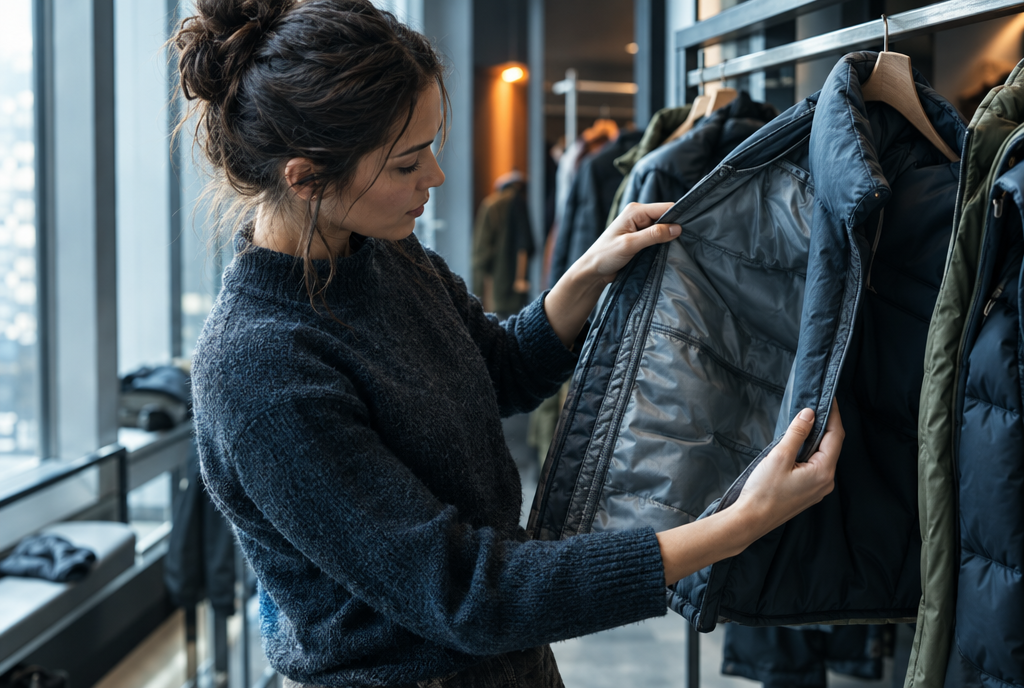
Before buying any warming garment, check seven things: the use case, safety marks and recall history, fit over your real layers, the care label, the written warranty and return terms, whether your workplace or airline allows it, and the cost over a full season. The checklist works for heated, heat-reflective, insulated and warmer-pocket garments alike.
Which type of warming garment fits your use?
Start with the job, not the product. How long will you be cold, how much will you move, and what goes over and under the garment? Those answers decide the type before any brand does.
Hours of cold exposure per day, and how many of them are still
Activity level and sweat
Outer layer it must fit under, and base layer beneath
Access to charging during the day
| If you... | Consider | Trade-off |
|---|---|---|
| Stand still for hours in hard cold | Battery-heated garment | Charging, battery rules, weight |
| Move a lot, or travel far from power | Insulated or heat-reflective layer | No added heat on the coldest hours |
| Need heat only some days | Garment with warmer pockets | Buying warmers, keeping them off skin |
| Work where devices need approval | Passive layer | Less adjustable warmth |
| Wear it under a uniform or armor | Thin, low-profile option | Less room for insulation |
What safety marks and certifications should you check?
For any garment with a battery, look at the battery first. UL 62133-2 covers portable sealed lithium cells and the batteries made from them, and UL 2054 is the standard for household and commercial batteries. For the garment, IEC 60335-2-17 sets safety requirements for blankets, pads, clothing and other flexible appliances that heat the body, including battery-operated ones.
A standard named in a listing is not the same as a certification. Ask which laboratory tested the product, and search the CPSC recall database for the brand and model. For warmer-pocket garments, read the warmer maker's instructions; HotHands, for example, advises against applying warmers directly to skin.
Battery tested to UL 62133-2, UL 2054 or an equivalent, by a named lab
Stated overheat protection or automatic shutoff on heated garments
A covered, strain-relieved connector and a secure battery pocket
No open recalls for the brand and model
Warmer pockets that keep a fabric layer between warmer and skin
How should it fit?
Heating panels and reflective linings work best close to the body, but not under compression. Try the garment over the base layer you will wear and under your usual outer layer, then reach, sit and bend. Our sizing guide covers measuring and wearing a vest under scrubs, uniforms and armor.
Chest measured over your real base layer
Close contact without pressure marks
Outer layer still closes and moves freely
Hem and neckline stay covered where policy requires it
How will you care for it?
Read the care label before you buy, not after the first wash. The FTC's Care Labeling Rule requires at least one safe cleaning method or a warning if the garment cannot be cleaned without harm, and labels should be easy to see or find at the point of sale.
Washable once the battery or inserts are removed
Care method that matches how often you will clean it
Workplace laundering rules, if it is worn at work
Removable reflective inserts or warmers, if any
What warranty and return terms should you look for?
The FTC says written warranties on consumer products costing more than $15 must be available to you before you buy. A warranty labeled full meets federal minimum standards; a limited warranty does not, so read what it covers. Heated garments often split coverage, with a longer term on heating elements and a shorter one on the battery.
Full or limited warranty, and for how long
Separate terms for battery, heater and fabric
Return window, and whether worn items can be returned
A reachable company with a real support address
Will your workplace or airline allow it?
Clinical, secure and industrial sites may restrict battery devices, fabrics or personal clothing, and airlines limit spare lithium batteries. Check before you buy, especially for anything worn in an operating room or under duty gear.
Attire or uniform policy on personal layers
Rules on battery devices and charging at work
Airline limits on spare batteries if you fly
Anyone with diabetes, reduced sensation, an implanted device or a pregnancy should talk to a clinician before using heated clothing
What will it cost over a season?
Price tags hide running costs. Add spare batteries or warmers for a full season, divide by the seasons you expect the garment to last, and compare options on the same number of cold days.
Up-front price, plus spare packs or warmers
Expected seasons of use
Replacement batteries after the warranty ends
Where HEATJAC fits
HEATJAC REFLECT is a lightweight heat-reflective vest with a snap front and integrated warming pockets for compatible warming elements (sold separately). Its lining material is rated at about 95% radiant heat reflectance in the supplier's ASTM emittance testing, a material property rather than a whole-garment claim. It has no built-in battery, so the battery items on this checklist apply only to any warming element you add.
Key takeaways
Choose the garment type from your use case before comparing brands.
For heated gear, check the battery's tested standard, the lab and the recall record.
Fit over real layers, and read the care label before buying.
Read the written warranty and return terms; the FTC requires them before purchase for products over $15.
Confirm workplace and travel rules, then compare season-long cost.
Frequently asked questions
What should I look for when buying heated clothing?
Match the type to your use, then check battery testing and recall history, fit over your real layers, the care label, the warranty and return terms, workplace or travel rules, and season-long cost.
What certification should a heated jacket battery have?
Look for testing to a recognized battery safety standard such as UL 62133-2 or UL 2054 by a named laboratory. The garment itself may be tested to IEC 60335-2-17, which covers heated clothing.
Are non-heated warming garments worth considering?
Yes, especially if you move a lot, travel or work where battery devices need approval. Insulated and heat-reflective layers need no charging, and warmer pockets let you add heat only on cold days.
How do I check if a heated garment has been recalled?
Search the US Consumer Product Safety Commission recall database by brand, product type and model before you buy and again before each season.
What warranty is normal for heated clothing?
Terms vary by maker, and many split coverage between the heating system and the battery. Ask to see the written warranty before buying, which the FTC requires sellers to make available for products over $15.
Related reading
Sources
Understanding Portable Battery Safety: the UL 62133 family of standards, UL Solutions
IEC 60335-2-17:2022, Particular requirements for blankets, pads, clothing and other flexible heating appliances, International Electrotechnical Commission
Recalls and Product Safety Warnings, US Consumer Product Safety Commission
Clothes Captioning: Complying with the Care Labeling Rule, Federal Trade Commission
Businessperson's Guide to Federal Warranty Law, Federal Trade Commission
FAQ, HotHands
About HEATJAC. HEATJAC is a thermal architecture company founded by an anesthesiologist. We design patented garment systems that capture, conduct and broaden warmth across the body, and we publish this knowledge hub because the science of staying warm should be public. HEATJAC products are not medical devices and are not intended to diagnose, treat, cure or prevent any disease.