
Cooling vests for construction and industrial workers
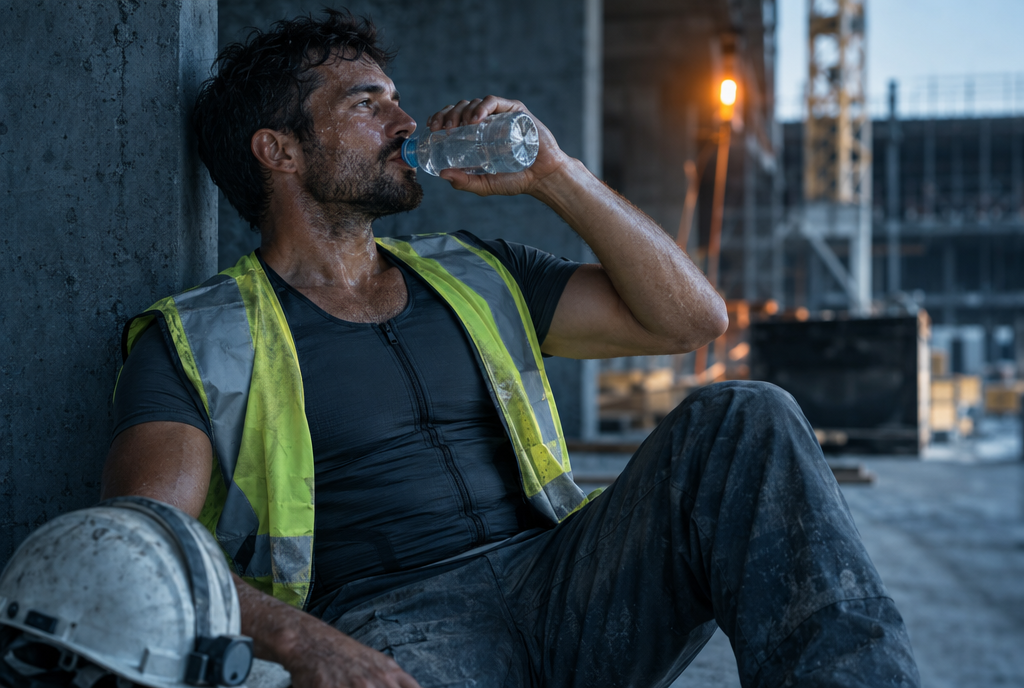
On construction and industrial sites, the most practical cooling vests are phase-change or hybrid designs with swappable packs, because they work in humid heat and under protective gear. Evaporative vests suit dry climates and light tasks. Research on construction workers suggests cooling vests are most useful during rest breaks, helping crews unload heat before the next work bout, alongside water, shade and acclimatization.
Why do construction and industrial workers need cooling?
Construction and industrial work combines the three biggest drivers of heat strain: heavy physical effort, hot environments and protective clothing. Roofers and road crews work in direct sun on hot surfaces. Foundry, steel and glass workers face radiant heat from processes. Many workers wear hard hats, high-visibility layers, harnesses, respirators or coveralls that trap heat and slow sweat evaporation.
OSHA notes that certain protective equipment, including some respirators, impermeable clothing and head coverings, can increase the risk of heat-related illness. Cooling vests are one of the few tools that add heat removal under that gear.
Which cooling vest type works best on a jobsite?
Match the vest to the climate, the task and what goes on top of it.
| Site condition | Suggested type | Reason |
|---|---|---|
| Dry heat, open air, light work | Evaporative | Light, cheap, recharge with water |
| Humid heat | Phase-change or hybrid (PCM plus fans) | Cooling does not depend on evaporation |
| Under coveralls, chemical suits or FR gear | Phase-change or ice | Works without airflow to the skin |
| Radiant heat near furnaces or ovens | Phase-change or liquid cooling with suitable outer protection | Sustained conduction cooling; outer gear handles radiant load |
| Equipment operators in cabs | Air-conditioned cab first; tethered or active vest if needed | Stationary work suits powered systems |
What does research show for construction workers?
Much of the construction-specific research comes from Hong Kong, where hot, humid summers make heat stress a major site hazard. Researchers there developed a hybrid cooling vest combining phase-change packs with small ventilation fans, specifically for the construction industry, and tested it in the field during rest periods.
Laboratory work on a similar design is informative. In a 2020 study, a 1.26 kg vest with eight PCM packs melting at 28°C and two fans was worn by 12 men recovering in a 37°C chamber at 60% relative humidity. With the vest, thermal sensation during recovery was much cooler, physiological strain was lower, and participants ran longer in the next exercise bout. The authors noted that air and liquid cooling systems can restrict worker movement and add weight, which is why lighter PCM hybrids suit construction.
When should workers wear a cooling vest?
There are two common strategies. Wearing a vest during work adds cooling while packs last, which helps most under protective clothing. Wearing it during breaks, in shade, speeds recovery so workers start the next bout cooler.
Packs have a finite life. Under a heavy suit at 40°C, one PCM vest lasted about 50 minutes in a military study, and researchers found a spent vest adds insulation without cooling. Plan swaps at breaks rather than wearing melted packs through a shift.
What features matter for work cooling vests?
Swappable packs, with enough spares for the shift and a cooler or refrigerator on site to recharge them.
Slim profile that fits under harnesses, tool belts and high-visibility layers without snagging.
High-visibility or flame-resistant outer fabric where the site requires it.
Adjustable side closures for a close fit, since packs cool best when they touch the torso.
Durable, washable shell fabric for dust and sweat.
Battery fans, if used, with a secure battery pocket and runtime that matches the work period.
What safety cautions apply to cooling vests at work?
Feeling cooler is not the same as being safe. In a 2011 study of subjects in firefighting gear at 55°C, phase-change vests cooled the torso and skin but did not reduce peak core temperature during exercise, only during recovery. A worker in a cooling vest can still develop heat exhaustion or heat stroke, so warning signs and work-rest limits still apply.
Keep a fabric layer between frozen packs and skin, and remove any pack that causes pain, numbness or redness. Charge fan batteries away from heat sources and follow the manufacturer's care instructions. Make sure the vest does not interfere with how other PPE fits or functions.
How do cooling vests fit into a site heat plan?
OSHA lists cooling vests among personal protective options, after engineering controls and work practices such as shade, ventilation, air-conditioned break areas, acclimatization schedules and rest breaks. NIOSH's criteria document describes personal cooling garments as auxiliary measures when other controls are not enough.
Treat vests as part of the plan, not the plan itself. Keep water close to the work, train crews on heat illness signs, use a buddy system and know when to call 911. Workers with health conditions or questions about heat tolerance should talk to a clinician.
Key takeaways
Phase-change and hybrid vests suit humid sites and work under protective gear; evaporative vests suit dry heat.
Construction research, much of it from Hong Kong, supports cooling vests during rest breaks.
Pack logistics decide real-world value: spares, recharge space and timely swaps.
Fit under harnesses and hi-vis layers matters as much as cooling power.
Cooling vests supplement engineering controls, water, rest, shade and acclimatization.
Frequently asked questions
What is the best cooling vest for construction workers?
For most sites, a phase-change or hybrid vest with swappable packs, because it works in humidity and under gear. Evaporative vests are a good low-cost option in dry climates. Fit under harnesses and hi-vis layers is as important as the cooling method.
Can you wear a cooling vest under a safety harness?
Slim pack-based vests usually fit under a harness, but the harness must still fit correctly and be inspected as the manufacturer requires. Check that packs do not sit under straps or buckles.
Do evaporative cooling vests work in humid weather?
Poorly. Evaporation needs dry air, so in muggy conditions an evaporative vest removes much less heat. Phase-change, ice or active vests are better choices there.
Are cooling vests required by OSHA?
No federal rule requires them. OSHA lists cooling vests among protective options, but expects employers to rely first on engineering controls, water, rest, shade and acclimatization.
How many spare packs does a worker need?
Enough to cover the hottest part of the shift given your conditions. Under heavy gear in extreme heat, packs may last under an hour; in milder heat, longer. Test on site and plan swaps at breaks.
From HEATJAC
We design low-profile thermal garments, including a thermal harness with pockets that hold cold packs in summer and warmers in winter.
Choosing gear? One garment, two seasons: modular heating and cooling · The thermal gear buying, safety and care guide
Related reading
Sources
Experimental Study on the Efficacy of a Novel Personal Cooling Vest Incorporated with Phase Change Materials and Fans, Materials (via PubMed Central)
Cooling vests with phase change materials: the effects of melting temperature on heat strain alleviation in an extremely hot environment, European Journal of Applied Physiology (via PubMed)
A field study of the effectiveness and practicality of a novel hybrid personal cooling vest worn during rest in Hong Kong construction industry, Journal of Thermal Biology (ScienceDirect)
Optimizing the Use of Phase Change Material Vests Worn During Explosives Ordnance Disposal Operations in Hot Conditions, Frontiers in Physiology
Heat: Protecting Workers (Controls), Occupational Safety and Health Administration
Criteria for a Recommended Standard: Occupational Exposure to Heat and Hot Environments (DHHS/NIOSH Publication 2016-106), CDC, National Institute for Occupational Safety and Health
About HEATJAC. HEATJAC is a thermal architecture company founded by an anesthesiologist. We design patented garment systems that capture, conduct and broaden warmth across the body, and we publish this knowledge hub because the science of staying warm should be public. HEATJAC products are not medical devices and are not intended to diagnose, treat, cure or prevent any disease.