
Winter work in utilities and construction: staying warm and safe
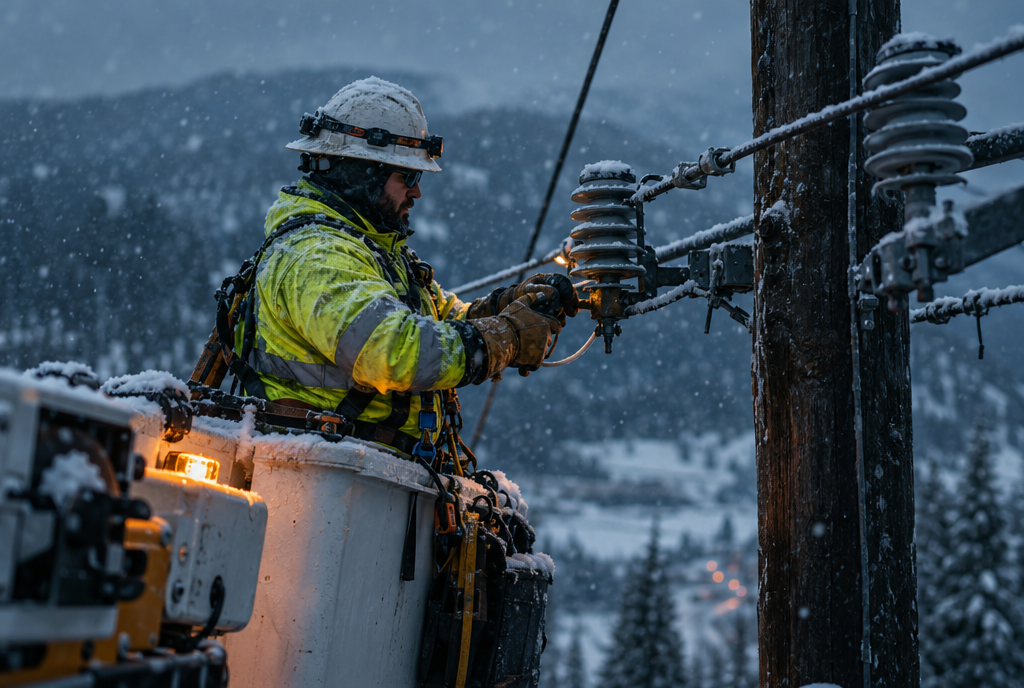
To stay warm working outside in winter, dress in three adjustable layers that fit under your harness and hi-vis, keep hands, feet and head dry and covered, and plan around wind chill rather than air temperature. Take warm-up breaks in a heated space, pair up to watch for early cold stress signs, and treat ice, winter driving and downed lines as part of the same plan.
Why is winter work in utilities and construction so demanding?
CCOHS lists outdoor construction workers, linemen, emergency responders and transport workers among the groups most exposed to cold stress. Their work combines long hours outside, exposure to wind at height or on open sites, and tasks that swing between heavy effort and standing still.
Winter also adds hazards that have nothing to do with body temperature. OSHA highlights slips on snow and ice, winter driving, strenuous snow removal, snow-covered roofs that hide skylights, and downed power lines. Cold hands and bulky clothing make each of those harder to manage safely.
How should you layer under a harness, hard hat and hi-vis?
OSHA recommends three layers: a moisture-wicking inner layer of wool, silk or synthetic fabric, a middle insulating layer of wool, fleece or synthetic insulation, and an outer layer that blocks wind and rain while allowing some ventilation. On a construction or utility site, those layers also have to work with fall protection, a hard hat and high-visibility apparel.
Fit matters more than bulk. A fall arrest harness should be adjusted over the layers you will actually wear, and readjusted if you add or remove a layer. Thin, efficient insulation near the torso, such as a vest, keeps the core warm without adding bulk at the shoulders and arms where a harness and tool belt sit.
Step 1: Start with a snug wicking base layer and dry wool or synthetic socks.
Step 2: Add a mid layer or insulated vest that leaves arm movement free.
Step 3: Put on a wind- and water-resistant outer layer.
Step 4: Add a hard hat liner that covers the ears, or a balaclava rated for use under a helmet.
Step 5: Put hi-vis apparel on as the outermost layer so it stays visible.
Step 6: Fit and check the harness over the full layer system.
Step 7: Carry spare dry gloves and socks in a sealed bag.
How do you keep high-visibility apparel compliant in winter?
In work zones, visibility requirements do not relax for cold weather. The federal Manual on Uniform Traffic Control Devices requires workers within the right-of-way who are exposed to traffic or construction equipment to wear high-visibility safety apparel meeting Performance Class 2 or 3 of the ANSI/ISEA 107 standard.
The practical rule is that the certified garment must stay on the outside and uncovered. If a warm jacket goes over a vest, the vest no longer does its job. Options include insulated jackets that are themselves certified hi-vis, or sizing the hi-vis garment to fit over winter layers.
How does wind change the plan?
Wind is often the deciding factor for crews on poles, towers, bridges and roofs. The National Weather Service explains that wind chill reflects the rate of heat loss from exposed skin. At 0°F with a 15 mph wind, the wind chill is -19°F, and exposed skin can freeze in 30 minutes. OSHA's example shows the effect even in milder weather: 40°F air with a 35 mph wind feels like 28°F.
Supervisors should check forecast wind chill before the shift and adjust for local exposure. OSHA also recommends shielding work areas from drafts and wind and using radiant heaters at outdoor stations where feasible.
How should breaks and monitoring work on an outdoor crew?
Outdoor work rarely stops on a schedule, so warm-up breaks have to be planned in. The ACGIH work and warm-up schedule, published by several Canadian regulators, sets maximum work periods by temperature and wind for a four-hour period. Our guide to warm-up schedules explains how to use it.
Pair workers so each watches the other for early signs: shivering, clumsiness, slurred speech or confusion suggest hypothermia, and numb, pale or waxy skin suggests frostbite. OSHA recommends a buddy system, frequent breaks in warm, dry areas and avoiding alcohol. A heated truck cab or site trailer only works as a warming area if it is close and people actually use it.
What other winter hazards should crews plan for?
OSHA's winter weather guidance covers several hazards that often cause more injuries than cold itself. For slips, it advises proper footwear and short, slow steps. For winter driving, it expects employers to train drivers and maintain brakes, tires and visibility systems. For snow removal, it recommends warming up first, scooping small amounts and pushing rather than lifting.
On roofs, OSHA warns that snow can hide skylights and calls for suitable ladders, aerial lifts and fall arrest systems. Around storms, it advises treating every downed or damaged power line as energized and staying clear. Fuel-burning heaters and generators used for warmth need ventilation and should never run in enclosed spaces where exhaust can build up.
| Winter hazard | Key control |
|---|---|
| Slips on snow and ice | Traction footwear, short steps, cleared and treated walkways |
| Winter driving | Driver training, maintained brakes, tires and visibility |
| Snow removal strain | Warm up first, small loads, push rather than lift |
| Hidden skylights and roof edges | Fall protection, planned access with ladders or lifts |
| Downed power lines | Assume energized and stay clear |
| Heater and generator exhaust | Ventilate and never run in enclosed spaces |
Do heated work clothes help outdoor crews?
Heated vests, jackets and gloves are popular with lineworkers and equipment operators because they add warmth during long periods of low activity, such as waiting on a bucket truck or flagging. They are most useful as a supplement to good layering. Before issuing them, check battery safety, how the garment fits under a harness and over layers, and whether it works with hi-vis requirements. Our employer checklist for heated and thermal PPE walks through those points.
Anyone with numbness, color changes in fingers or toes, or other symptoms after cold exposure should report it and talk to a clinician.
Key takeaways
Use three adjustable layers that fit under fall protection and keep hi-vis on the outside.
Plan around wind chill and local exposure at height, not just forecast air temperature.
Schedule warm-up breaks and use a buddy system to catch early signs of cold stress.
Include slips, winter driving, snow removal, roofs, power lines and heater exhaust in the winter plan.
Frequently asked questions
What is the best way to stay warm working outside all day?
Wear three layers you can adjust as effort changes, keep hands, feet and head dry and covered, and take regular warm-up breaks in a heated space. Eat and drink warm, non-alcoholic fluids during breaks, and change damp gloves and socks.
Can I wear a winter jacket over my hi-vis vest?
Not in a work zone where hi-vis is required, because covering the vest defeats its purpose. Use an insulated jacket that is itself certified to the required class, or size the hi-vis garment to fit over your winter layers.
Does a harness fit differently over winter clothes?
Yes. Extra layers change how a harness sits, so it should be fitted and inspected over the clothing you will wear that day and adjusted again if layers change. Follow the manufacturer's fitting instructions.
What temperature is too cold for construction work?
OSHA does not set one. Many employers use the ACGIH work and warm-up schedule, which shortens work periods as temperature and wind worsen and stops non-emergency work in the most extreme conditions.
From HEATJAC
We design low-profile thermal garments: a heat-reflective vest and a thermal harness with pockets for warmers or cold packs.
Choosing gear? Cold storage and freezer gear by zone · Winter gear for construction and utility crews
Related reading
Sources
Winter Weather: Hazards, Occupational Safety and Health Administration
Winter Weather: Preparedness, Occupational Safety and Health Administration
Cold Stress Guide, Occupational Safety and Health Administration
Wind Chill Chart, National Weather Service
Manual on Uniform Traffic Control Devices, Part 6D: Pedestrian and Worker Safety, Federal Highway Administration
Cold Environments: Overview, Canadian Centre for Occupational Health and Safety
About HEATJAC. HEATJAC is a thermal architecture company founded by an anesthesiologist. We design patented garment systems that capture, conduct and broaden warmth across the body, and we publish this knowledge hub because the science of staying warm should be public. HEATJAC products are not medical devices and are not intended to diagnose, treat, cure or prevent any disease.