
Work and warm-up schedules for cold environments
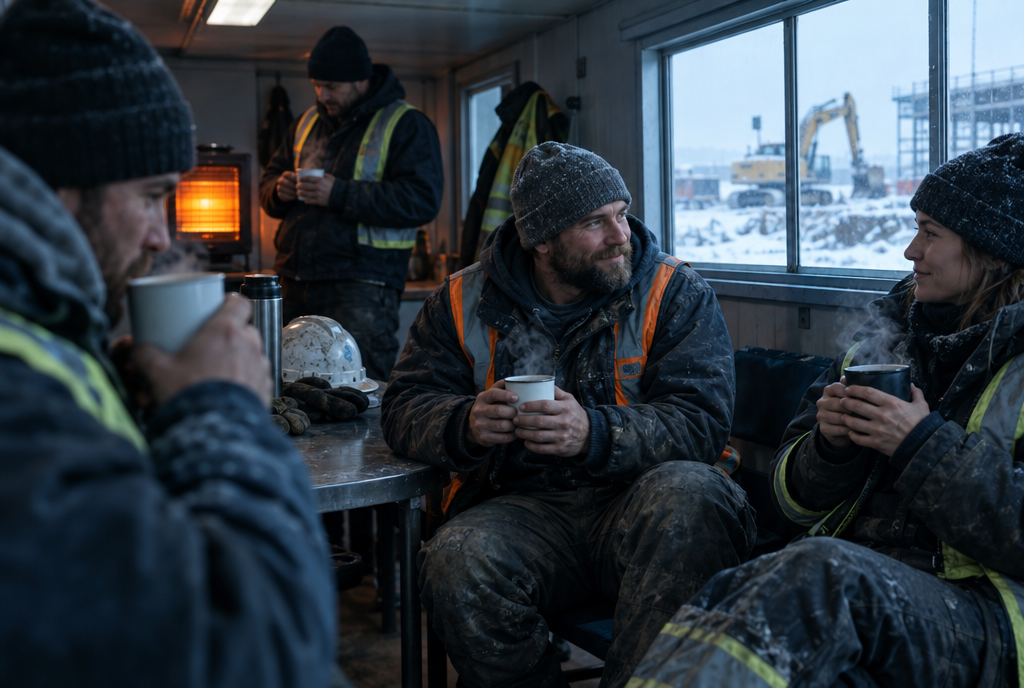
The most widely used cold work and warm-up schedule comes from the ACGIH Threshold Limit Value for cold stress. For moderate to heavy work over a four-hour period, it shortens the maximum work period and adds 10-minute warm-up breaks as air temperature falls and wind rises, starting at about -26°C (-15°F) with a 16 km/h (10 mph) wind, and stops non-emergency work at about -43°C (-45°F).
What is a work and warm-up schedule?
A work and warm-up schedule sets how long people can work continuously in the cold before taking a break in a warm place, and how many such breaks they need in a period. It turns general advice to take frequent breaks into a rule supervisors can apply the same way every time.
OSHA does not publish a numeric schedule; its guidance recommends frequent breaks in warm, dry areas. The schedule most employers use comes from the American Conference of Governmental Industrial Hygienists (ACGIH), as part of its Threshold Limit Values for cold stress. It is republished by Canadian regulators, including WorkSafe Saskatchewan, and referenced by CCOHS.
How does the ACGIH warm-up schedule work?
The schedule is built for a four-hour work period and uses two inputs: air temperature and wind speed. As either gets worse, the maximum continuous work period shrinks and the number of breaks grows. The published assumptions matter as much as the numbers.
It applies to moderate to heavy physical work in any four-hour period
Warm-up breaks are about 10 minutes long, in a warm location
It assumes workers are wearing dry clothing
Break counts include the normal break after two hours plus added warm-up breaks
An extended break in a warm location is expected at the end of each four-hour period
All temperatures are approximate
What does the schedule look like?
The table below reproduces selected rows from the ACGIH-based schedule published by WorkSafe Saskatchewan. It shows the pattern clearly: at a given temperature, each step up in wind cuts the work period, and at a given wind speed, each step down in temperature does the same.
| Air temperature | Wind | Max work period | Breaks per 4 hours |
|---|---|---|---|
| -26 to -28°C (-15 to -19°F) | No wind | 120 min | 1 |
| -26 to -28°C (-15 to -19°F) | 16 km/h (10 mph) | 75 min | 2 |
| -26 to -28°C (-15 to -19°F) | 32 km/h (20 mph) | 40 min | 4 |
| -29 to -31°C (-20 to -24°F) | No wind | 120 min | 1 |
| -29 to -31°C (-20 to -24°F) | 16 km/h (10 mph) | 55 min | 3 |
| -29 to -31°C (-20 to -24°F) | 32 km/h (20 mph) | 30 min | 5 |
| -32 to -34°C (-25 to -29°F) | No wind | 75 min | 2 |
| -35 to -37°C (-30 to -34°F) | No wind | 55 min | 3 |
| -40 to -42°C (-40 to -44°F) | No wind | 30 min | 5 |
| -43°C (-45°F) and below | All conditions | Non-emergency work should stop | None |
When should warm-up breaks start?
WorkSafe Saskatchewan states that warm-up breaks should begin when the temperature reaches -26°C (-15°F) with winds of 16 km/h (10 mph) or greater. That is the first point where the schedule adds breaks beyond the normal two-hour break.
Other ACGIH triggers apply earlier. CCOHS reports that the ACGIH recommends a work-warming regimen when work is done continuously at a wind chill of -7°C (19.4°F) or below, with heated shelters used at regular intervals, and constant observation through a supervisor or buddy system at -12°C (10.4°F) and below. Many employers adopt these earlier thresholds for light work, wet conditions or new workers.
How should you adapt the schedule on real sites?
The schedule is a floor, not a ceiling. Its assumptions, dry clothing and moderate to heavy work, often do not hold. Light work generates less body heat, so people doing inspections, flagging or equipment operation cool faster than the schedule expects. Wet clothing removes heat much faster, and OSHA notes that wet feet lose heat 25 times faster than dry feet.
Wind at the work location is often stronger than the forecast. Crews on roofs, towers, bridges and open decks should measure or estimate local wind rather than rely on the airport reading. The National Weather Service wind chill chart is a useful cross-check: at 0°F with a 15 mph wind, the wind chill is -19°F, and exposed skin can freeze in 30 minutes.
Use the next colder row for light or sedentary work
Add breaks when clothing is damp or it is raining or snowing
Use site wind, not forecast wind, where exposure is higher
Give new and returning workers extra breaks while they adjust
Make sure the warm area really is warm, dry and close to the work
Does the schedule apply to freezers and cold storage?
The ACGIH table was written for outdoor work, where wind and sun are variables. Freezers have steady temperatures but constant air movement from evaporator fans and vehicles, plus frequent contact with frozen product. Many cold storage employers use the table as a starting point, treating evaporator airflow as wind, and set maximum continuous stay times for each zone.
Whatever schedule you choose, write it down, train supervisors to apply it, and review it after any cold injury or near miss. NIOSH also recommends encouraging workers to take a break whenever they need to warm up, even between scheduled breaks.
What makes a warm-up break effective?
A warm-up break only works if the break area is warm, dry and close. NIOSH recommends warm areas, a place to change out of wet clothes and warm beverages. During the break, workers should open outer layers, dry or swap gloves and socks, and drink something warm and non-alcoholic.
Workers who feel symptoms such as numbness that does not resolve, uncontrolled shivering or confusion should stop work and be checked, and anyone with ongoing symptoms should see a clinician.
Key takeaways
OSHA has no numeric warm-up schedule; most employers use the ACGIH schedule for a four-hour period.
Warm-up breaks of about 10 minutes begin at about -26°C (-15°F) with a 10 mph wind and increase as it gets colder or windier.
Non-emergency work should stop at about -43°C (-45°F) and below in any wind.
Adjust for light work, wet clothing and local wind; the schedule assumes dry clothing and moderate to heavy work.
Frequently asked questions
What is the ACGIH work warm-up schedule?
It is a table in the ACGIH cold stress Threshold Limit Value that sets maximum work periods and the number of warm-up breaks for a four-hour period, based on air temperature and wind speed. It assumes moderate to heavy work, dry clothing and 10-minute breaks in a warm location.
At what temperature should outdoor work stop?
Under the ACGIH schedule, non-emergency work should stop at about -43°C (-45°F) and below in any wind. At slightly warmer temperatures, high winds can also bring the schedule to the point where work periods become very short. OSHA itself sets no stop temperature.
How long should a cold weather warm-up break be?
The ACGIH schedule assumes warm-up breaks of about 10 minutes in a warm location, plus an extended warm break at the end of each four-hour period. Longer breaks may be needed if clothing is wet.
Is there an OSHA cold weather chart?
OSHA's cold stress materials include wind chill information, and the National Weather Service publishes the wind chill chart. The numeric work and warm-up chart that many employers call the cold weather chart comes from ACGIH, not OSHA.
From HEATJAC
We design low-profile thermal garments: a heat-reflective vest and a thermal harness with pockets for warmers or cold packs.
Choosing gear? Cold storage and freezer gear by zone · Winter gear for construction and utility crews
Related reading
Sources
Working in Cold Conditions (fact sheet with work warm-up schedule), WorkSafe Saskatchewan
Cold Environments: Control Measures, Canadian Centre for Occupational Health and Safety
Cold Environments: Overview, Canadian Centre for Occupational Health and Safety
Wind Chill Chart, National Weather Service
Cold Stress Guide, Occupational Safety and Health Administration
Preventing Cold-related Illness, Injury, and Death among Workers (NIOSH 2019-113), CDC, National Institute for Occupational Safety and Health
About HEATJAC. HEATJAC is a thermal architecture company founded by an anesthesiologist. We design patented garment systems that capture, conduct and broaden warmth across the body, and we publish this knowledge hub because the science of staying warm should be public. HEATJAC products are not medical devices and are not intended to diagnose, treat, cure or prevent any disease.