
Are electric blankets and heating pads safe?
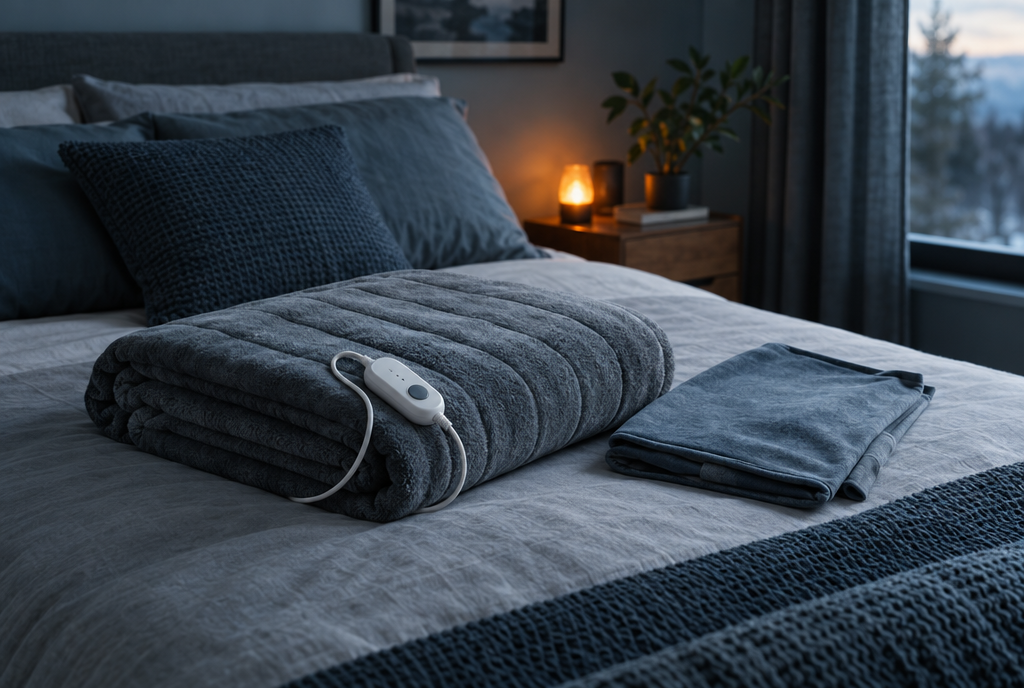
Electric blankets and heating pads are safe for most adults when the product is in good condition, used flat, and switched off or on a timer before sleep. The main risks are fire, mostly from blankets over ten years old, and burns from long contact with warm surfaces. People who cannot feel heat well, including many with diabetes or neuropathy, and infants should not use them.
What are the real risks of electric blankets?
There are two: fire and burns. The Electrical Safety Foundation International (ESFI) reports that heating pads and electric blankets cause around 500 fires each year, and that almost all of these involve electric blankets more than ten years old. Age, wear and misuse, not the technology itself, drive most of the fire risk.
Individual products can also fail. In July 2026 the US Consumer Product Safety Commission (CPSC) warned consumers to stop using Melinora electric heated blankets after reports that the internal heating wires could overheat and melt through the fabric, with five incidents of smoking, melting or burning including one burn injury. Checking for recalls before you buy or dig out an old blanket takes a minute at CPSC.gov.
Burns are the quieter risk. An integrative review of burns from body heating devices in the journal Wounds notes that skin can be burned at temperatures as low as 44 degrees Celsius (about 111 degrees Fahrenheit) with sustained contact, and that damage rises steeply with each degree above that. Most injuries were on the lower limbs and feet.
Is it safe to sleep with an electric blanket on?
ESFI's position is clear: heating appliances should never be left unattended or used while sleeping. The lowest-risk routine is to switch the blanket on a little while before bed to warm the sheets, then switch it off or unplug it when you get in.
Many newer blankets have timers and automatic shut-off. These add a margin of safety, but they do not change the basic advice. If you depend on overnight warmth, use the lowest setting on a product with auto shut-off, read the maker's instructions, and consider an extra blanket instead.
How do you use an electric blanket or heating pad safely?
Most of ESFI's guidance comes down to keeping heat from building up in one spot and catching wear early.
| Check | What to do | Why it matters |
|---|---|---|
| Age | Replace blankets that are around ten years old or older | Almost all electric blanket fires involve blankets over ten years old |
| Condition | Look for dark, charred or frayed spots and cracked cords | Damaged wiring can overheat |
| Folding or tucking | Use it flat; never fold it or tuck it in while on | Folded or tucked blankets can overheat |
| Anything on top | Keep other blankets, pillows and pets off it | Covering it traps heat |
| Power | Plug directly into a wall outlet, not an extension cord or power strip | Cords and strips can overheat |
| Certification | Buy products listed by a Nationally Recognized Testing Laboratory | Shows the design was tested |
| Right product | Do not use a heating pad and electric blanket together or swap their roles | They are designed for different uses |
| Sleep | Pre-warm, then switch off or use a timer | Unattended heat is the main risk |
Is a heating pad safer than an electric blanket?
Not necessarily. A heating pad concentrates heat on a small area of skin, often pressed against it, which is exactly the condition for a contact burn. The Wounds review lists electric heating pads alongside hot water bottles and wheat bags as common causes of these burns.
Use a heating pad on low, with a layer of fabric between it and your skin, for a limited time. Do not lie on top of one, where body weight adds pressure, and never fall asleep with it on. Check the skin afterward for redness that does not fade.
Can people with diabetes or neuropathy use electric blankets?
This is the group with the most to lose. Nerve damage can blunt the sense of heat and pain, so skin can burn without warning. The Wounds review identified people with diabetes, people with peripheral neuropathy, older adults with thinner skin, and anyone asleep or sedated as higher risk. NIDDK advises people with diabetes not to put a hot water bottle or heating pad on their feet.
If you have diabetes or neuropathy, talk to your clinician before using any heat source on your body. A blanket used only to pre-warm the bed and then switched off is a very different exposure from a pad resting on your feet all night.
Who else should avoid electric blankets and heating pads?
The same logic applies to anyone who cannot feel heat, say it is too hot, or move away from it.
Infants: the American Academy of Pediatrics (AAP) advises keeping blankets and other soft bedding out of a baby's sleep area and notes that overheating can raise the risk of SIDS. Dress babies in layers or a wearable blanket instead. Call your pediatrician or emergency services if a baby seems unwell.
Young children, and people with dementia, paralysis or limited mobility, who may not be able to report or escape heat.
Anyone who has taken alcohol, sleep aids or sedating medicines that make deep sleep or slow reactions more likely.
Pregnancy: the general concern is raising core body temperature. Pre-warming the bed and switching the blanket off is a sensible pattern; ask your obstetric clinician if you are unsure.
Do electric blankets affect pacemakers?
The American Heart Association lists electric blankets and heating pads among household devices that pose little or no risk to pacemakers and implantable cardioverter defibrillators. It still advises keeping motors and antennas at least 6 inches from the device and checking with your care team about your specific device.
Talk to your clinician about any burn, blister or skin change after using heat, and about any symptom that makes you want heat more than usual.
Key takeaways
Most electric blanket fires involve blankets more than ten years old; inspect yours and replace old ones.
Use blankets flat, uncovered, plugged into the wall, and never folded or tucked in while on.
Pre-warm the bed and switch off before sleep; do not fall asleep on a heating pad.
People with diabetes, neuropathy or reduced feeling, infants and anyone who cannot move away from heat should not use them.
The American Heart Association lists electric blankets as little or no risk for pacemakers.
Frequently asked questions
How long can you leave an electric blanket on?
Long enough to warm the bed, typically before you get in, then switch it off. Safety groups advise against leaving heating appliances on while you sleep or are away. If your blanket has a timer, set it to the shortest period that works.
Can an electric blanket catch fire?
Yes, though it is uncommon. ESFI reports around 500 fires a year from heating pads and electric blankets, almost all involving blankets over ten years old. Folding, covering, damaged cords and extension cords all raise the risk.
Is it safe to use an electric blanket every night?
Daily use is fine for most adults if the blanket is in good condition and used as a bed pre-warmer. Inspect it at the start of each season and replace it if it is old or damaged.
Can you get burned by a heating pad on low?
Yes. Burns can happen at relatively low temperatures with long, steady contact, especially if you fall asleep or cannot feel heat well. Keep a fabric layer between the pad and skin and limit the time.
Can I put an electric blanket in a baby's crib?
No. The AAP advises keeping all blankets and soft bedding out of a baby's sleep area, and overheating raises the risk of SIDS. Use layers of clothing or a wearable blanket instead.
Is it safe to use an electric blanket during pregnancy?
Pre-warming the bed and then switching the blanket off is a sensible pattern, because the general concern in pregnancy is raising core body temperature for long periods. Avoid sleeping under a blanket that is switched on, and keep heating pads off the abdomen for long stretches. Ask your obstetric clinician if you have questions about your situation.
Can kids use heating pads?
Young children should not use heating pads or electric blankets on their own. A review of burns from body heating devices notes that young children, like older adults, tend to get deeper burns because their skin is thinner, and small children may not be able to say a pad is too hot. Never put a heating pad or electric blanket in an infant's sleep area.
Can heating pads catch fire?
Yes, though it is uncommon. ESFI reports almost 500 fires a year from heating pads and electric blankets combined, mostly involving electric blankets more than ten years old. Check cords and fabric for damage, use pads flat and uncovered, and never leave one on while sleeping.
Do heating pads and electric blankets give off radiation?
They give off extremely low frequency electromagnetic fields, which are non-ionizing, like those from hair dryers and other household appliances. The National Cancer Institute reports that studies of home exposure have not consistently linked these fields to cancer, and that no mechanism has been identified by which they could cause it. The practical risks are burns and fire.
Can an electric blanket shock you?
A blanket in good condition is designed not to, but damaged wiring is a real hazard. A review of burns from body heating devices lists electrocution and fire among the dangers of faulty electrical heating products. Stop using any blanket or pad with frayed cords, scorch marks or exposed wires, and check CPSC.gov for recalls.
From HEATJAC
We design low-profile thermal garments: a heat-reflective vest and a thermal harness with pockets for warmers or cold packs.
Choosing gear? What actually helps someone who is always cold · Warm, safe gifts for an older parent
Related reading
Sources
Electric Blanket Fire Prevention, Electrical Safety Foundation International (ESFI)
CPSC Warns Consumers to Stop Using Melinora Electric Heated Blankets Immediately Due to Risk of Serious Injury from Burn and Fire Hazards, US Consumer Product Safety Commission (CPSC)
Burns Sustained From Body Heating Devices: An Integrative Review, Wounds (HMP Global)
Diabetes and Foot Problems, National Institute of Diabetes and Digestive and Kidney Diseases (NIDDK)
A Parent's Guide to Safe Sleep, American Academy of Pediatrics, HealthyChildren.org
Devices That May Interfere With ICDs and Pacemakers, American Heart Association
Heating Pads and Electric Blankets Safety, Electrical Safety Foundation International
Electromagnetic Fields and Cancer, National Cancer Institute
About HEATJAC. HEATJAC is a thermal architecture company founded by an anesthesiologist. We design patented garment systems that capture, conduct and broaden warmth across the body, and we publish this knowledge hub because the science of staying warm should be public. HEATJAC products are not medical devices and are not intended to diagnose, treat, cure or prevent any disease.