
Gifts for someone who is always cold: what actually helps
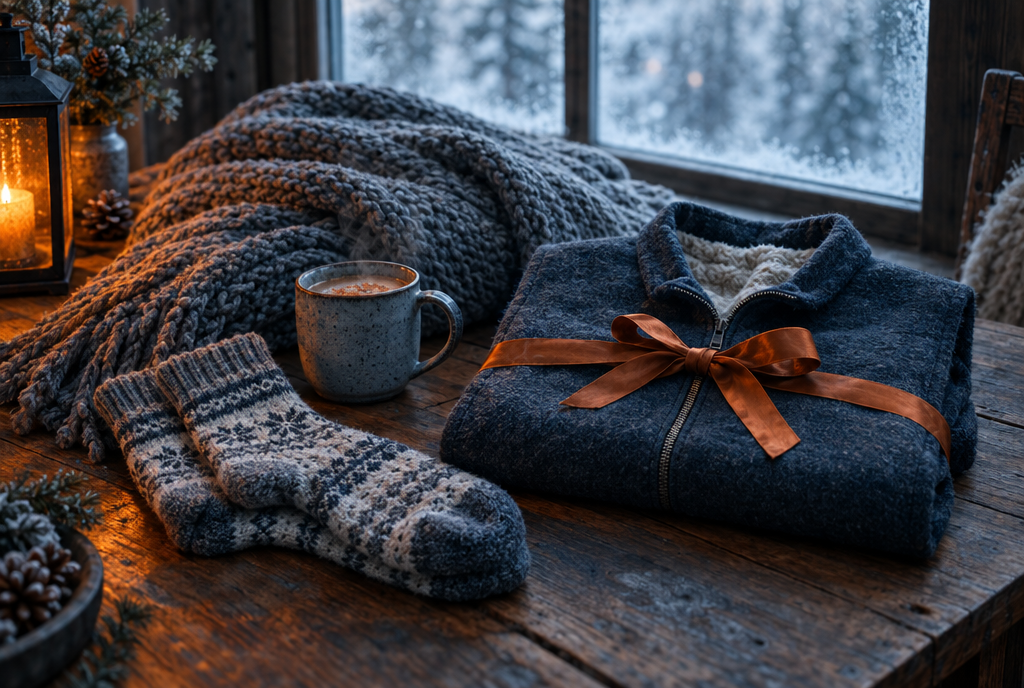
The best gifts for someone who is always cold match where they feel it: a layer for the torso at home or the office, warm socks and slippers for cold floors, a mitten-and-liner setup for the commute, and safe bedtime warmth. Look for layers they will wear daily, simple controls and auto shut-off on anything that plugs in or heats up.
How do you choose a gift for someone who is always cold?
Start with a question you can answer by watching: where are they cold? Someone who wraps a blanket around their shoulders at their desk needs something different from someone whose feet are icy in bed or whose hands hurt on the walk to the train.
Then think about the core. When the body senses cold, it narrows blood vessels in the skin to protect its central temperature, so hands and feet cool first. A warm layer over the torso often does more for cold fingers than another pair of gloves, which is why many of the most useful gifts are vests, wraps and base layers rather than gadgets.
| If they are coldest... | Gift type to consider | What to look for |
|---|---|---|
| On the couch at home | Wearable blanket, shawl or heated throw | Covers shoulders and neck; heated throws with auto shut-off |
| At a desk or in air conditioning | Thin vest, cardigan or scarf | Low bulk, fits under a jacket, looks at home at work |
| On the commute | Mittens with liners, neck gaiter, hat | Windproof shell, long cuffs, touchscreen liners |
| In bed | Bed socks, flannel or fleece bedding, bed warmer | Pre-warming devices that switch off before sleep |
| Outdoors for hours | Base layers, insulated vest, warmer-compatible gloves | Wicking fabric, pockets for air-activated warmers |
| With cold drinks and cold hands | Insulated mug or tumbler | Double wall so the outside stays room temperature |
What are good gifts for staying warm at home?
Home gifts work best when they are easy to put on and take off. A wearable blanket, a large shawl or an oversized fleece covers the neck and shoulders, which open throws often miss. Warm socks and slippers matter because cold floors pull heat from the feet; choose slippers with a textured, non-slip sole.
Heated throws are popular, and worth buying with care. The Electrical Safety Foundation says heating pads and electric blankets cause almost 500 fires each year, almost all involving electric blankets more than ten years old. Look for automatic shut-off, and remind the recipient never to fold or cover a heated blanket while it is on.
What helps someone who is cold at the office?
Offices are a common complaint because thermostats are set for the whole room, not the person. The most wearable gift is a thin layer for the torso: a fitted vest, a merino or synthetic base layer, or a cardigan that looks right with work clothes. A scarf adds warmth at the neck with almost no bulk.
Air conditioning is a recognized trigger for people with Raynaud's, and the Raynaud's Association suggests insulated mugs and glasses so fingers do not chill on cold drinks. That makes a good insulated tumbler a thoughtful, low-risk office gift. Personal space heaters are a different matter; many workplaces restrict them, so check before buying one.
What gifts help on a cold commute?
For walking, waiting and driving, focus on the extremities and the gaps between garments. Mittens are warmer than gloves because fingers share heat, and a thin liner glove underneath keeps fingers covered while using a phone or paying. A neck gaiter or scarf and a hat close off the places where warm air escapes.
Pocket warmers make good stocking stuffers. Air-activated warmers are simple and battery-free, while rechargeable warmers are reusable but need charging. With either type, keep a layer of fabric between the warmer and skin.
What are safe gifts for sleeping warm?
Sleep is where heat products need the most caution. The Electrical Safety Foundation advises that heating appliances should never be left unattended or used while sleeping. Safer choices include bed socks, flannel or fleece sheets, a heavier duvet and a bed warmer or heated mattress pad used to pre-warm the bed and switched off at bedtime.
If a space heater is on your list, choose one with tip-over and overheat protection. The Consumer Product Safety Commission advises keeping portable heaters at least three feet from bedding and furniture, plugging them directly into a wall outlet and turning them off when sleeping.
What about gifts for time outdoors?
For walks, sports and outdoor events, layering beats one heavy coat. A moisture-wicking base layer, an insulated vest and a windproof shell let the wearer adjust as they warm up. Gloves or vests with pockets for air-activated or rechargeable warmers add heat where insulation alone falls short. Choose battery-heated clothing only if they will keep up with charging.
When is being cold all the time worth a clinician visit?
Feeling colder than others is often normal. MedlinePlus lists underactive thyroid, anemia, blood vessel problems such as Raynaud's and other conditions among the causes of cold intolerance, and advises contacting a health care provider for long-term or extreme cold intolerance. If the person you are shopping for is cold all the time, a gentle suggestion to talk to a clinician can be as caring as any gift.
Where HEATJAC fits
HEATJAC REFLECT is a lightweight heat-reflective vest with a snap front and integrated pockets for compatible warming elements (sold separately). Its lining material is rated at about 95% radiant heat reflectance in the supplier's ASTM emittance testing, a material property rather than a whole-garment claim. It suits the office and commute categories above; it is not bedding or a replacement for a winter coat.
Key takeaways
Match the gift to where they feel cold: home, office, commute, bed or outdoors.
Torso layers often help cold hands more than extra gloves.
Choose heated products with auto shut-off, and never use them while sleeping.
Keep fabric between any warmer and bare skin.
Constant, unusual cold is worth a conversation with a clinician.
Frequently asked questions
What is a good gift for someone who is always cold?
A layer they will wear every day is usually the most useful: a thin vest, a wearable blanket, warm socks with non-slip soles, or mittens with liners. Pick based on where they feel coldest.
Are heated blankets a safe gift?
They can be when new, used as directed and bought with automatic shut-off. The Electrical Safety Foundation says most blanket fires involve blankets more than ten years old, and advises never folding or covering a blanket in use or using it while sleeping.
Is a space heater a good gift for someone who is always cold?
It can be, with the right features and habits. Look for tip-over and overheat protection, and follow CPSC advice: keep it three feet from combustibles, plug it directly into a wall outlet and turn it off when sleeping.
Why are some people always cold?
Body size, activity, clothing and room temperature explain a lot. Conditions such as an underactive thyroid, anemia or Raynaud's can also cause cold intolerance, so persistent or extreme cold is worth raising with a clinician.
What gift helps with cold hands at a desk?
Try a torso layer such as a vest, plus thin liner or fingerless gloves and an insulated mug. Warming the core helps the body keep blood flowing to the hands.
Related reading
Sources
Cold intolerance, MedlinePlus, U.S. National Library of Medicine
Heating Pads and Electric Blankets Safety, Electrical Safety Foundation International
Keep Warm and Safe This Winter: Tips for Using Generators, Furnaces and Space Heaters (2026), U.S. Consumer Product Safety Commission
Frequently Asked Questions, Raynaud's Association
The Physiological Response of Working in Cold Environments and How Your PPE Can Help, NIOSH, Centers for Disease Control and Prevention
About HEATJAC. HEATJAC is a thermal architecture company founded by an anesthesiologist. We design patented garment systems that capture, conduct and broaden warmth across the body, and we publish this knowledge hub because the science of staying warm should be public. HEATJAC products are not medical devices and are not intended to diagnose, treat, cure or prevent any disease.