
Cooling under PPE, gowns and body armor
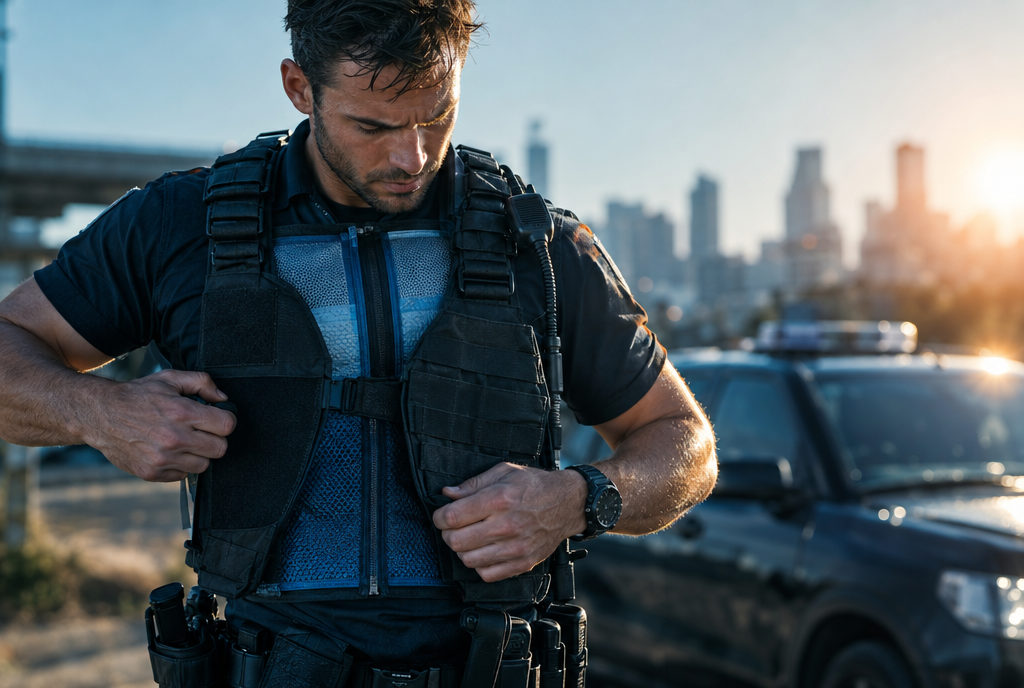
Body armor, surgical gowns and protective suits trap heat because they block sweat evaporation and add weight. Cooling under them works best with phase-change, ice or liquid-cooled vests, which cool by conduction rather than evaporation. Studies show these vests improve comfort and cut heat storage, but packs can run out in under an hour under heavy gear, so planned swaps matter.
Why does protective gear make heat stress worse?
The body's main cooling method in the heat is sweating, and sweat only cools when it evaporates. Armor carriers, gowns, coveralls and chemical suits sit over the torso and trap humid air against the skin, so sweat pools instead of evaporating. Heavy gear also adds work: the ordnance disposal suits in one study weighed about 38 kg.
OSHA warns that certain protective equipment, including some respirators, impermeable clothing and head coverings, can increase the risk of heat-related illness. That is why cooling under PPE focuses on methods that do not need open air.
Which cooling vests work under body armor and PPE?
Evaporative vests are a poor fit under impermeable layers because the moisture they rely on has nowhere to go. Conduction-based and active systems are the practical choices.
| Gear | Practical cooling | Key constraint |
|---|---|---|
| Body armor and plate carriers | Slim phase-change or ice packs in a thin vest | Must not change how armor fits or covers |
| Surgical gowns | Lightweight ice or phase-change vest under the gown | Sterile attire rules; worn under, never over |
| Firefighting turnout gear | Phase-change vest, especially during recovery breaks | Extreme heat shortens runtime |
| Bomb disposal and chemical suits | Phase-change vest swapped at rest, or tethered liquid cooling | Runtime under heavy load |
| Vehicle crews | Liquid or air cooling connected to vehicle power | Tether limits movement |
What does research show about cooling under heavy gear?
In a 2020 study in Frontiers in Physiology, operators wearing explosive ordnance disposal suits of about 38 kg worked in 40°C heat. A 1.12 kg phase-change vest melting at 25°C stayed effective for about 50 minutes. Replacing it with a fresh vest during a 10-minute rest reduced heat storage and lowered rectal temperature by 0.57°C compared with no cooling. Continuing to wear an exhausted vest increased heat strain because it added insulation without cooling.
In a 2011 study of subjects in firefighting protective clothing walking at 55°C, phase-change vests cooled the torso and skin, and the lower 24°C melting point outperformed 28°C. Neither reduced peak core temperature during exercise, although both helped during recovery.
Do cooling vests help surgeons under gowns?
Sterile gowns, hoods and sustained physical work can leave surgeons hot even when the operating room itself is kept cool. In a 2023 randomized crossover trial of 30 orthopedic surgeons, a lightweight, disposable ice-pack vest worn under the gown reduced thermal discomfort by 2.1 points on a 0 to 10 scale and lowered mean skin temperature by 0.23°C. It also reduced perceived sweat-soaked clothing, fatigue and exertion.
Core temperature did not change significantly, and cognitive test scores were unaffected. The vest was designed to cool for about 2.5 hours, long enough for many procedures.
What should you look for in a vest worn under gear?
Profile comes first. Under armor or a gown, every millimeter of pack thickness changes fit, so flat, flexible packs spread across chest and back work better than a few bulky ones. Weight comes next, because a heavy vest adds work and therefore heat; the ordnance disposal study used a vest of just over 1 kg.
Then consider melting point and recharge. Lower melting points cool harder, higher ones feel gentler, and packs that recharge in a refrigerator or cooler are easier to rotate in the field than packs that need a freezer. Finally, choose washable, low-bulk fabric that does not add another insulating layer.
How should teams manage cooling under PPE?
Plan pack swaps around rest breaks; under heavy load, assume packs may last under an hour.
Remove or replace spent packs rather than wearing them as extra insulation.
Fit test the vest with the full kit so armor plates, harnesses and seals sit correctly.
Choose slim, flat packs that do not create pressure points under plates or straps.
Keep spare packs in coolers at the staging area or vehicle.
Use cooling alongside work-rest limits, hydration and heat illness monitoring, not instead of them.
What are the limits of cooling under PPE?
Cooling vests cover the torso only, and protective gear still limits heat loss from the rest of the body. Research consistently shows clearer effects on comfort and skin temperature than on core temperature during hard work, so a cooled worker can still develop heat exhaustion or heat stroke.
Confusion, slurred speech or collapse in anyone wearing heavy gear is an emergency: call 911, remove the gear and cool the person rapidly. This page is educational; anyone with health conditions or recurring heat symptoms should talk to a clinician.
Key takeaways
PPE traps heat by blocking sweat evaporation and adding weight, and OSHA notes it can raise heat illness risk.
Phase-change, ice and liquid systems work under gear; evaporative vests do not.
Under a heavy suit at 40°C, a PCM vest lasted about 50 minutes, and swapping it at rest reduced heat storage.
An ice vest under surgical gowns improved surgeons' comfort without affecting cognitive performance.
Fit, pack swaps and heat monitoring matter as much as the vest itself.
Frequently asked questions
Can you wear a cooling vest under body armor?
Yes, slim phase-change or ice vests can be worn under armor. Fit test with the full kit to make sure plates sit correctly and coverage is not reduced, and choose flat packs that avoid pressure points.
How long does a cooling vest last under PPE?
Under heavy suits in extreme heat, one phase-change vest lasted about 50 minutes in research. In milder conditions and lighter gear, packs last longer. Plan swaps at breaks.
Do evaporative cooling vests work under protective clothing?
Not well. They rely on moisture evaporating into open air, which impermeable layers prevent. Conduction-based or active vests are better under PPE.
Do surgeons use cooling vests?
Some do. A 2023 randomized trial found an ice-pack vest under the surgical gown improved surgeons' thermal comfort and did not affect cognitive test performance. Facility attire policies apply.
Should firefighters wear cooling vests?
Cooling vests are one option, particularly during rest between work cycles. Research shows they help recovery more clearly than they lower core temperature during active work, so they supplement, not replace, work-rest rotation and monitoring.
From HEATJAC
We design low-profile thermal garments, including a thermal harness with pockets that hold cold packs in summer and warmers in winter.
Choosing gear? One garment, two seasons: modular heating and cooling · The thermal gear buying, safety and care guide
Related reading
Sources
Optimizing the Use of Phase Change Material Vests Worn During Explosives Ordnance Disposal Operations in Hot Conditions, Frontiers in Physiology
Cooling vests with phase change materials: the effects of melting temperature on heat strain alleviation in an extremely hot environment, European Journal of Applied Physiology (via PubMed)
Cooling vest improves surgeons' thermal comfort without affecting cognitive performance: a randomised cross-over trial, Occupational and Environmental Medicine (via PubMed Central)
Heat: Protecting Workers (Controls), Occupational Safety and Health Administration
Heat-Related Illnesses, CDC, National Institute for Occupational Safety and Health
About HEATJAC. HEATJAC is a thermal architecture company founded by an anesthesiologist. We design patented garment systems that capture, conduct and broaden warmth across the body, and we publish this knowledge hub because the science of staying warm should be public. HEATJAC products are not medical devices and are not intended to diagnose, treat, cure or prevent any disease.