
Staying warm under body armor and duty gear
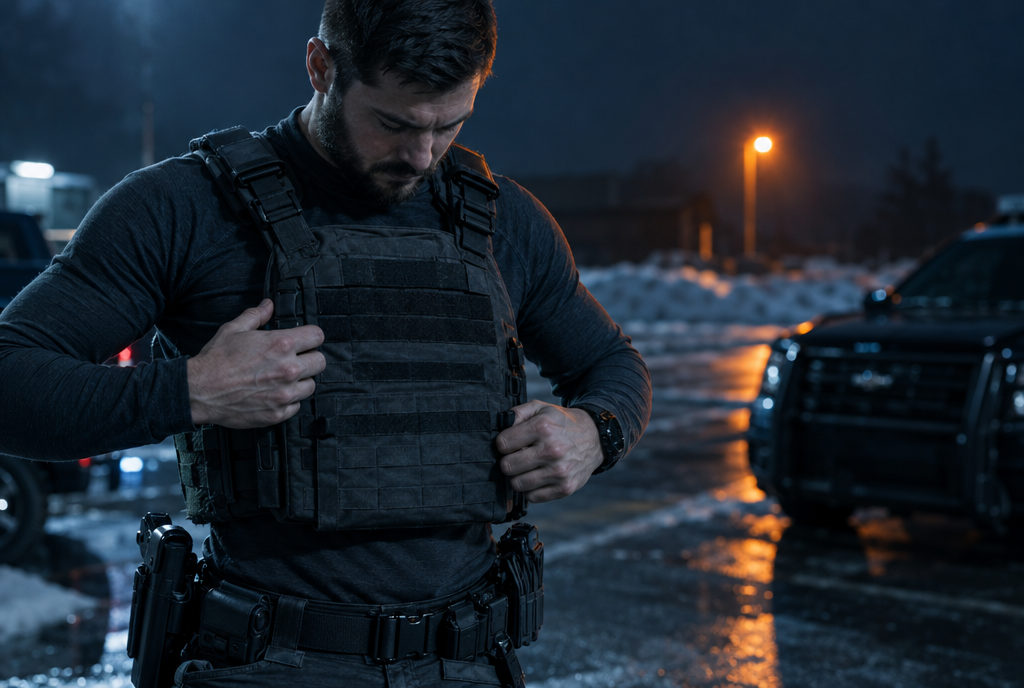
Staying warm under body armor is mostly about managing sweat. A carrier blocks ventilation and presses on anything worn beneath it, so the usual approach is a thin, moisture-managing base layer under the armor, insulation added over the kit when you stop moving, and, where policy allows, low-profile heat sources placed so nothing hot is pressed against bare skin.
Why is it hard to stay warm under body armor?
Armor covers the torso front and back, which is exactly where the body makes and holds most of its heat. During exertion the carrier traps sweat against the base layer. When movement stops, that damp layer sits under plates with little room for insulation, and the wearer cools quickly.
The Army's cold-injury bulletin, TB MED 508, explains that layers work because they trap air, and that wet clothing can lose 50 percent or more of its insulation. Its COLD rule asks for clothing that is clean, avoids overheating, is worn loose and in layers, and stays dry. Armor makes loose and dry hard to achieve over the torso, so the strategy has to adapt.
What should you wear under a plate carrier in winter?
Keep the layer under the armor thin and quick-drying, then put warmth elsewhere. The Army's Arctic system, CTAPS, reflects this thinking: its lightweight insulated layer has vented armpits, its extreme cold weather parka and trousers provide maximum insulation, and the Army notes the layers can be worn in any combination depending on the mission and the individual soldier.
Next to skin: a lightweight synthetic or wool base that moves sweat outward.
Under the armor: nothing bulky; a thin midweight layer at most.
Over the kit: an insulated layer sized to go over equipment for halts and static duty.
Neck, head and hands: covered separately, since they are outside the armor and lose heat fast.
How do you manage sweat on duty in the cold?
A US Army article on Arctic research lists heavy sweating during exertion among the hazards soldiers face. The practical answer is to vent before you soak through: open collars and cuffs, loosen side panels where the carrier allows it, and shed outer insulation before a climb or foot pursuit.
When movement stops, add the over-layer right away instead of waiting to feel cold. A dry sock and glove change during long static periods also helps protect hands and feet. On vehicle patrols, where you move between a heated cab and the cold, open the over-layer inside rather than letting the base layer soak.
Can you wear a heated vest under body armor?
Many people do, but it needs care. Pressure from plates and a tight carrier can push heating elements, wires and connectors hard against the body, creating hot spots. Military casualty guidance from the Joint Trauma System warns never to place an active heat source directly on skin; the same caution is sensible for anyone wearing a heater under compression.
Use a thin base layer between any heating element and skin.
Choose flat, low-profile elements and route wires and connectors away from plate edges.
Start on the lowest setting under armor and check skin at breaks.
Make sure added layers do not change how the armor fits or covers you.
Follow your agency's uniform and equipment policy and the armor maker's guidance.
Where should extra heat go to keep hands working?
Cold hands are a mission problem, not just a comfort one. The Army notes that loss of dexterity occurs because the body cuts blood flow to hands and feet in the cold, affecting shooting, equipment handling and casualty care. TB MED 508 reports that manual dexterity declines once finger skin temperature falls to about 60 °F.
Army researchers have prototyped a Personal Heating Dexterity Device, reporting that warming the forearm significantly increases hand and finger temperatures. For the wearer, that points to keeping the torso and forearms warm, not only the fingers.
What are the options for warmth under and over duty gear?
Each approach has trade-offs for armored wearers.
| Approach | Strength | Watch out for |
|---|---|---|
| Thin base layer only | Nothing bulky under plates | Chills fast when static |
| Battery-heated vest under armor | Adjustable heat at the core | Hot spots under pressure; battery life in cold |
| Air-activated warmers in pockets | No wiring; light | Need oxygen; never directly on skin |
| Insulated over-layer on top of kit | Big warmth gain during halts | Must be sized to fit over equipment |
How do cold temperatures affect heated gear batteries?
Batteries lose usable capacity in the cold. Battery University reports that a battery delivering full capacity at 27 °C typically delivers only about half at minus 18 °C, and that consumer lithium-ion cells should not be charged below freezing. Keep packs inside insulated layers, carry spares close to the body, and warm them before charging.
If you notice numbness, color change or pain in hands or feet after a cold shift, talk to a clinician.
Key takeaways
Under armor, the priority is a thin, dry base layer, not bulk.
Add insulation over the kit whenever you stop moving.
Heaters under compression need a layer between element and skin and a low starting setting.
Warm core and forearms help keep hands working.
Keep batteries warm and never charge lithium-ion packs below freezing.
Frequently asked questions
Can I wear a heated vest under my plate carrier?
Many wearers do, but pressure can create hot spots. Keep a base layer between elements and skin, start on low, check skin at breaks, and follow agency policy and the armor maker's guidance.
What should I wear under body armor in winter?
A thin, moisture-managing base layer and little else. Put bulk insulation over the kit for static periods so sweat does not soak the layer trapped under your plates.
Why do I get cold at the end of a shift wearing body armor?
Sweat builds up under the carrier during activity, and damp layers lose much of their insulation. When activity drops, heat loss outpaces heat production.
Are chemical hand warmers safe under body armor?
Air-activated warmers need oxygen and can get hot under pressure. Keep them in pockets over a clothing layer, never directly against skin, and follow package directions.
Does cold weather drain heated vest batteries faster?
Yes. Battery University reports that capacity at minus 18 °C can be about half of that at 27 °C. Keep batteries insulated and close to the body.
From HEATJAC
We design low-profile thermal garments: a heat-reflective vest and a thermal harness with pockets for warmers or cold packs.
Choosing gear? Cold-weather gear for EMS crews · Cold-weather gear for police and security officers
Related reading
Sources
TB MED 508: Prevention and Management of Cold-Weather Injuries (April 2005), US Army / USARIEM
Army scientists developing solutions to improve thermal toughness in the Arctic, US Army
Arctic Angels equipped with newest extreme cold weather gear, US Army
Hypothermia: Prevention and Treatment, CPG ID 23 (07 Jun 2023), Joint Trauma System, DoD Center of Excellence for Trauma
BU-502: Discharging at High and Low Temperatures, Battery University
About HEATJAC. HEATJAC is a thermal architecture company founded by an anesthesiologist. We design patented garment systems that capture, conduct and broaden warmth across the body, and we publish this knowledge hub because the science of staying warm should be public. HEATJAC products are not medical devices and are not intended to diagnose, treat, cure or prevent any disease.