
Cold-weather gear for EMS crews: what to buy for winter calls
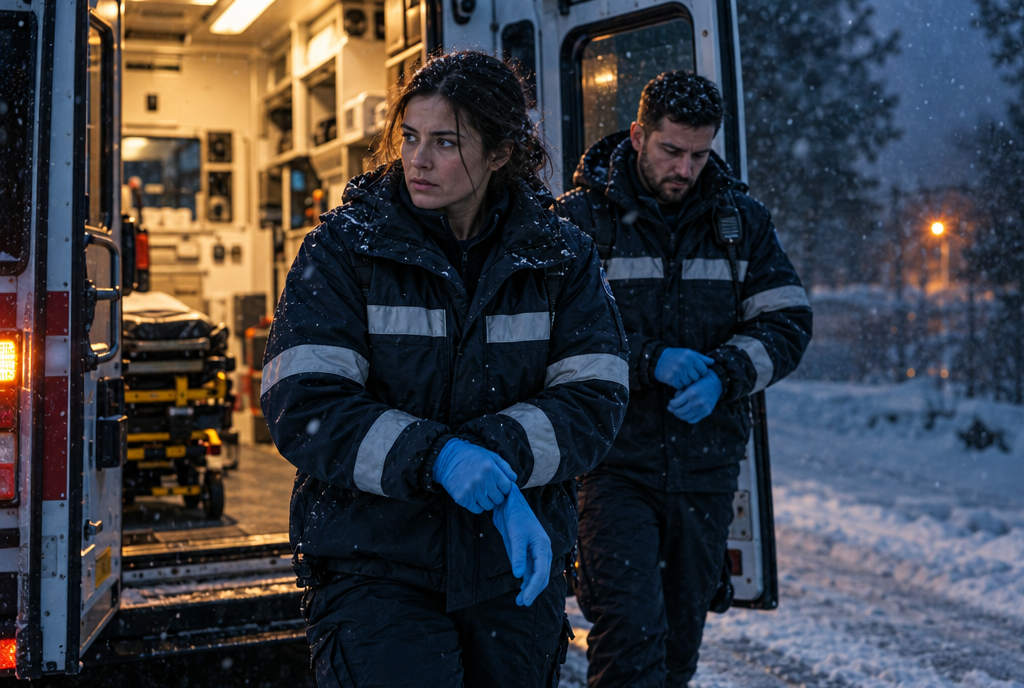
EMS crews stay warmest with a system built for constant transitions: a wicking base layer, a light insulating mid layer that comes off easily in the heated rig, a fluid-resistant outer shell that can be cleaned or laundered after contamination, sturdy insulated boots, and a glove system that separates exam gloves for patient care from insulated gloves for scene work.
What makes EMS winter gear different?
This guide is about keeping the crew warm, not the patient. For patient warming, see our page on prehospital hypothermia prevention. Crew gear faces a problem few other cold jobs share: you move from a hot ambulance to a frozen scene and back many times a shift, often after heavy lifting.
That cycle soaks base layers in sweat and then chills them. Contamination adds a second constraint. Anything that can be splashed with blood or body fluids has to be removable, cleanable, or disposable, so the warmest parka on the market may be the wrong buy if it cannot be laundered properly.
How should EMS crews layer for in-and-out calls?
OSHA recommends at least three layers of loose-fitting clothing: a moisture-wicking inner layer, an insulating middle layer, and an outer layer that blocks wind and rain. For EMS, make the middle layer the one that moves. A thin fleece or insulated vest can come off during transport and go back on before the doors open.
A FireRescue1 column on winter EMS describes carrying a warmer shell jacket in an ambulance compartment when starting the shift lighter, and keeping a good set of gloves and a warm hat in the truck. That habit, a staged cold kit in the rig, is often a better investment than one heavy coat.
Base: synthetic or merino that dries fast, never cotton.
Mid: a vest or light fleece that zips off in seconds.
Shell: fluid-resistant, high-visibility, with room over the mid layer.
Staged in the rig: warm hat, insulated gloves, spare socks, a warmer shell.
Do EMS jackets need to be fluid resistant?
Under OSHA's bloodborne pathogens standard, protective equipment counts as appropriate only if it does not let blood or other potentially infectious materials pass through to work clothes, street clothes, undergarments or skin under normal conditions of use. If a garment is penetrated, it must be removed immediately or as soon as feasible.
NFPA 1999, the standard on protective clothing for emergency medical operations, sets requirements for single-use and reusable garments, gloves and footwear, according to NIOSH. Many EMS jackets are sold as certified to it. When comparing, check the certification label, which edition it references, and whether a removable insulating liner is included so you can wash the shell and liner separately.
Which gloves work for patient care in the cold?
Plan for three kinds of hand protection. Exam gloves are for patient contact and are changed often. Insulated gloves keep hands warm while staging, walking in, or waiting. Work or extrication gloves protect against sharp edges at vehicle crashes; NIOSH notes that NFPA 1999 also covers work gloves.
Carry extra exam gloves, since donning them with cold, damp hands is slower and a torn glove needs replacing on the spot. Keep insulated gloves in an inside pocket so they stay warm and dry between uses, and follow your agency's infection-control protocol on what may be worn under or over exam gloves.
What boots and headwear should EMS crews buy?
The same FireRescue1 column recommends trading light slip-on shoes or sneakers for sturdier, warmer boots that are less likely to get soaked. Look for waterproof, insulated boots with slip-resistant soles, since you carry weight over ice. NIOSH advises waterproof, insulated boots and a hat for cold work.
Keep a spare uniform and socks at the station. Wet feet on a long shift are one of the fastest ways to lose comfort and focus.
How should cold-weather gear be laundered after contamination?
The standard is clear on responsibility. OSHA states that the employer shall clean, launder and dispose of required personal protective equipment at no cost to the employee, and contaminated laundry must travel in labeled or color-coded bags or containers. An OSHA interpretation adds that a uniform counts as protective equipment when it is worn or relied on as a protective garment.
Before buying, confirm how your agency launders gear and whether jackets, liners and gloves can go through that process. Garments with batteries or wiring usually need the battery removed and special care, which is a practical reason to keep heated items as separate layers under the shell.
Which setup fits your service?
Match the kit to your call pattern and climate.
| If your service is mostly... | Prioritize | Consider adding |
|---|---|---|
| Urban calls, short scene times | Removable mid layer, fluid-resistant shell | Staged hat and gloves in the rig |
| Rural calls, long scenes | Insulated boots, full three layers | Heated or warmer-pocket vest under the shell |
| Highway and extrication | High-visibility shell, work gloves | Spare insulated gloves; face protection |
| Event standby outdoors | Heavy boots and gloves | Added core heat; warm break area |
Where HEATJAC fits
HEATJAC CORE is a low-profile thermal harness with heat-reflective inserts and pockets for supplemental warmers, available in Medical Blue and Navy among other colors. It is passive, with no battery, and designed by an anesthesiologist, so it can sit under an EMS shell as a separate warmth layer. It is not a fluid barrier, so it belongs under protective outerwear, not in place of it.
Key takeaways
Build the system around the heated rig: a mid layer that comes off fast.
Choose outerwear that is fluid resistant and launderable, and check NFPA 1999 labels.
Carry three kinds of hand protection: exam, insulated and work gloves.
Keep heated or battery items as separate layers under the shell.
Your employer handles laundering of contaminated protective gear.
Frequently asked questions
What should an EMT wear in winter?
A wicking base layer, a removable insulating mid layer, a fluid-resistant high-visibility shell, insulated waterproof boots and a warm hat. Stage spare gloves and a warmer layer in the ambulance.
What is an NFPA 1999 jacket?
A garment certified to NFPA 1999, the standard for protective clothing used in emergency medical operations. It covers garments, gloves and footwear intended to protect against body fluids.
Can EMS crews take contaminated uniforms home to wash?
OSHA requires employers to clean, launder or dispose of required protective equipment at no cost to the employee. Follow your agency's exposure control plan for contaminated items.
Can I wear a heated vest on an ambulance shift?
Often, if agency policy allows it. Wear it as a separate layer under a fluid-resistant shell, turn it down in the rig, and never let a heat source sit directly on skin.
When should crew members see a clinician about the cold?
If you notice numbness, color change or pain in your hands or feet after a cold shift, talk to a clinician.
Related reading
Sources
Improved Criteria for Emergency Medical Protective Clothing, CDC / NIOSH
Cold and Work: Types, Causes, Preparation, CDC / NIOSH
Braving the cold: Essential EMS strategies for winter emergencies, FireRescue1
About HEATJAC. HEATJAC is a thermal architecture company founded by an anesthesiologist. We design patented garment systems that capture, conduct and broaden warmth across the body, and we publish this knowledge hub because the science of staying warm should be public. HEATJAC products are not medical devices and are not intended to diagnose, treat, cure or prevent any disease.