
Cold-weather gear for police and security officers: a buyer's guide
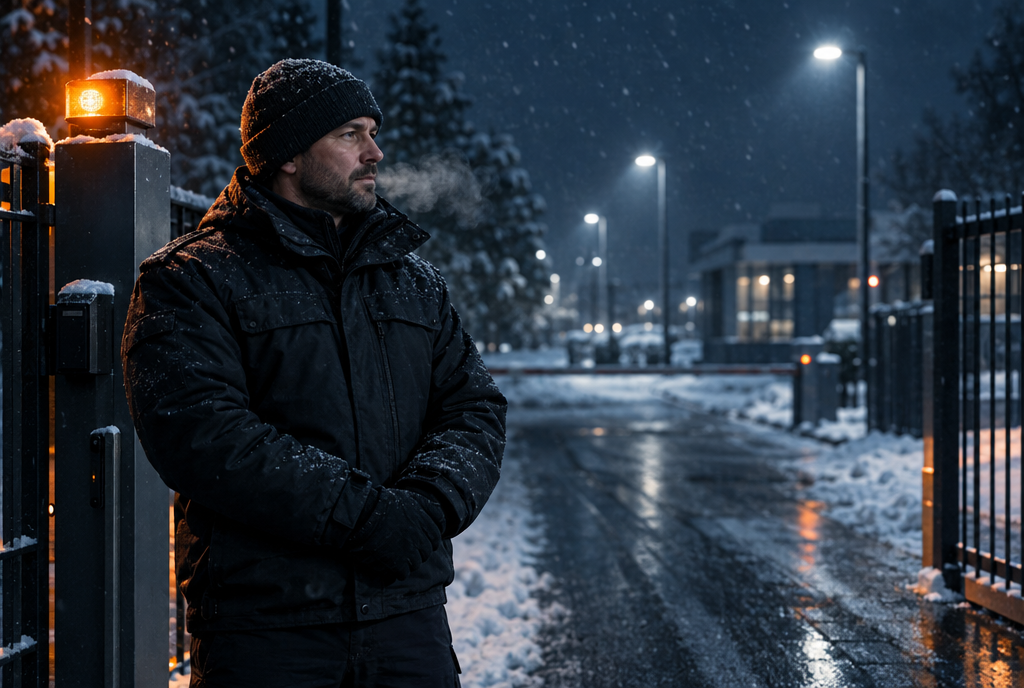
For winter duty, buy in this order: a thin wicking base layer that fits under armor, a low-bulk insulated vest or fleece that fits under the duty jacket, insulated waterproof boots with wool socks, and two weights of gloves you have trained in. Add heated or warmer-pocket gear for long static posts, and confirm everything with your department's uniform policy.
What does a police or security officer need for winter duty?
Patrol and static posts ask different things of the same kit. Patrol means cycling between a heated vehicle and the cold, with bursts of exertion. A post, checkpoint or traffic assignment means hours of standing with little heat production. Buy a system that handles both rather than one heavy coat.
OSHA recommends at least three layers of loose-fitting clothing: an inner layer that wicks moisture, a middle insulating layer, and an outer layer that blocks wind and rain. For officers the twist is that armor, a duty belt and a uniform shirt sit in the middle of that stack, so every layer has to be chosen for low bulk where the gear sits.
Base layer: synthetic or merino, in two weights for mild and severe days.
Mid layer: a thin insulated vest or grid fleece that fits under the duty jacket.
Outer layer: a wind and water resistant duty jacket that clears the belt and gives access to tools.
Extremities: insulated hat, neck gaiter or face mask, gloves, insulated boots and wool socks.
What should you wear under body armor in winter?
Keep it thin. Concealable armor is worn under the uniform shirt, and anything added beneath it changes fit. The Criminal Justice Technology Testing and Evaluation Center notes that proper measurement is needed for coverage of the torso and vital organs while allowing range of motion, so a bulky layer under panels works against the armor you were fitted for.
Put warmth over the armor instead. The same center notes that with concealable armor, regular issued items such as jackets, sweaters and windbreakers can still be worn over the uniform. An insulated vest under the duty jacket warms the core without crowding the carrier. Our guide to staying warm under body armor covers sweat management in more depth.
How do you fit winter layers around a duty belt?
Check three things before you buy. The jacket hem should sit above or clear of the belt so it does not snag your holster, and side zips or vents help you reach tools. Mid layers should be short or tucked so nothing bunches under the belt. Sleeves should not cover a watch, radio controls or cuffs you need to reach quickly.
Police1's winter guidance advises practicing the draw of every tool, from pistol and TASER to OC spray, handcuffs and magazines, while wearing winter gear, because jackets and gloves change presentation. Do that at a range day before the first cold shift, not during it.
Which gloves let you handle a weapon and radio?
No single glove does everything, so most officers carry two. A thin, close-fitting patrol glove with a grippy palm and touchscreen fingertips keeps dexterity for firearms, radios and phones. A warmer insulated glove or mitten goes on for static posts, traffic control and scene security, and comes off when fine work begins.
Police1 notes that gloves affect grip and trigger feel, so qualify or at least practice in the gloves you will actually wear. Keep a dry spare pair in the vehicle; wet gloves lose warmth quickly, and OSHA lists insulated, water resistant gloves among the basics for cold work.
Do heated vests and warmers make sense for patrol and posts?
On a long static post, yes, an added heat source is often the difference between focused and distracted. On patrol, where you move in and out of a heated car, a heated layer is easy to overdo; you arrive at a call sweaty and then chill. Many officers run heat only when they stop moving.
Choose low-profile heat that sits over the base layer and away from plate edges, never directly on skin. Battery vests offer adjustable heat; air-activated warmers in vest pockets need no wiring. Our comparisons of heated vs reflective vests and battery heat vs hand warmers go deeper.
How do you keep batteries working in the cold?
Radios, body cameras, flashlights, phones and heated gear all lose capacity in the cold. Battery University reports that a battery giving 100 percent of its capacity at 27 °C (80 °F) typically delivers only about 50 percent at minus 18 °C (0 °F).
Carry spare packs inside the jacket, close to the body, not in an outer pouch. Let cold packs warm to room temperature before charging. For heated clothing, a spare battery per shift is the usual answer on long posts.
What does your department's uniform policy allow?
Before buying, read the uniform and equipment orders. Many agencies specify outer jacket color, patches and reflective markings, and some restrict items worn over or under armor or require approval for anything electrical. Buy approved outer layers first, then choose base and mid layers that stay out of sight.
Employers also carry duties. OSHA states that employers must provide a workplace free from recognized hazards, including winter weather, and recommends warm break areas and warm, non-alcoholic drinks. Supervisors planning posts should rotate staff and provide shelter where they can.
Which setup fits your assignment?
Use this as a starting point, then adjust for climate and policy.
| If your shift is mostly... | Prioritize | Consider adding |
|---|---|---|
| Vehicle patrol with short exits | Thin base layer, vest under jacket, patrol gloves | Warm hat and a spare dry glove pair in the car |
| Foot or bike patrol | Wicking base, breathable mid layer, windproof shell | Face protection; vents you can open |
| Static post or checkpoint | Insulated boots, heavy gloves, full three layers | Heated or warmer-pocket vest; insulating mat underfoot |
| Traffic control at night | High-visibility outer layer approved by policy | Heated gloves or warmers; spare batteries |
Where HEATJAC fits
HEATJAC CORE is a low-profile thermal harness with heat-reflective inserts and pockets for supplemental warmers, made in tactical green, brown, black and navy. It is passive, with no built-in battery, so it suits officers who want core warmth under a duty jacket without wiring. Check fit with your armor and your agency's policy first.
Key takeaways
Buy a layered system: thin under armor, insulation over it, wind protection outside.
Carry two glove weights and practice drawing every tool in them.
Save added heat for static time and avoid sweating on patrol.
Keep batteries warm inside your layers and carry spares.
Check uniform and equipment policy before you buy.
Frequently asked questions
What is the best base layer for police officers in winter?
A thin synthetic or merino base layer that wicks sweat and fits smoothly under armor. Owning two weights lets you match the day. Avoid cotton, which holds moisture.
Can I wear a heated vest under my duty jacket?
Usually, if policy allows it. Wear it over the base layer, keep it away from plate edges, start on low and avoid sweating before you head back outside.
What gloves do cops wear in winter?
Many carry a thin patrol glove with a grippy palm and touchscreen fingertips for handling a weapon and radio, plus a warmer insulated pair for posts and traffic. Practice with both.
How do security guards stay warm standing outside all day?
Insulated boots and something underfoot, a windproof outer layer, full layering, a hat, heavy gloves and warm-up breaks. Added heat from warmers or a heated vest helps on long posts.
Should I tell a clinician about cold symptoms after a shift?
Yes. If you notice numbness, color change or pain in your hands or feet after cold duty, talk to a clinician.
Related reading
Sources
Cold and Work: Types, Causes, Preparation, CDC / NIOSH
Body Armor Selection and Fit, Criminal Justice Technology Testing and Evaluation Center (CJTTEC)
Winter weather survival tips and gear for police officers, Police1
BU-502: Discharging at High and Low Temperatures, Battery University
About HEATJAC. HEATJAC is a thermal architecture company founded by an anesthesiologist. We design patented garment systems that capture, conduct and broaden warmth across the body, and we publish this knowledge hub because the science of staying warm should be public. HEATJAC products are not medical devices and are not intended to diagnose, treat, cure or prevent any disease.