
The Berry Amendment and military textiles, explained
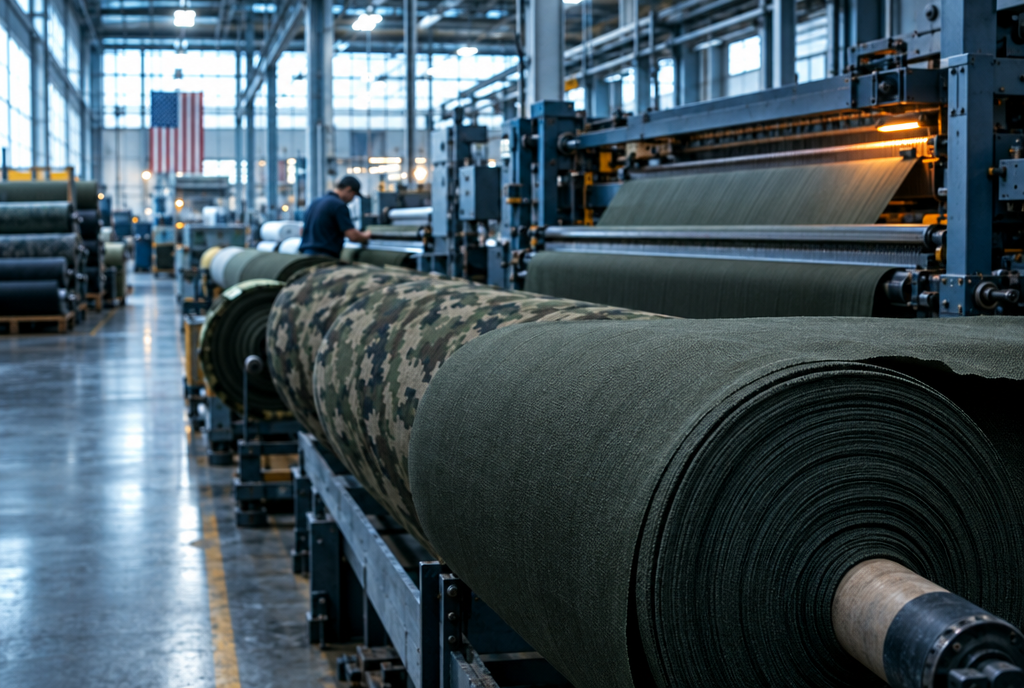
The Berry Amendment is a US law that bars the Department of Defense from spending its funds on clothing, textiles, food and certain other items unless they are grown, reprocessed, reused or produced in the United States. For textiles, the requirement reaches back through fabric to fibers and yarns. It is codified at 10 U.S.C. 4862 (formerly 2533a) and implemented through DFARS 252.225-7012.
What is the Berry Amendment?
Congress first passed the Berry Amendment in 1941 to promote the purchase of certain US goods, according to the Defense Pricing and Contracting office.
It was codified as 10 U.S.C. 2533a in 2002 by section 832 of Public Law 107-107. The section was renumbered to 10 U.S.C. 4862, titled Requirement to buy certain articles from American sources; exceptions, effective January 1, 2022. Many documents and contract clauses still refer to the old 2533a citation.
Which textiles and items does the Berry Amendment cover?
The statute says DoD funds may not be used to procure a covered item if it is not grown, reprocessed, reused or produced in the United States. The covered list is broader than uniforms.
Food.
Clothing and the materials and components thereof.
Tents, tarpaulins and covers, and their structural components.
Cotton and other natural fiber products; woven silk and silk blends; spun silk yarn.
Synthetic fabric and coated synthetic fabric, including all textile fibers and yarns for synthetic fabric.
Canvas products, wool and individual equipment in Federal Supply Class 8465.
Hand or measuring tools, stainless steel flatware, dinnerware and the US flag.
How does DFARS 252.225-7012 apply the rule?
The Berry Amendment is implemented in the Defense Federal Acquisition Regulation Supplement (DFARS) at subpart 225.7002, and flows into contracts through clause 252.225-7012, Preference for Certain Domestic Commodities. The current clause version is dated April 2022.
When the clause is in a contract, the contractor agrees to deliver covered items that meet the domestic requirement. Because the rule covers materials and components, a textile end item generally needs domestic fiber, yarn, fabric and finishing, not just domestic sewing. Specialty metals were moved out of this statute in 2006 into a separate section, 10 U.S.C. 2533b.
What are the main exceptions to the Berry Amendment?
DFARS 225.7002-2 lists the exceptions. The ones that matter most for textiles are summarized below. Dollar thresholds change with regulation updates, so check the current DFARS text for the figure in force.
| Exception | In plain terms |
|---|---|
| Simplified acquisition threshold | Small purchases at or below the threshold are generally exempt |
| Domestic nonavailability | Authorized officials determine US items cannot be obtained in satisfactory quality and quantity at US market prices |
| Combat or contingency operations | Purchases outside the US in support of combat operations |
| Emergency overseas purchases | Emergency acquisitions by activities located outside the US |
| Incidental fibers | Cotton, other natural fibers or wool worth no more than 10 percent of the end product's price |
| Chemical warfare protective clothing | Purchases from qualifying countries under specific agreements |
Why does the Berry Amendment matter for cold-weather clothing?
Cold-weather systems are textile-heavy. A layered ensemble such as the Army's ECWCS combines knit base layers, fleece, woven shells, coated waterproof fabrics and synthetic insulation, and each of those materials is a covered textile when bought with DoD funds. That is why suppliers of military cold-weather clothing need domestic mills and converters, with documented origin at every stage from fiber to finished garment.
What does Berry compliant mean on a product label?
Berry compliant is a marketing term, not a certification issued by the government. It usually means the maker believes the product meets the domestic-source requirements of 10 U.S.C. 4862 and DFARS 252.225-7012 all the way from fiber to finished item.
Compliance is ultimately determined contract by contract. Buyers and contracting officers typically look for supply chain documentation, such as mill and yarn origin records. A product sold commercially as Berry compliant is not thereby approved, issued or purchased by the DoD.
Does the Berry Amendment apply to heated and thermal garments?
Clothing and its materials and components are covered, so the textile parts of a thermal garment bought with DoD funds would fall under the rule unless an exception applies. Electronic components such as batteries and heating elements raise separate sourcing questions, and suppliers should read the specific contract clauses rather than assume.
The Berry Amendment itself applies to DoD funds. Purchases by other federal agencies may fall under different domestic-source rules, so suppliers selling to other federal buyers should confirm which rules apply to each purchase.
What should textile suppliers do before bidding?
Start by deciding whether DoD work is a real target, because a domestic chain from fiber onward can change material choices, lead times and cost. Then map the full supply chain for every covered component, including thread, webbing, trims, insulation and coated fabrics. Keep origin documentation from each mill and converter, and confirm whether small-value items could trigger the incidental-fiber rule. When in doubt, seek guidance from the contracting officer or qualified counsel; this page is general information, not legal advice.
Key takeaways
The Berry Amendment dates to 1941 and now lives at 10 U.S.C. 4862, formerly 2533a.
DoD funds cannot buy covered clothing and textiles unless they are grown, reprocessed, reused or produced in the US.
DFARS 252.225-7012 carries the requirement into contracts; 225.7002-2 lists the exceptions.
Berry compliant is a supplier claim, not a government certification or endorsement.
Frequently asked questions
Is the Berry Amendment the same as the Buy American Act?
No. The Buy American Act is a separate domestic preference law that applies to federal purchases generally. The Berry Amendment applies specifically to DoD funds and carries its own list of covered items and exceptions.
Does the Berry Amendment cover fibers and yarns?
Yes. Clothing is covered along with its materials and components, and the covered list extends to the fibers and yarns used in synthetic fabrics. In practice, compliant textiles need a domestic chain from fiber onward.
What is 10 U.S.C. 2533a now called?
It was renumbered to 10 U.S.C. 4862, effective January 1, 2022. The title is Requirement to buy certain articles from American sources; exceptions.
Are small purchases exempt from the Berry Amendment?
Generally yes, below the simplified acquisition threshold, with some exceptions. The threshold figure has changed over time, so check the current DFARS text.
Can a commercial product be advertised as Berry compliant?
A seller may describe a product that way, but it is a claim, not a government certification. Compliance is confirmed in each contract through documentation.
From HEATJAC
We design low-profile thermal garments: a heat-reflective vest and a thermal harness with pockets for warmers or cold packs.
Choosing gear? Cold-weather gear for EMS crews · Cold-weather gear for police and security officers
Related reading
Sources
Berry Amendment (10 U.S.C. 2533a), Defense Pricing and Contracting, Office of the Under Secretary of Defense (A&S)
10 U.S. Code 4862: Requirement to buy certain articles from American sources; exceptions, Legal Information Institute, Cornell Law School
DFARS 252.225-7012 Preference for Certain Domestic Commodities, Acquisition.gov
DFARS 225.7002-2 Exceptions, Acquisition.gov
Berry Amendment Implementation, International Trade Administration, US Department of Commerce
About HEATJAC. HEATJAC is a thermal architecture company founded by an anesthesiologist. We design patented garment systems that capture, conduct and broaden warmth across the body, and we publish this knowledge hub because the science of staying warm should be public. HEATJAC products are not medical devices and are not intended to diagnose, treat, cure or prevent any disease.