
How heated vests work: carbon fiber, wire and batteries
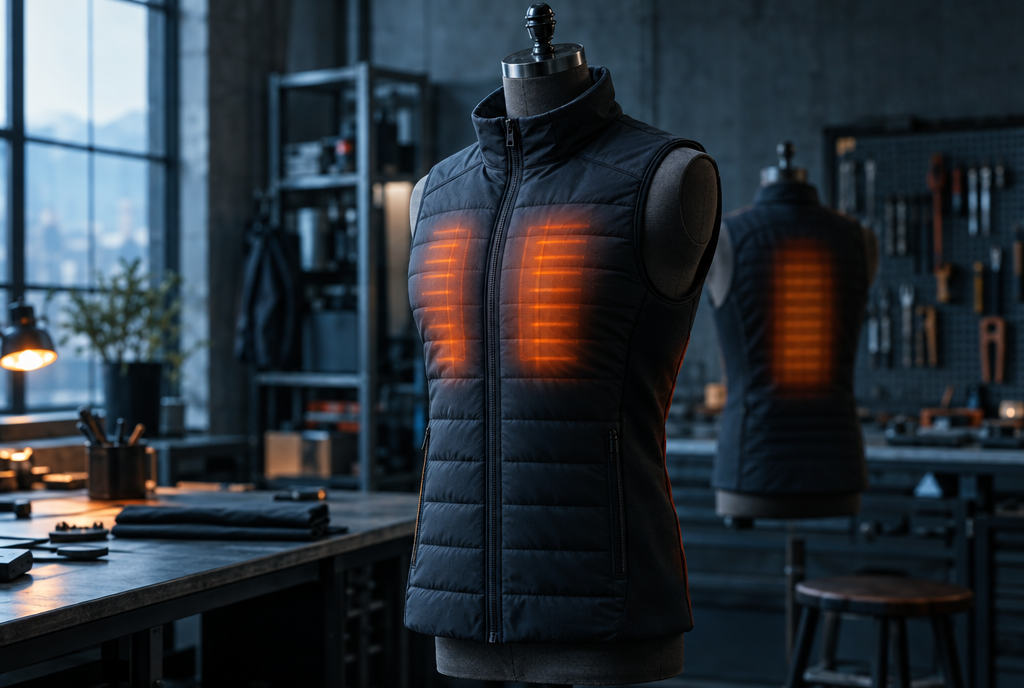
A heated vest works like a small, flexible electric blanket. A rechargeable battery pushes current through thin heating elements, usually carbon fiber or metal alloy wire, sewn into panels at the chest, back or collar. The elements resist the current and turn electrical energy into heat. A controller sets the heat level, and the vest's insulation holds that heat near your core.
How does a heated vest turn electricity into heat?
The principle is Joule heating, also called resistive heating. When current flows through a material that resists it, some electrical energy becomes heat. The power produced depends on voltage and the resistance of the element, which designers choose so a panel warms gently rather than glowing like a toaster wire.
Research reviews of wearable heaters describe the same basic design across products: a thin, flexible conductor laminated or stitched into fabric, a power source and a way to control output. The differences between brands lie mostly in the element material, where panels sit and how power is managed.
What heating elements are used: carbon fiber, wire or film?
Most heated clothing uses fine wires made of carbon fiber or a metal composite such as nickel-chromium. Carbon fiber strands are flexible and spread heat across a patch of fabric. Metal alloy wire is thin and efficient but must be routed carefully so repeated bending does not fatigue it.
Newer designs use printed or laminated films, including carbon-loaded polymer inks. Some of these films are self-regulating: their resistance rises as they warm, which limits their own temperature. That approach, called PTC heating, has its own trade-offs.
| Element type | How it heats | Strengths | Watch-outs |
|---|---|---|---|
| Carbon fiber strands | Resistive heating through conductive fibers | Flexible, spreads heat over an area | Needs protected connections |
| Metal alloy wire | Resistive heating through thin wire | Efficient, compact | Can fatigue with repeated flexing |
| Printed or laminated film | Resistive heating through a conductive layer | Thin, can be self-regulating (PTC) | Fixed temperature range in PTC designs |
What voltage do heated vests use?
Three power systems are common. Many consumer vests run from 5-volt USB power banks, which can also charge a phone. Systems built around 7.4-volt lithium batteries are described as the most common type of heated clothing battery system. Motorcycle and snowmobile gear often runs from the vehicle's 12-volt system, which can deliver more power.
Voltage alone does not make a vest warmer. Output depends on how the element is matched to the supply. A well-designed 5-volt vest and a 7.4-volt vest can both feel comfortable, but higher-voltage systems generally have more headroom for larger panels and higher settings.
How long do heated vests work on one charge?
Most 7.4-volt garments run for roughly 2 to 8 hours depending on heat setting and conditions. The high setting may last only a couple of hours, while the low setting can last most of a workday.
Battery energy is best compared in watt-hours, which is volts multiplied by amp-hours. A 7.4-volt battery rated at 5 amp-hours stores about 37 watt-hours. Divide that by the power the vest draws on a given setting and you have a rough runtime. Cold air, wind and a thin outer layer all shorten it, because the vest has to replace more lost heat.
Where are the heating zones, and why the core?
Vests typically place panels over the upper back, the chest or abdomen, and sometimes the collar. Warming the trunk supports overall comfort, and when your core feels warm your body is less inclined to cut blood flow to the hands and feet.
Zones only warm what they touch. A snug fit keeps panels close to the body, and an insulated layer over the vest keeps the heat from escaping. A heated vest under a thin windbreaker in wind will struggle more than the same vest under an insulated jacket.
Moisture also matters. Sweat-soaked base layers pull heat away faster than the panels can replace it, so a breathable, wicking layer under the vest helps the heat reach you. Most heated vests can be washed only after the battery is removed and connectors are protected, following the maker's care label.
Controllers, safety and travel
Budget vests may offer only on and off, while better models provide several heat levels, usually set with a button that changes the controller's output. Good designs add protection against short circuits and overheating.
Batteries deserve respect. Use the manufacturer's charger, do not crush or puncture packs, and inspect cables for damage. For air travel, the FAA requires spare lithium-ion batteries to be carried in carry-on baggage only, and limits them to 100 watt-hours each without airline approval.
Heated clothing is a comfort tool. People with reduced sensation, such as some people with diabetes or neuropathy, may not notice when skin gets too warm. If you have circulation or sensation concerns, talk to a clinician before using heated gear.
Key takeaways
Heated vests use resistive (Joule) heating in carbon fiber, metal wire or film elements.
The 7.4-volt lithium battery is the most common system; 5-volt and 12-volt systems also exist.
Runtime of about 2 to 8 hours depends on setting, battery watt-hours and conditions.
Panels warm only what they touch, so fit and an insulated outer layer matter.
Carry spare lithium batteries in carry-on bags, within FAA limits.
Frequently asked questions
Do heated vests actually work?
Yes, they add real heat to the body through resistive elements. How warm you feel depends on panel placement, fit, heat setting and what you wear over the vest.
Is 7.4V better than 5V for a heated vest?
Not automatically. A 7.4-volt system can deliver more power for larger panels or higher settings, but a well-matched 5-volt vest can be comfortable for moderate cold. Compare heat settings and battery watt-hours.
Can you wear a heated vest under a jacket?
Yes, and that is usually the best way to wear one. The jacket traps the heat the panels produce, which extends battery life and improves comfort.
Can I bring a heated vest battery on a plane?
In the United States, spare lithium-ion batteries must go in carry-on baggage and are limited to 100 watt-hours each without airline approval. Check your airline's rules before you fly.
Why does my heated vest only feel warm in some spots?
Heating elements cover specific zones, usually the back and chest. Areas without panels rely on insulation alone, so a snug fit and a warm outer layer help spread comfort.
From HEATJAC
We design low-profile thermal garments: a heat-reflective vest and a thermal harness with pockets for warmers or cold packs.
Choosing gear? Heated vest vs heat-reflective vest · The thermal gear buying, safety and care guide
Related reading
Sources
Heated clothing, Wikipedia
Electrically Heated Flexible Heaters in Wearable Technology: A Review of Research Progress and Challenges, PubMed (National Library of Medicine)
Soft Self-Regulating Heating Elements for Thermoplastic Elastomer-Based Electronic Skin Applications, PMC (National Library of Medicine)
PackSafe: Lithium Batteries, Federal Aviation Administration
About HEATJAC. HEATJAC is a thermal architecture company founded by an anesthesiologist. We design patented garment systems that capture, conduct and broaden warmth across the body, and we publish this knowledge hub because the science of staying warm should be public. HEATJAC products are not medical devices and are not intended to diagnose, treat, cure or prevent any disease.