
Are heated vests safe? Pacemakers, pregnancy, elderly and more
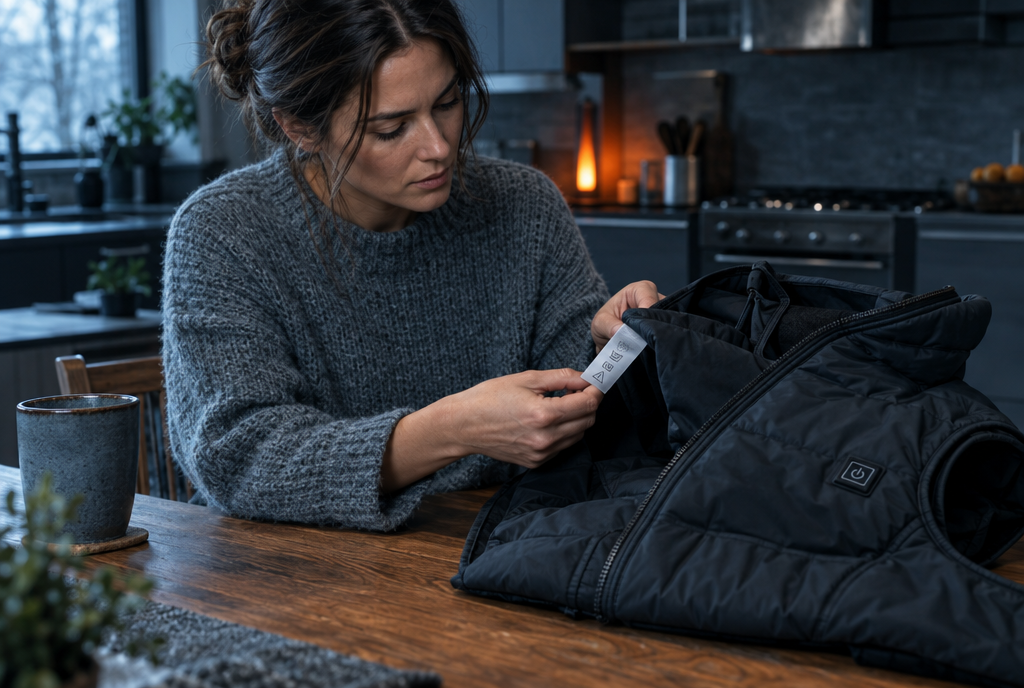
For most healthy adults, a well-made heated vest used as directed is a low-risk way to stay warm. The real hazards are skin burns from prolonged contact heat and fire from damaged or poorly made lithium batteries. People with reduced sensation, diabetes, implanted cardiac devices, pregnancy, young children and frail older adults need extra caution and a clinician's input.
What are the real risks of a heated vest?
A battery-heated vest does two things that deserve respect: it holds a warm surface against your skin for hours, and it carries a rechargeable lithium-ion battery a few inches from your body. Almost every documented problem traces back to one of those two facts.
The first risk is a contact burn. A review of burns from body heating devices places the lowest burn-causing temperature at about 44°C (111°F), where damage begins at the basal layer of the epidermis. Below that, skin tolerates warmth well. Above it, time matters: the same review reports that between 44°C and 51°C the damage roughly doubles for each 1°C rise.
The second risk is the battery. The US Consumer Product Safety Commission (CPSC) has issued recalls and warnings for heated apparel over burn and fire hazards. In one 2025 warning about heated insoles, CPSC reported 11 fires, explosions or other thermal incidents, including eight burn injuries, and noted the battery could ignite even when the product was off.
Contact burns from a warm panel held against skin for a long time
Burns where heat meets pressure, friction and moisture
Battery overheating, swelling or fire from damage, defects or improper charging
Overheating the whole body during hard exertion with the heat left on high
Who should be more careful with heated clothing?
The same warmth that feels mild to one person can injure another. An integrative review of burns from body heating devices found that older adults and people whose conditions reduce sensation, such as diabetes and peripheral vascular disease, were overrepresented, and that many burns happened while the person was asleep.
The common thread is feedback. If you cannot feel that a panel is too hot, or cannot remove the garment quickly, the normal safety loop of discomfort followed by adjustment is broken.
People with diabetes, neuropathy or any condition that dulls skin sensation
Frail older adults, and anyone with limited mobility or cognition
Infants and young children, who cannot reliably report or remove heat
People who are pregnant
People with implanted cardiac devices such as pacemakers or ICDs
Anyone who plans to sleep in heated clothing
Are heated vests safe for people with pacemakers or ICDs?
There is no published guidance written specifically about heated vests and pacemakers. The American Heart Association (AHA) says most household appliances, such as hair dryers and electric shavers, rarely cause problems. Its specific warnings concern magnets, headphones and phones, which it advises keeping at least 6 inches from the device, because magnets can suspend normal pacemaker or ICD function.
The FDA gives the same 6-inch (15 cm) distance for phones and smart watches with strong magnets and advises not carrying consumer electronics in a pocket over the implant. For a heated vest, the practical questions are therefore where the battery pocket sits, whether the garment uses magnetic closures or a magnetic controller, and whether you will carry a phone in a chest pocket.
Before wearing any heated garment, ask your cardiologist or electrophysiology clinic, and check the implant manufacturer's patient guidance. Bring the vest's specifications, including battery location and any magnetic parts.
Is it safe to wear a heated vest while pregnant?
The concern in pregnancy is raising core body temperature, not warming the skin. MotherToBaby, the teratology information service, notes a small increased chance of neural tube defects when fever or hyperthermia occurs before the sixth week of pregnancy, and recommends limiting hot tub and sauna use.
A heated vest on a low setting is designed to offset heat loss rather than drive core temperature up, but we are not aware of studies that measure heated apparel in pregnancy. Sensible precautions are to use the lowest effective setting, avoid heat directly over the abdomen for long periods, turn heat off during exercise, and ask your obstetric clinician first.
Are heated vests safe for diabetics and people with neuropathy?
The National Institute of Diabetes and Digestive and Kidney Diseases warns that people with diabetic nerve damage may burn their feet without knowing it, and advises against putting a hot water bottle or heating pad on the feet. The same logic applies to any heat source placed on skin with reduced sensation.
A vest heats the torso, where sensation is often better preserved than in the feet, but that is not guaranteed. Use low settings, keep a base layer between the panel and skin, check skin after use, and talk to your diabetes care team before starting.
Are heated vests safe for older adults and children?
For older adults, a heated vest can make it easier to stay comfortable without turning up the whole house, but the burn review above is a reminder that age and reduced sensation raise risk. A caregiver should check the setting, confirm the person can switch it off, and look at the skin under the panels.
For children, choose products designed and sized for children, keep settings low, and supervise use. Never put a heated garment on an infant or on anyone who is asleep.
How can you lower the risk?
These habits address both burn and battery risk, whatever brand you use.
Buy from sellers who state which recognized safety standards the battery and garment were tested to
Check the CPSC recall database before buying and periodically after
Start on low, and keep a thin layer between heating panels and skin
Turn heat down or off when you are active, sweating or indoors
Never sleep in heated clothing
Stop using any battery that is swollen, cracked, hot or smells unusual
Charge only with the supplied charger, on a hard surface, where you can see it
Key takeaways
For healthy adults, a quality heated vest used as directed carries low risk; burns and battery faults are the main hazards.
Skin injury starts at about 44°C, and time at temperature matters as much as the temperature itself.
Reduced sensation, sleep, pregnancy, young age and frailty all raise risk and call for clinician input.
With a pacemaker or ICD, keep magnets, phones and battery packs at least 6 inches from the implant and ask your cardiologist.
Talk to a clinician about any symptoms or medical condition before relying on heated clothing.
Frequently asked questions
Can a heated vest burn you?
Yes. Burns can occur when a warm panel stays against the skin for a long time, especially where pressure, friction or moisture are present, or when sensation is reduced. Start on low, keep a layer between panel and skin, and never sleep in heated clothing.
Can heated vest batteries explode?
Lithium-ion batteries can overheat and catch fire if damaged, defective or charged improperly, and CPSC has issued recalls and warnings for heated apparel batteries. Use the supplied charger, stop using swollen or damaged packs, and check the CPSC recall database.
Is it safe to wear a heated vest all day?
Many people wear heated vests through a work shift, cycling the heat as needed. The safer pattern is intermittent use on the lowest effective setting, with heat off during hard work or when you begin to sweat.
Do heated vests emit harmful radiation or EMF?
Heated vests run on low-voltage direct current from a battery and warm by resistance, like a heating pad. We are not aware of evidence that they pose a radiation risk, but people with implanted cardiac devices should still follow AHA and FDA distance guidance for magnets and electronics.
Should I ask my doctor before using a heated vest?
Yes, if you have a pacemaker or ICD, diabetes or neuropathy, a circulation disorder, a skin condition, or are pregnant. Talk to a clinician about any symptoms, such as numbness, color changes or pain in the cold.
From HEATJAC
We design low-profile thermal garments: a heat-reflective vest and a thermal harness with pockets for warmers or cold packs.
Choosing gear? Heated vest vs heat-reflective vest · What warmth costs per shift
Related reading
Sources
Burns Sustained From Body Heating Devices: An Integrative Review (Kornhaber et al., Wounds, 2020), Wounds / HMP Global
CPSC warns consumers to stop using certain heated insoles due to burn and fire hazard (2025), US Consumer Product Safety Commission
Devices That May Interfere With ICDs and Pacemakers, American Heart Association
Magnets in Cell Phones and Smart Watches May Affect Pacemakers and Other Implanted Medical Devices, US Food and Drug Administration
Diabetes and Foot Problems, National Institute of Diabetes and Digestive and Kidney Diseases (NIH)
Fever/Hyperthermia in Pregnancy fact sheet, MotherToBaby (Organization of Teratology Information Specialists)
About HEATJAC. HEATJAC is a thermal architecture company founded by an anesthesiologist. We design patented garment systems that capture, conduct and broaden warmth across the body, and we publish this knowledge hub because the science of staying warm should be public. HEATJAC products are not medical devices and are not intended to diagnose, treat, cure or prevent any disease.