
Heated clothing with diabetes or neuropathy: safety first
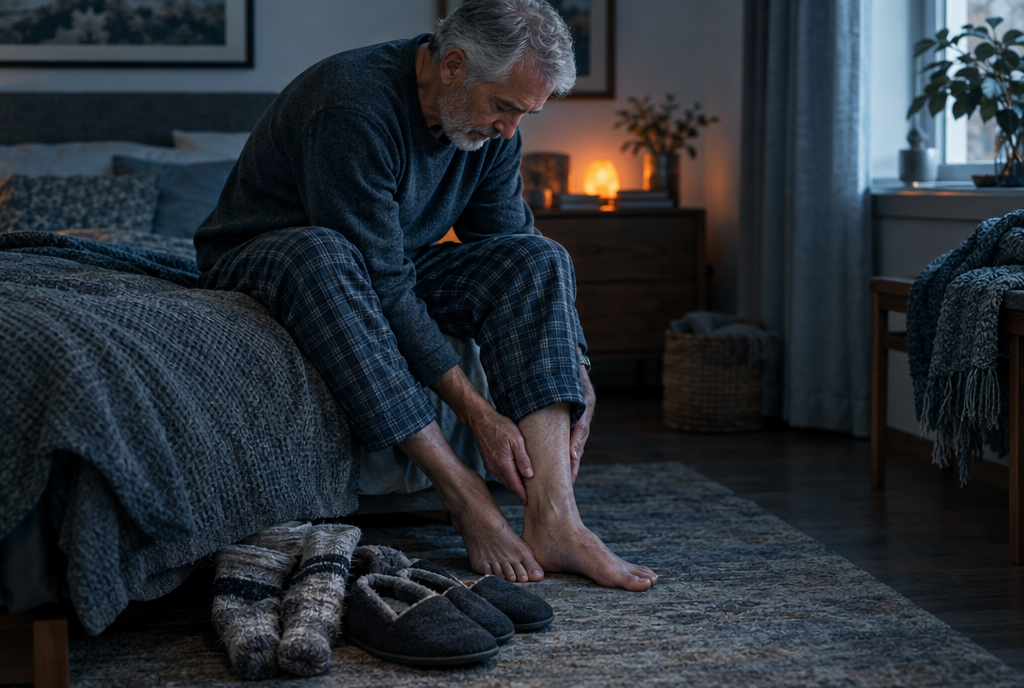
Heated clothing can be used by many people with diabetes, but neuropathy changes the risk. When nerves cannot sense heat properly, a heated panel, sock or hand warmer can burn skin without warning. Talk to your clinician first, avoid direct heat on numb areas, especially the feet, use the lowest effective setting, keep fabric between heat and skin, and check your skin every time.
Why does neuropathy raise burn risk?
Skin normally warns you when heat becomes too much. Peripheral neuropathy weakens that warning. NIDDK explains that people with diabetic peripheral neuropathy may have problems sensing pain or temperature in the feet, legs, hands and arms. A heat source that would prompt anyone else to move away may go unnoticed until skin is red or blistered.
This is common. NIDDK reports that up to one-half of people with diabetes have peripheral neuropathy, and the CDC says about half of all people with diabetes have some kind of nerve damage. Cancer drugs such as oxaliplatin can also cause numbness and tingling in the hands and feet.
How hot do heated clothing and hand warmers get?
It varies widely. One major manufacturer of air-activated warmers states that its products produce heat from about 100 to 180 degrees Fahrenheit, depending on the product, and notes that people with sensitive skin, especially young children, diabetics and older adults, may have reduced sensation to heat.
Battery-heated garments usually have several settings, and the highest can feel very warm against skin. Heat builds up where a warmer is pressed tight, such as under a boot strap, a waistband or a sleeping body. For comparison, NIDDK recommends washing feet in warm water of 90 to 95 degrees Fahrenheit and testing it with a thermometer or your elbow.
Are heated vests safe for diabetics?
A vest warms the torso, where diabetic neuropathy is less often the main concern than in the feet and legs. For many people that makes torso warmth a more manageable choice than heat applied directly to numb feet. It is still a heat source, so the same precautions apply, and anyone with reduced sensation on the chest, back or abdomen should treat it with extra care.
Heated socks, heated insoles and toe warmers need the most caution. NIDDK advises people with diabetes not to put a hot water bottle or heating pad on their feet and to keep feet away from heaters and open fires. Ask your clinician or podiatrist before using any heated footwear.
How can you use heated clothing more safely?
These steps apply to battery-heated garments, air-activated warmers and any heated insert.
Talk to your clinician before you start, and ask specifically about your feet and hands.
Keep at least one layer of fabric between any heat source and your skin; never place a warmer directly on bare skin.
Start on the lowest setting and increase only if needed, rather than starting high to warm up fast.
Set a timer to check your skin, particularly the first few times you use a new product.
Look at the skin under heated areas afterward, using a mirror or a helper for hard-to-see spots.
Never sleep in heated clothing or with warmers in socks, gloves or bedding.
Avoid tight straps or boots that press a warmer into the skin.
Stop using any garment with damaged wiring, a swollen battery or hot spots, and follow the maker's instructions.
What should caregivers watch for?
If you help an older relative or someone with advanced neuropathy stay warm, you may be their early warning system. Check heated settings yourself, look at skin after each use, and remove warmers before naps or bedtime. Watch for redness that lingers, blisters or unexplained marks, and bring them to the attention of a clinician.
What are safer ways to keep numb feet warm?
For feet with reduced sensation, insulation is usually safer than added heat. NIDDK suggests wearing socks in bed if your feet get cold and wearing lined, waterproof boots in winter. Warm the whole body with layers and a warm torso, so the feet are not doing all the work.
The CDC advises always wearing shoes and socks or slippers, even indoors, and checking your feet every day for cuts, redness, swelling, sores and blisters. Those daily checks are the best safeguard whenever you use any form of heat.
What should you do if you notice a burn or blister?
Remove the heat source straight away and do not keep using the garment until you understand what happened. For people with diabetes, even a small burn or blister on the foot deserves attention.
NIDDK advises calling your health care provider right away if a cut, blister or bruise on your foot does not start to heal after a few days, or if skin becomes red, warm or painful, which can signal infection. Talk to your clinician promptly about any burn on skin with reduced sensation.
Key takeaways
Up to half of people with diabetes have nerve damage that can hide the warning signs of a burn.
Some air-activated warmers can reach 100 to 180 degrees Fahrenheit, depending on the product.
Torso warmth is generally more manageable than direct heat on numb feet, but still needs care.
Use low settings, a fabric barrier, timed skin checks and no heat while sleeping.
Check feet daily and contact a clinician about any burn, blister or slow-healing wound.
Frequently asked questions
Can diabetics use hand warmers?
Many can, with care. Keep warmers inside a glove or pocket rather than against bare skin, and check your hands often. A major warmer manufacturer notes that diabetics may have reduced sensation to heat.
Are heated socks safe for neuropathy?
They carry more risk than other heated clothing because the feet are where neuropathy is most common. NIDDK advises against heating pads and hot water bottles on the feet. Ask your clinician or podiatrist before using heated socks or insoles.
Can I use an electric blanket with diabetes?
If you use one, warm the bed first and switch it off before getting in, especially if your feet are numb. Socks in bed are a lower-risk way to keep feet warm, as NIDDK suggests.
What temperature is safe for diabetic feet?
NIDDK gives 90 to 95 degrees Fahrenheit as a safe range for washing water and suggests testing with a thermometer or your elbow. Heat sources in contact with the skin for long periods need even more caution.
Is chemotherapy neuropathy a reason to avoid heated clothing?
Not always, but it calls for the same precautions as diabetic neuropathy. Tell your cancer care team about numbness or cold sensitivity and ask what is safe for you.
From HEATJAC
We design low-profile thermal garments: a heat-reflective vest and a thermal harness with pockets for warmers or cold packs. If you have reduced sensation or a health condition, check with your clinician before adding heat.
Choosing gear? Warmth that fits daily life with Raynaud's · Before you buy: a checklist for any warming garment
Related reading
Sources
Peripheral Neuropathy, NIDDK
Diabetes and Foot Problems, NIDDK
Diabetes and Your Feet, Centers for Disease Control and Prevention (CDC)
HotHands FAQs, Kobayashi Americas (HotHands manufacturer)
Oxaliplatin, Macmillan Cancer Support
About HEATJAC. HEATJAC is a thermal architecture company founded by an anesthesiologist. We design patented garment systems that capture, conduct and broaden warmth across the body, and we publish this knowledge hub because the science of staying warm should be public. HEATJAC products are not medical devices and are not intended to diagnose, treat, cure or prevent any disease.