
Staying warm with a health condition or disability: start here
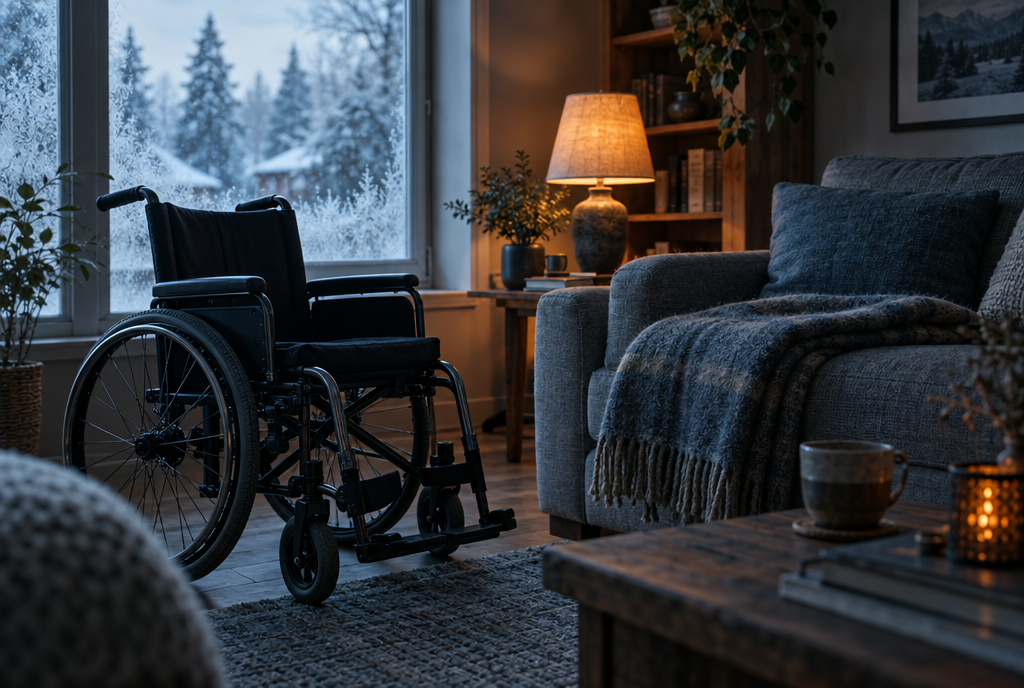
Many health conditions and disabilities change how the body makes heat, holds on to it or senses it. Nerve damage, poor circulation, numb skin, some medicines and moving less all play a part. The safest approach is similar across conditions: keep the home warm, hold in body heat with layers, keep direct heat off skin that cannot feel it, eat and drink regularly, and know the signs of hypothermia.
Why do some health conditions make you feel cold?
Body temperature is run by the hypothalamus in the brain. The American Academy of Physical Medicine and Rehabilitation (AAPM&R) explains that it keeps heat in by narrowing blood vessels in the skin and makes more heat by shivering. When any link in that chain is disrupted, cold can hit harder, be noticed later or not be felt at all.
Most conditions work through one or more of five routes. Knowing which ones apply to you, or to the person you care for, tells you where to focus.
Neurological control. AAPM&R lists spinal cord injury (particularly above T6), traumatic brain injury, stroke and brainstem lesions among causes of impaired temperature regulation. A 2018 review in the journal Temperature describes temperature disorders as major contributors to the non-motor symptoms of Parkinson's disease, and covers thermoregulatory problems in multiple sclerosis, Alzheimer's disease and peripheral neuropathy.
Circulation. MedlinePlus, from the National Library of Medicine, notes that people who are chronically ill, especially those with heart or blood flow problems, are more likely to develop hypothermia.
Reduced sensation. A review of burns from body heating devices in the journal Wounds names diabetes, peripheral vascular disease, peripheral neuropathy, paraplegia and spina bifida among conditions that reduce sensation. Skin that cannot feel well may not signal either cold or dangerous heat.
Medicines and treatment. AAPM&R lists opioids, anesthetic agents, anticholinergic medicines and blood pressure medicines as drugs that affect temperature control, and the National Institutes of Health (NIH) notes that some medicines, including over-the-counter cold remedies, can change how the body responds to cold.
Moving and eating less. The NIH points out that being less active means the body makes less heat, and MedlinePlus lists malnutrition and exhaustion among hypothermia risk factors.
How much does feeling cold matter?
Feeling chilly is uncomfortable, but the bigger concern is that some people cannot rely on the usual warning signs. After a high spinal cord injury, AAPM&R describes a loss of connection between the hypothalamus and the sensory and motor pathways, so body temperature can drift toward the temperature of the room. AAPM&R defines hypothermia as a core temperature below 35 degrees Celsius (95 degrees Fahrenheit).
Age adds to the risk. The NIH says the body's ability to endure long periods of cold falls with age and that even mildly cool homes of 60 to 65 degrees Fahrenheit can trigger hypothermia in older people. Many people with long-term conditions are also older, so the two risks often stack.
Do not stop or change a medicine because you feel cold. Talk to your clinician, who can check whether your condition, your medicines or something else, such as poor nutrition, is behind it.
What are the safest ways to stay warm with a health condition?
The order matters. Warm the space first, then hold in the heat the body already makes, and only then add heat, carefully. These principles apply to almost every guide in this cluster.
Warm the rooms you use. The NIH suggests setting the thermostat to at least 68 to 70 degrees Fahrenheit for older adults. For people with impaired temperature regulation, AAPM&R lists temperature-controlled environments of 20 to 25 degrees Celsius (68 to 77 degrees Fahrenheit).
Layer to keep heat in. The CDC recommends several layers of loose-fitting clothing plus a hat, a scarf or knit mask, mittens or gloves, and water-resistant coat and boots outdoors. MedlinePlus advises a hat that covers the ears.
Stay dry. Both the CDC and MedlinePlus advise replacing wet clothing, which pulls heat from the body. Change damp socks, gloves and bedding promptly.
Eat and drink regularly. MedlinePlus advises staying hydrated and well nourished, and the CDC notes that warm drinks help raise body temperature. Both advise against alcohol.
Move when you can. Even small movements add heat, since the NIH links lower activity with less body heat. A physical or occupational therapist can suggest safe options.
Add heat last. If you use a heating device, follow the burn safety steps below.
Are heating pads, hot water bottles and heated clothing safe on numb skin?
They carry real burn risk for anyone who cannot feel heat properly. The Wounds review found that hot water bottles, wheat bags and heating pads caused most device burns, with electric blankets also involved. The burns usually covered a small area but were often partial to full thickness, and many happened through prolonged contact during sleep.
Heat does not need to feel extreme to injure. The review cites evidence that a full-thickness burn can occur in as little as 30 seconds against a hot water bottle with a surface temperature of 55 degrees Celsius, and that patients over 60 were more than twice as likely to be burned by therapeutic heating devices. People with numbness after surgery were also among those injured.
Air-activated warmers and heated garments deserve the same caution on skin a person cannot feel. Safer practice draws on the review's recommendations and the principle of keeping heat in before adding it.
Keep a cloth or clothing layer between any heat source and the skin; never place one directly on bare or numb skin.
Use timers and automatic shutoff so no one falls asleep with a device switched on.
Prewarm a bed, then remove the hot water bottle or switch off the blanket before the person gets in.
Replace hot water bottles and heat packs regularly; the review suggests every 12 months.
Look at the skin afterward for redness or blistering, using a mirror or a caregiver for areas you cannot see.
Never use direct heat to rewarm someone with suspected hypothermia; MedlinePlus lists hot water, heating pads and heat lamps among things to avoid.
Which guide fits your condition?
Each guide below goes deeper on one condition or situation. The table maps the main temperature issue to one key tip, all built on the principles above.
| Condition or situation | Main temperature issue | One key tip |
|---|---|---|
| Spinal cord injury | Temperature drifts with the room below the injury | Control the room and layers; no heating pads on skin you cannot feel |
| Wheelchair users | Lap, legs and feet exposed for long periods | Cover the lap with a poncho or zippered blanket; keep gloves that grip |
| Prosthesis | Cold residual limb, changing fit and sweat in the liner | Carry spare socks and check the limb morning and night |
| Chemotherapy | Cold sensitivity, especially with oxaliplatin | Room temperature drinks and gloves; call your team about any fever |
| GLP-1 medications | Feeling colder while eating less and losing weight | Layer up and ask your clinician; never change the dose yourself |
| Multiple sclerosis | Stiffness, spasms and fatigue worse in the cold | Stay steadily warm with thin layers you can shed |
| Parkinson's | Cold hands and feet, sweating and temperature swings | Wicking base layer and easy-on clothing |
| POTS and dysautonomia | Cold hands and feet with hot and cold swings | Warm hands and feet, not the whole body; skip hot baths |
| Arthritis and fibromyalgia | Pain that seems worse in cold, damp weather | Keep joints covered and keep moving indoors |
| Stroke | A cold arm or leg that may not sense heat | Layer the affected limb; test water with the unaffected hand |
| Dementia | May not notice, say or dress for cold; winter wandering | Caregiver checks warmth and supervises heating devices |
| Bedbound | Little movement and chills during care | Light layers, loose covers over the feet, uncover one area at a time |
| After surgery | Cold and shivering after anesthesia; numb skin after nerve blocks | Tell staff when cold; keep heat off numb skin at home |
What does each condition guide cover?
Spinal cord injury and mobility. The spinal cord injury guide explains poikilothermia and autonomic dysreflexia. The wheelchair guide covers clothing, gloves and power chair batteries, and the prosthesis guide covers the residual limb, socket fit, liners and skin checks.
Neurological conditions. The MS guide separates temporary cold effects from a relapse. The Parkinson's guide covers cold limbs and sweating changes, and the stroke guide explains why an affected limb can be cold yet not sense heat.
Circulation and pain. The POTS guide covers blood pooling, purple feet on standing and how to warm up without triggering symptoms. The arthritis and fibromyalgia guide weighs the evidence on weather and pain.
Treatments and medicines. The chemotherapy guide focuses on oxaliplatin and fever. The GLP-1 guide looks at what the prescribing information says about feeling cold, and the surgery guide explains shivering after anesthesia.
Caregiving. The dementia guide covers home temperature, dressing and winter wandering, and the bedbound guide covers bedding, repositioning and safe prewarming. For diabetes and neuropathy, see our separate guide to heated clothing safety, and for Raynaud's and cold hands, the cold sensitivity guide.
When to call a clinician or emergency services
Hypothermia can develop indoors as well as outside, and shivering is not a reliable warning for everyone. MedlinePlus notes that shivering may stop as temperature falls very low. Talk to a clinician about any cold symptoms that are new, persistent or worrying, and call emergency services for the signs below.
Warning signs of hypothermia (CDC): shivering, exhaustion, confusion, fumbling hands, memory loss, slurred speech or drowsiness. The NIH adds stiffness in the arms and legs, weak pulse and slow reactions.
Call 911: a body temperature below 95 degrees Fahrenheit (CDC). The NIH advises calling 911 for an older adult at 96 degrees Fahrenheit or lower.
While waiting: move the person somewhere warm, remove wet clothing and warm the chest, neck, head and groin with blankets (CDC). Offer warm, sweet, nonalcoholic drinks only if they are alert (MedlinePlus).
Do not: apply hot water, heating pads or heat lamps, give alcohol, or give drinks to someone who is not fully conscious (MedlinePlus, CDC).
Contact a clinician: any blister, burn or red mark that does not fade after using a heat source, especially on skin with reduced sensation.
Key takeaways
Nerve damage, poor circulation, reduced sensation, some medicines and moving less all change how the body makes, keeps or senses heat.
Warm the room first, hold in body heat with loose layers second, and add heat last.
Heating pads, hot water bottles, warmers and heated clothing can burn skin that cannot feel them; keep a layer between, use timers and check skin.
Regular meals, fluids and movement support warmth; alcohol does not.
Confusion, slurred speech, drowsiness or a temperature below 95 degrees Fahrenheit means call 911.
Frequently asked questions
Why do I feel cold all the time with a chronic illness?
Many conditions affect the nerves that control temperature, the circulation that carries heat, or how much heat the body makes. Some medicines, eating less and moving less add to it. Talk to your clinician, who can check for specific causes.
What room temperature is best for someone who gets cold easily?
The NIH suggests at least 68 to 70 degrees Fahrenheit for older adults and warns that homes of 60 to 65 degrees can trigger hypothermia. For people with impaired temperature regulation, AAPM&R lists 20 to 25 degrees Celsius (68 to 77 degrees Fahrenheit). Heat the rooms you use most.
Can you get burned by a heating pad without feeling it?
Yes. People with reduced sensation, older adults and people who fall asleep on a device are most at risk, and burns from heating pads and hot water bottles are often deeper than they look. Keep a layer between device and skin, use a timer and check the skin afterward.
Do medications affect how you handle cold?
Some can. AAPM&R lists opioids, anesthetic agents, anticholinergic medicines and blood pressure medicines among drugs that affect temperature control, and the NIH mentions some over-the-counter cold remedies. Never stop or change a medicine on your own; ask your clinician or pharmacist.
What are the first signs of hypothermia in someone who cannot tell you they are cold?
Watch for confusion, drowsiness, slurred speech, fumbling hands, stiffness or unusually slow reactions, not just shivering. A sudden change from the person's usual state is an important clue. If you have a thermometer and the reading is below 95 degrees Fahrenheit, call 911.
From HEATJAC
We design low-profile thermal garments: a heat-reflective vest and a thermal harness with pockets for warmers or cold packs. If you have reduced sensation or a health condition, check with your clinician before adding heat.
Choosing gear? Before you buy: a checklist for any warming garment · Are heated vests safe?
Related reading
Sources
Preventing Hypothermia, Centers for Disease Control and Prevention
Hypothermia: A Cold Weather Hazard for Seniors, National Institutes of Health (National Institute on Aging)
Hypothermia, MedlinePlus, National Library of Medicine
Impaired Thermoregulation, American Academy of Physical Medicine and Rehabilitation, PM&R KnowledgeNow
Burns Sustained From Body Heating Devices: An Integrative Review, Wounds
Thermoregulation: From basic neuroscience to clinical neurology, part 2, Temperature (PubMed Central)
About HEATJAC. HEATJAC is a thermal architecture company founded by an anesthesiologist. We design patented garment systems that capture, conduct and broaden warmth across the body, and we publish this knowledge hub because the science of staying warm should be public. HEATJAC products are not medical devices and are not intended to diagnose, treat, cure or prevent any disease.