
Keeping a person with dementia warm and safe in cold weather
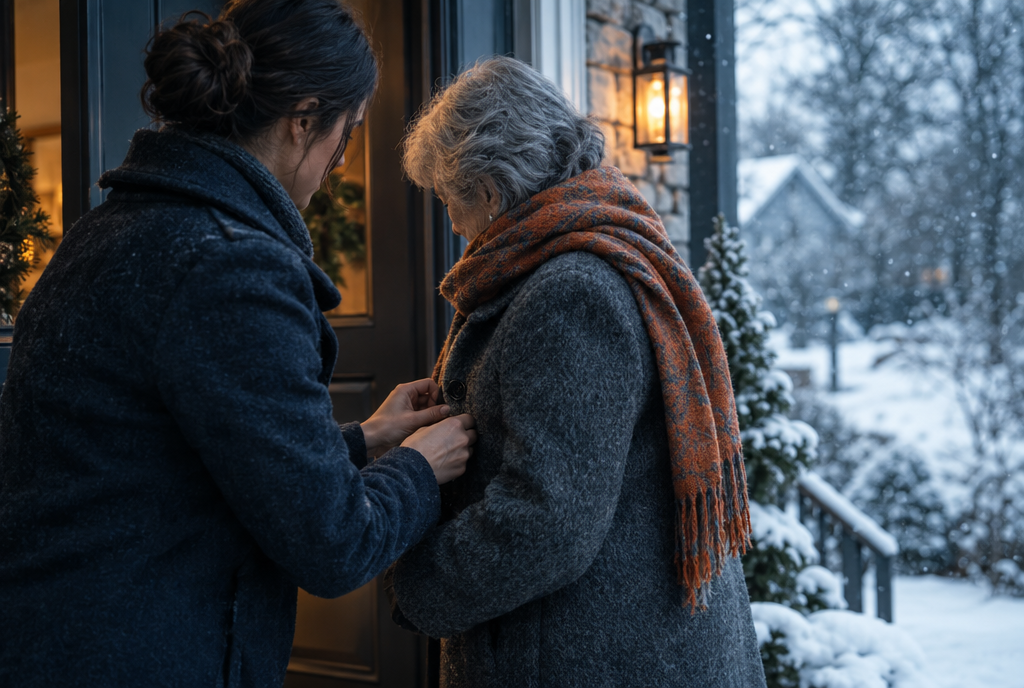
A person with dementia may not notice or say they are cold, may forget to dress for the weather, and may wander outdoors. Keep their main rooms at 64 to 70°F or warmer, dress them in thin layers, check warmth at the back of the neck, supervise any heating device closely, plan for winter wandering and learn the signs of hypothermia.
Why are people with dementia at higher risk in cold weather?
Dementia UK explains that a person with dementia may not be able to explain how they are feeling, may forget to put on warm clothing or turn on the heating, and that cold can increase confusion. The Alzheimer's Association adds that people living with memory loss may not think to put on gloves or a hat and may not be able to communicate that they are cold.
The Alzheimer's Association also notes that it can be hard for a person with dementia to tell hot from cold. That single change affects everything on this page: they may underdress, sit in a chilly room without complaint, or hold a hot object longer than is safe.
How warm should the home be for someone with dementia?
Dementia UK suggests keeping main living areas at 64 to 70°F (18 to 21°C) at least, other rooms at about 61°F (16°C), and heating the bedroom just before bedtime. The National Institute on Aging advises older adults to set the thermostat to at least 68 to 70°F.
Focus on the rooms they actually use during the day. The Alzheimer's Society suggests draft-proofing and thermal curtains, and keeping a blanket or robe within easy reach, along with warm socks that have grippy soles, as the Alzheimer's Association recommends.
| Area | Suggested temperature | Source |
|---|---|---|
| Main living areas | 64 to 70°F (18 to 21°C) or warmer | Dementia UK |
| Other rooms | About 61°F (16°C) | Dementia UK |
| Thermostat for older adults | At least 68 to 70°F | National Institute on Aging |
| Bedroom | Warm it just before bedtime | Dementia UK |
How do you help a person with dementia dress for the cold?
Thin layers of wool, cotton or fleece hold heat better than one thick garment and are easier to adjust. Dementia UK notes that a lot of heat is lost through the head and neck, so a hat and scarf can help even indoors. Outdoors, the Alzheimer's Association advises dry, loose-fitting layers with exposed skin covered.
If the person resists changing clothes, Dementia UK suggests buying several sets of the same outfit so warm clothing stays clean without a daily struggle. Lay clothes out in the order they go on, and check before every outing that hat, gloves and non-skid boots are in place.
How can you tell if a person with dementia is too cold?
Do not rely on their answer or on cold hands and feet. Dementia UK suggests gently placing your hand on the back of their neck, since hands and feet can be cold while core temperature is fine.
Watch for quieter signs too: more confusion than usual, sleepiness, or pulling blankets around themselves. Keep them moving; the Alzheimer's Society suggests some movement at least every hour, even arm movements or wiggling toes if walking is hard. Regular meals, snacks and warm drinks supply the energy the body uses to stay warm.
Are hot water bottles and electric blankets safe with dementia?
Both are commonly suggested for warming the bed, but the Alzheimer's Association advises caregivers to closely monitor any electric blanket, heater or heating pad to prevent burns. A person who cannot judge heat, or who cannot move away from it, may be burned without noticing.
Safer practice is to warm the bed before they get in, then remove the hot water bottle or switch off the blanket. Never place a heat source directly on skin, use devices with automatic shutoff and a timer, and check skin afterward. Retaining body heat with layers and bedding is safer than adding heat. Make sure smoke and carbon monoxide detectors are working.
How do you prevent wandering in winter?
The Alzheimer's Association reports that 6 in 10 people living with dementia will wander at least once, and it warns that the risks are magnified in cold weather, when a short time outdoors in house clothes can become dangerous.
Keep coats, keys and boots out of sight near exits, since they can prompt leaving, and keep the person dressed warmly indoors in case they slip out.
Use door alarms, deadbolts placed out of the usual line of sight, and night lights.
Plan engaging activity for the times of day when restlessness usually peaks.
If the person goes missing, search the immediate area at once; many are found within 1.5 miles. If you have not found them within 15 minutes, call 911 and say they have dementia.
When to call a clinician or emergency services
Talk to their clinician about any new confusion, changes in eating or drinking, or medicines that may affect how they handle cold. Act fast on these warning signs.
Signs of hypothermia: cold skin, shivering (which may stop as it worsens), confusion, slurred speech, sleepiness, shallow breathing, stiffness or slow reactions. Call 911 while gently warming them.
A thermometer reading of 96°F or lower: call 911.
The person is missing in cold weather and not found within 15 minutes: call 911.
A burn, blister or red mark from a heating device: contact a clinician.
Key takeaways
A person with dementia may not feel, notice or report cold, so the caregiver has to check.
Keep main rooms at 64 to 70°F or warmer and use thin, easy layers, including a hat indoors if needed.
Check warmth at the back of the neck, not the hands.
Supervise every heating device closely and prefer warming the bed ahead of time.
Prepare for winter wandering and call 911 if a missing person is not found within 15 minutes.
Frequently asked questions
Why does my mother with dementia always say she is cold?
Some people with dementia cannot describe what they feel accurately, and cold itself can add to confusion. Check the room temperature and her neck, add a thin layer or blanket, and offer warm drinks and food. Talk to her clinician if it is new or constant, since other conditions and medicines can play a part.
Why does a person with dementia refuse to wear a coat?
They may not recognize that it is cold, may not remember the coat, or may dislike the feel of certain clothing. Offer one simple choice, keep a familiar coat ready for outings, and consider several identical sets of warm clothing so a favorite is always available.
Can someone with dementia get hypothermia indoors?
Yes. Cold rooms, thin clothing and not noticing the cold can all lower body temperature over time. Keep occupied rooms warm, check them regularly and learn the warning signs.
Is an electric blanket safe for someone with dementia?
It can be, with close supervision. The Alzheimer's Association advises monitoring electric blankets, heaters and heating pads to prevent burns. Warming the bed ahead of time and switching the blanket off before sleep is a safer routine.
What should I do if my loved one with dementia wanders in the cold?
Start searching immediately, beginning with the nearby area. If you have not found them within 15 minutes, call 911 and tell them the person has dementia. Once found, bring them somewhere warm and watch for signs of hypothermia.
From HEATJAC
We design low-profile thermal garments: a heat-reflective vest and a thermal harness with pockets for warmers or cold packs. If you have reduced sensation or a health condition, check with your clinician before adding heat.
Choosing gear? Before you buy: a checklist for any warming garment · Are heated vests safe?
Related reading
Sources
Looking after a person with dementia in cold weather, Dementia UK
7 ways to support a person with dementia in cold weather, Alzheimer's Society
Wandering, Alzheimer's Association
Cold temperatures pose Alzheimer's safety challenges, Alzheimer's Association
Alzheimer's and Dementia Home Safety Tips, Alzheimer's Association
Hypothermia: A Cold Weather Hazard for Seniors, National Institutes of Health, National Institute on Aging
About HEATJAC. HEATJAC is a thermal architecture company founded by an anesthesiologist. We design patented garment systems that capture, conduct and broaden warmth across the body, and we publish this knowledge hub because the science of staying warm should be public. HEATJAC products are not medical devices and are not intended to diagnose, treat, cure or prevent any disease.