
Keeping a bedbound person warm
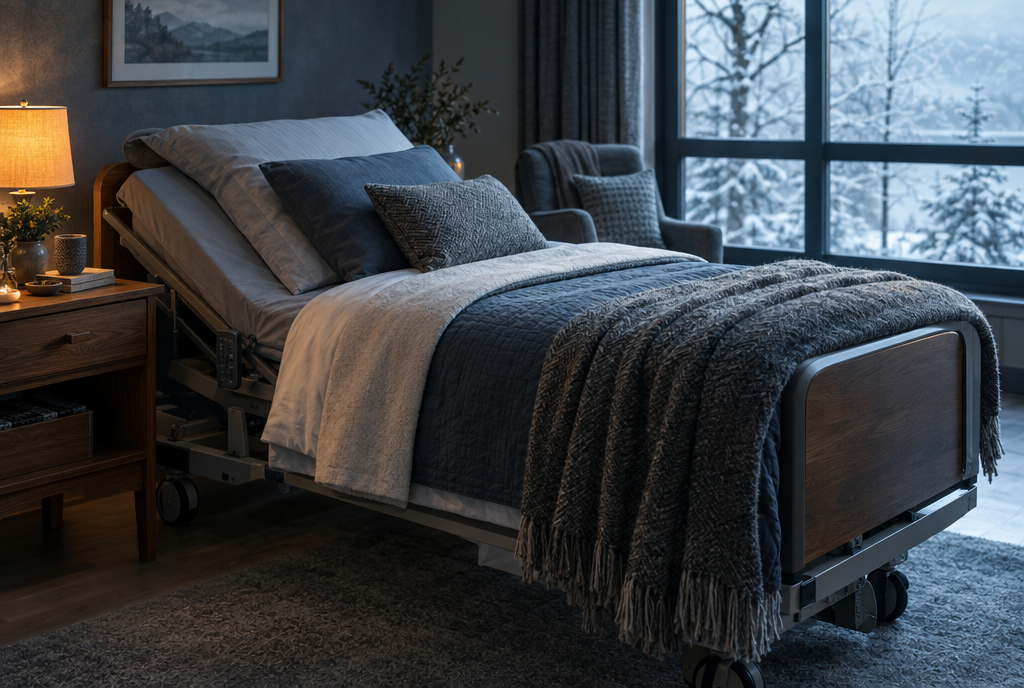
To keep a bedridden person warm, hold in their own body heat rather than adding hot devices. Keep the room at least 68 to 70°F, use several light layers of breathable bedding, cover the head, neck and feet, keep skin and sheets dry, and uncover only one area at a time when repositioning. Use heating devices only to prewarm the bed, never against skin.
Why does a bedridden person feel cold?
Moving muscles make heat, so a person who lies still for most of the day produces less of it. Many bedbound adults are also older, underweight or unwell, and the National Institute on Aging notes that illnesses such as diabetes and some medicines, including over-the-counter cold remedies, raise the risk of hypothermia.
Care routines add their own chills. Washing, changing and turning expose skin, and damp sheets from sweat or incontinence pull heat away quickly. The goal is steady, even warmth that does not come at the cost of skin damage. For general advice on warming an older adult at home, see our guide to keeping an elderly person warm; this page focuses on the bed.
What is the best bedding for a bedridden person?
Several light layers trap more warm air than one heavy quilt and let you adjust quickly. Heavy or tightly tucked covers can press on the toes and heels, which are common sites for pressure injury, so keep covers loose over the feet.
Keep the room itself warm. The National Institute on Aging suggests setting the thermostat to at least 68 to 70°F for older adults, and a warm room means less need for heat sources in the bed.
| Layer or item | What it does | Pressure and skin note |
|---|---|---|
| Fitted sheet over a pressure-relieving mattress | Base layer against the body | Keep it smooth and dry; use the mattress or cushions the care team recommends |
| Soft, breathable top sheet | Holds a thin layer of warm air | Change promptly if damp |
| Two or three light blankets | Adjustable insulation | Loose over the feet so toes and heels are not pressed |
| Soft hat, socks and a light shawl | Covers head, neck and feet | Check that socks and cuffs are not tight or leaving marks |
| Extra blanket at the bedside | Quick warmth during care | Use to cover areas you are not washing or turning |
How do you keep someone warm during washing and repositioning?
Repositioning is essential. Mayo Clinic advises changing position about every two hours, and the NHS recommends changing position regularly and checking skin every day. Each turn is also a moment when the person can get cold, so warm the room first and gather everything before you start.
Uncover one area at a time, wash and dry it fully, then cover it before moving on. Pat skin dry, especially in folds, because moisture both chills skin and makes it more fragile.
Step 1: Warm the room and close drafts before care begins.
Step 2: Keep a spare blanket over the parts of the body you are not working on.
Step 3: Wash, dry and cover each area in turn.
Step 4: Replace damp sheets or pads straight away; Mayo Clinic advises keeping skin clean and dry and using moisture barrier creams where incontinence is an issue.
Step 5: Check heels, elbows, hips and the tailbone for pressure changes, then settle the covers loosely.
Are heating pads, hot water bottles and electric blankets safe in bed?
Use extreme care. A review of burns from body heating devices in the journal Wounds found that hot water bottles, heat bags, heating pads and electric blankets caused burns that were often partial to full thickness despite covering a small area, and that many happened through prolonged contact during sleep. Older adults and people with reduced sensation were among those most at risk.
A bedbound person may not feel heat building up and may not be able to move away from it. The NHS lists problems feeling sensation among the risks for pressure ulcers, and the same loss of feeling hides a developing burn.
Prewarm the bed, then remove the hot water bottle or switch off the electric blanket before the person gets in or goes to sleep.
Never place a heat source directly on skin or under a bony area such as the heels, hips or tailbone.
Never let the person lie on a heating pad, and use timers and automatic shutoff on any electric device.
Check the skin under and near any warmed area for redness or blistering.
Prefer holding in body heat with bedding and clothing over adding heat.
How can you tell if a bedbound person is too cold or too warm?
Hands and feet can feel cool even when the body is warm enough, so feel the chest or the back of the neck. Look for shivering, pale or cold skin, new drowsiness or confusion. Overheating matters too: sweating dampens bedding and skin, which adds to pressure injury risk, so take off a layer if the person is clammy or flushed.
Talk to their clinician or care team about how warm the person should be kept, especially if they have a condition that affects sensation or temperature control.
When to call a clinician or emergency services
Call emergency services for possible hypothermia, and contact a clinician promptly for skin warning signs.
Hypothermia signs: shivering, pale, cold and dry skin, slurred speech, slow breathing, tiredness or confusion, or a temperature of 96°F or lower. Call 911. Do not use a hot water bottle, hot bath or heat lamp to rewarm them, and do not rub their limbs.
Pressure ulcer warning signs: a patch of skin that stays discolored when pressed or feels warm, spongy or hard. Tell a clinician.
Infection signs around a sore: hot, swollen or red skin, pus, drainage or a bad smell, fever, or pain that keeps getting worse. Seek care the same day.
Any burn, blister or red mark from a heating device: contact a clinician.
Key takeaways
Keep a bedridden person warm by holding in their body heat, not by adding hot devices.
A warm room, light breathable layers and loose covers over the feet do most of the work.
Keep skin and bedding dry and reposition regularly, covering areas you are not working on.
Use heat only to prewarm the bed; never on skin, under bony areas or during sleep.
Act fast on hypothermia signs, pressure sore changes and any heat-related skin damage.
Frequently asked questions
Why are a bedridden person's feet always cold?
Lying still means less heat from muscles, and feet are furthest from the body's core. Soft, loose socks and blankets that rest lightly over the feet help. If cold feet come with color changes, pain or sores, tell their clinician.
Is it safe to use a hot water bottle for a bedridden person?
Only to warm the bed before they get in, then take it out. Burns from hot water bottles are often deep, and people who cannot feel or move away from heat are at higher risk. Never leave one against the skin or in the bed overnight.
Can an electric blanket cause pressure sores?
Pressure sores come mainly from sustained pressure on the skin, not warmth itself, but the NHS lists sweaty skin among the risk factors, and overheating causes sweating. A person lying on a hot electric blanket can also be burned without feeling it. Warm the bed first and switch the blanket off before they lie down.
What temperature should the room be for a bedridden elderly person?
The National Institute on Aging advises older adults to set the thermostat to at least 68 to 70°F. Some people need it warmer. Adjust bedding layers to keep them comfortable without sweating.
How often should a bedbound person be turned?
Mayo Clinic advises changing position about every two hours, and the NHS recommends regular position changes and daily skin checks. Their care team may set a different schedule based on their needs and mattress.
From HEATJAC
We design low-profile thermal garments: a heat-reflective vest and a thermal harness with pockets for warmers or cold packs. If you have reduced sensation or a health condition, check with your clinician before adding heat.
Choosing gear? Before you buy: a checklist for any warming garment · Are heated vests safe?
Related reading
Sources
Bedsores (pressure ulcers): Symptoms and causes, Mayo Clinic
Burns Sustained From Body Heating Devices: An Integrative Review, Wounds (HMP Global)
Hypothermia: A Cold Weather Hazard for Seniors, National Institutes of Health, National Institute on Aging
Hypothermia, NHS
About HEATJAC. HEATJAC is a thermal architecture company founded by an anesthesiologist. We design patented garment systems that capture, conduct and broaden warmth across the body, and we publish this knowledge hub because the science of staying warm should be public. HEATJAC products are not medical devices and are not intended to diagnose, treat, cure or prevent any disease.