
Base layer materials compared: merino, synthetic, silk and cotton
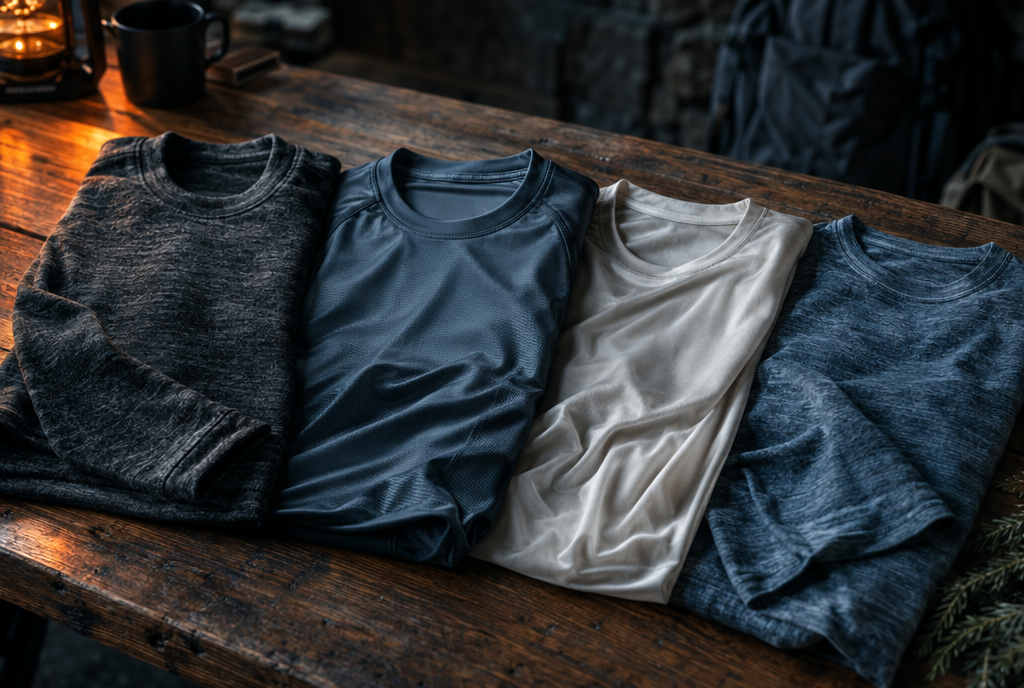
The best base layer for cold weather is merino wool or a synthetic such as polyester, chosen by activity. Synthetics wick sweat fastest and dry quickest, so they suit hard exertion. Merino feels warm when slightly damp and resists odor over several days of wear. Silk is light and soft for low-exertion use. Cotton holds moisture and dries slowly, so avoid it in the cold.
What does a base layer actually do?
A base layer is the fabric against your skin. Its main job in cold weather is moisture management: moving sweat off your skin so the insulating layers above stay dry and your skin does not sit in cold, wet fabric when you stop moving.
It adds some warmth too, but less than people expect. REI's base layer guide notes that heavier base layers add modest warmth, while the insulating mid layer provides most of the heat retention. Choose the base layer for moisture behavior first and weight second.
How do merino, synthetic, silk and cotton compare?
Each fiber makes a different tradeoff between drying speed, comfort, odor and durability. The table summarizes the pattern described by REI and other cold-weather guidance.
| Material | Wicking and drying | Warmth when damp | Odor resistance | Best for |
|---|---|---|---|---|
| Synthetic (polyester, nylon, polypropylene) | Fastest wicking, driest feel, quick to dry | Good while it dries quickly | Low unless treated | High-output activity: ski touring, running, fast hiking |
| Merino wool | Wicks well, dries more slowly | Good; feels warm when slightly damp | High, naturally resists odor | Multi-day trips, hunting, travel, mixed activity |
| Silk | Moderate wicking | Limited | Low, needs frequent washing | Low-exertion use, thin liner under other layers |
| Cotton | Absorbs sweat, dries slowly | Poor | Low | Warm, dry conditions only |
| Blends (wool and synthetic, added spandex) | Between the two parent fibers | Moderate to good | Moderate | People who want merino comfort with more durability and stretch |
Is merino wool or synthetic better for a cold-weather base layer?
Neither wins everywhere. REI describes synthetics as excelling at wicking and dissipating sweat for the driest feel, while merino wicks well, feels less dry, and takes longer to dry when saturated. Merino's standout advantage is its natural resistance to odor-causing bacteria, which matters on multi-day trips.
A practical split: pick synthetic when you will sweat heavily and then keep moving, and pick merino when you alternate effort with long still periods, or will wear the same layer for days. Many people own one of each.
Why is cotton a poor base layer in the cold?
Cotton absorbs sweat, holds it, and dries slowly. REI's ski clothing guide puts it plainly: cotton absorbs sweat, dries slowly and loses insulation, increasing chill and blister risk.
Mayo Clinic's hypothermia guidance makes the same point from a safety angle, noting that wool, silk or polypropylene inner layers hold body heat better than cotton. Minnesota DNR's ice fishing curriculum adds that wool and fleece retain some insulating value when wet. Cotton is fine for a short errand; it is a poor choice for a long day outside.
What weight of base layer do you need?
Base layers typically come in three weights. REI's guidance matches them to conditions:
Lightweight: moderate to cool temperatures, or high-output activity in the cold.
Midweight: cold temperatures and the most versatile all-around choice.
Heavyweight: below-freezing conditions with low activity, such as sitting in a stand or on the ice.
How should a base layer fit?
Snug everywhere. A base layer needs skin contact to wick efficiently, so REI recommends a comfortably snug fit. Loose base layers leave air gaps where sweat condenses instead of moving outward.
Check seams at the shoulders and hips if you will carry a pack or wear a harness. Flat seams reduce chafing under straps. Tops with a longer hem stay tucked when you bend or reach.
How do you care for base layers so they keep working?
Wash synthetics regularly, since body oils and odor build up in the fibers, and skip fabric softener, which can coat fibers and slow wicking. Merino usually needs a gentle cycle and air drying; high dryer heat can shrink it.
Keep a dedicated dry set for sleeping or for the drive home. Changing out of a damp base layer after activity is one of the simplest ways to stay comfortable, and it costs nothing more than packing a second top.
Which base layer is best for hunting, skiing and everyday wear?
Hunting usually pairs a sweaty walk in with a long, still sit, so merino or a merino blend in midweight or heavyweight is a common pick. Resort skiing involves short bursts of effort and cold chairlift rides; REI's ski guide specifically recommends merino for its light weight, wicking and odor resistance, though synthetics work well too. Backcountry touring favors lightweight synthetics that dry fast.
For commuting and office days, a thin merino or synthetic top under a shirt adds warmth without bulk. If you are frequently cold indoors or your fingers change color in the cold, talk to a clinician about the cause as well as the clothing.
Key takeaways
Choose a base layer for moisture management first; the mid layer does most of the insulating.
Synthetics dry fastest; merino resists odor and feels warmer when slightly damp.
Silk is a light, soft liner for low-exertion use; skip cotton for long days in the cold.
Match weight to activity: lighter for high output, heavier for sitting still.
Wear base layers snug so they stay in contact with skin.
Frequently asked questions
Is merino wool warmer than synthetic?
At the same fabric weight the difference in dry warmth is small. Merino tends to feel warmer when slightly damp and resists odor, while synthetics dry faster. Pick based on how much you sweat and how long you wear the garment between washes.
What is the warmest base layer for sitting still in extreme cold?
A heavyweight merino or merino blend is a common choice for low-activity cold, such as hunting or ice fishing. Warmth during a long sit also depends on the insulation and wind protection you add over it.
Can I wear a base layer under a heated vest?
Yes. A thin synthetic or merino base layer under a heated or reflective vest keeps sweat off your skin and helps the vest's warmth feel even. Avoid wearing heating elements directly against bare skin.
Does merino wool itch?
Merino fibers are finer than traditional wool, and most people find them comfortable against the skin. If you are sensitive, a merino and synthetic blend or a synthetic base layer is a good alternative.
How often should I wash a merino base layer?
Merino's odor resistance means many people wear it several times between washes. Follow the care label, usually a gentle cycle and air drying, to preserve fit and fiber life.
From HEATJAC
We design low-profile thermal garments: a heat-reflective vest and a thermal harness with pockets for warmers or cold packs.
Choosing gear? Heated vest vs heat-reflective vest · A hunter's guide to staying warm in the stand
Related reading
Sources
How to Choose Base Layers, REI Expert Advice
Layering Basics, REI Expert Advice
What to Wear Skiing and Snowboarding, REI Expert Advice
Hypothermia: Symptoms and causes, Mayo Clinic
Ice Fishing and Winter Safety (MinnAqua Leader's Guide), Minnesota Department of Natural Resources
About HEATJAC. HEATJAC is a thermal architecture company founded by an anesthesiologist. We design patented garment systems that capture, conduct and broaden warmth across the body, and we publish this knowledge hub because the science of staying warm should be public. HEATJAC products are not medical devices and are not intended to diagnose, treat, cure or prevent any disease.