
How to stay warm while hunting, from treestand to blind
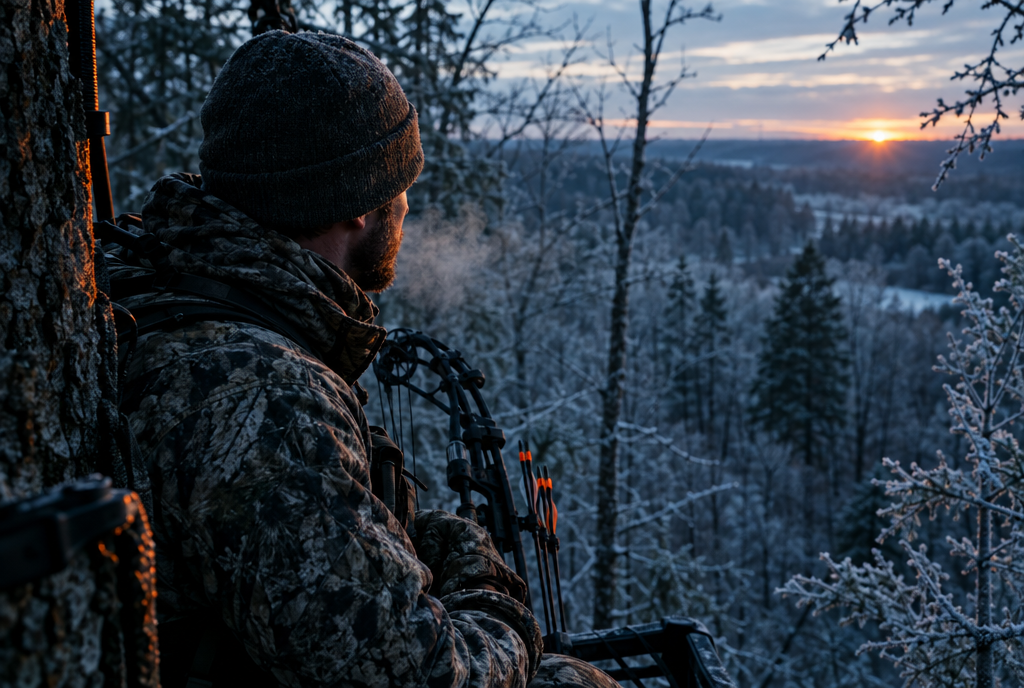
To stay warm while hunting, walk in cool and carry your insulation, because sweat soaked into clothing on the approach is what chills you later on stand. Once you sit, add a windproof insulated layer, a hat, and warm boots, and use hand and toe warmers before your extremities get cold. Eat, drink, and get up and move if you start shivering hard.
Why is hunting cold so hard to dress for?
Hunting combines two opposite demands. The walk or climb to a stand is hard work that makes you sweat, and then you sit almost motionless for hours while your body produces far less heat. Clothing warm enough for the sit is too warm for the walk.
The CDC lists hunters among people at higher risk of hypothermia because they remain outdoors for long periods. Wind in an elevated stand, damp ground in a blind, and cold metal seats all add to the heat you lose while waiting.
How do you avoid sweating on the walk in?
Carry your heavy layers in a pack and walk in wearing only a base layer and a light outer layer. MeatEater's Wired to Hunt guidance quotes hunter Beau Martonik: when you are moving it is easy to stay warm, but if you sweat on the way in you will get cold far too fast.
Slow your pace on the final stretch, open zippers, and take your hat off if your head is steaming. At the stand, let yourself cool slightly for a minute, then layer up before you feel chilled.
What should you wear to stay warm on a long sit?
Build the sit system from the skin out. Most experienced cold-weather hunters use some version of this:
Base layer: midweight or heavyweight merino or a synthetic, snug to the skin.
Insulation: a puffy jacket for rifle hunting, or an insulated vest for archery so your draw arm is not restricted.
Outer layer: windproof and quiet. Wind is the fastest way to lose heat in an elevated stand.
Legs: insulated bibs or pants over a base layer; bibs also cover the lower back.
Head and neck: a warm hat and neck gaiter or balaclava.
Visibility: where required, hunter orange as the outermost layer, visible from all directions.
How do you keep your hands and feet warm while hunting?
Hands and feet usually get cold first, and a cold trigger hand is a safety problem as well as a comfort one. An insulated hand muff with an air-activated warmer inside lets you keep a thinner shooting glove on. The National Weather Service notes that mittens are warmer than gloves, which is why many hunters keep hands in a muff or mitten until the shot.
For feet, choose insulated boots with enough room for a thick wool sock without squeezing. Tight boots restrict blood flow and feel colder. Pack a dry pair of socks if you sweat on the approach, and use toe warmers or heated socks or insoles before your toes get numb.
Keeping your core warm matters too. When your trunk is cold, the body sends less warm blood to the hands and feet, so a warm torso helps your extremities stay comfortable.
Do heated clothing and warmers work for hunting?
They can make a long sit much more comfortable. Air-activated warmers are silent, light and battery-free. Battery-heated vests, socks and gloves give adjustable heat but add weight and depend on charge, and cold reduces battery performance.
HEATJAC CORE, for example, is a low-profile harness with interior pockets that hold air-activated warmers or battery heating inserts close to the torso under hunting layers. Whatever you use, keep heat sources off bare skin, follow the maker's instructions, and check skin if you notice numbness.
Does food and water help you stay warm on stand?
Your body makes heat by burning fuel, so a real breakfast and snacks through the sit help you keep producing it. Warm drinks from a thermos add comfort and make it easier to keep drinking, which people tend to neglect in the cold.
Plan short, quiet movement breaks as well. Flexing your toes, clenching and relaxing your hands, and slowly shifting position generate heat without spooking game. A blind gives more freedom to move than an open stand, and a closed blind also cuts wind, so it can be the warmer choice on the coldest days.
What cold-weather safety rules apply in a treestand?
Cold makes hands clumsy and judgment slower, which raises the stakes on a stand. Michigan DNR advises three points of contact when climbing and a full-body harness attached to a secure line above your head at all times.
Know the warning signs of hypothermia listed by the CDC: shivering, exhaustion, confusion, fumbling hands, memory loss, slurred speech and drowsiness. If you notice them in yourself or a partner, climb down carefully, get to shelter and warmth, and seek medical care. Mayo Clinic notes that alcohol creates a false sense of warmth while increasing heat loss, so leave it at camp. Talk to a clinician if you have a condition that affects your circulation before planning long cold sits.
Key takeaways
Walk in cool and carry your insulation; sweat on the approach is the main cause of a cold sit.
Layer up at the stand before you feel chilled, with a windproof outer layer.
Protect hands and feet early with muffs, mittens, roomy boots and warmers.
A warm core helps keep hands and feet warm.
Wear a full-body harness in a treestand and know the signs of hypothermia.
Frequently asked questions
How do you stay warm in a treestand all day?
Avoid sweating on the walk in, then layer up with windproof insulation as soon as you settle. Eat and drink during the sit, use warmers for hands and feet, and stand up to stretch quietly when you can. If you begin shivering hard, climb down and warm up.
What is the best base layer for hunting?
Many hunters prefer midweight or heavyweight merino wool because it resists odor and feels warm when slightly damp. Synthetic base layers dry faster and suit hunts with a lot of walking.
Are heated socks worth it for hunting?
For long, still sits in the cold, many hunters find heated socks or insoles helpful. Check battery runtime at the temperatures you hunt in and bring a dry pair of non-heated socks as backup.
How do I keep my trigger hand warm?
Use an insulated hand muff with a warmer inside and a thin glove on your shooting hand. Keep the hand in the muff until you need it, so it stays warm and dexterous.
Can you get hypothermia while hunting in above-freezing weather?
Yes. Wet clothing, wind and long periods of inactivity can drain body heat even when the air is above freezing. Stay dry, block the wind, and warm up at the first signs of shivering or clumsiness.
From HEATJAC
We design low-profile thermal garments: a heat-reflective vest and a thermal harness with pockets for warmers or cold packs.
Choosing gear? Heated vest vs heat-reflective vest · A hunter's guide to staying warm in the stand
Related reading
Sources
How to Stay Warm During the Coldest Deer Hunts, MeatEater (Wired to Hunt)
Hunting Safety, Michigan Department of Natural Resources
Preventing Hypothermia, Centers for Disease Control and Prevention
Extreme Cold: During, National Weather Service (NOAA)
Hypothermia: Symptoms and causes, Mayo Clinic
About HEATJAC. HEATJAC is a thermal architecture company founded by an anesthesiologist. We design patented garment systems that capture, conduct and broaden warmth across the body, and we publish this knowledge hub because the science of staying warm should be public. HEATJAC products are not medical devices and are not intended to diagnose, treat, cure or prevent any disease.