
How hand warmers work: the chemistry of air-activated heat
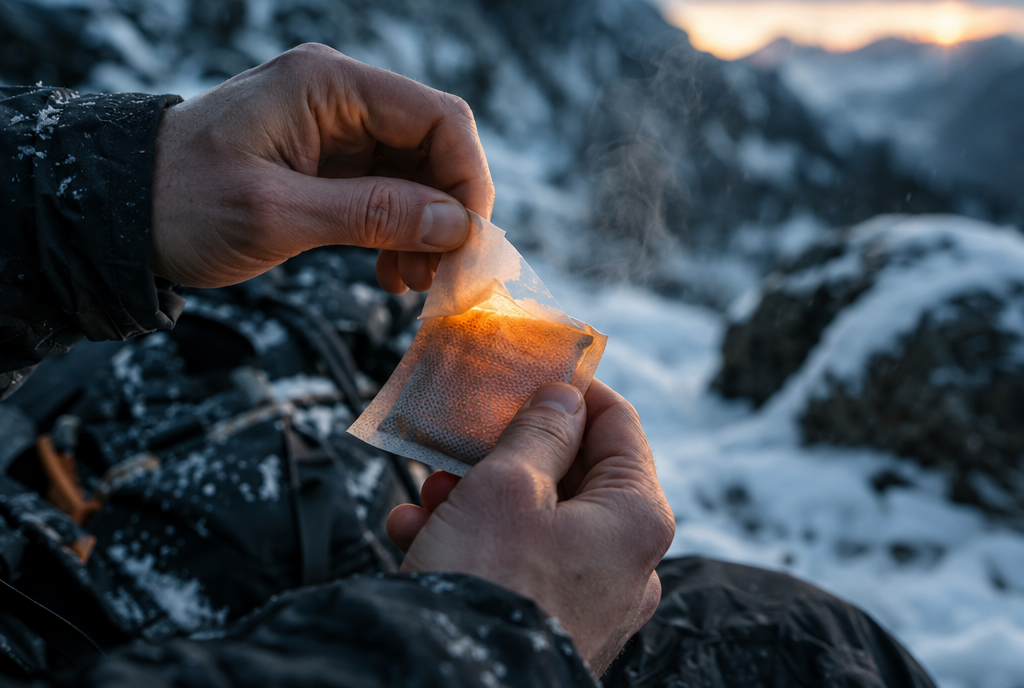
Disposable hand warmers work by controlled rusting. When you open the wrapper, oxygen reaches a mix of iron powder, water, salt, activated carbon and an absorbent filler. The iron oxidizes to iron oxide and releases heat. Salt speeds the reaction, carbon spreads the heat, and the porous pouch limits airflow so warmth lasts for hours instead of minutes.
What is inside a hand warmer?
An air-activated warmer is a small porous pouch sealed inside an airtight outer wrapper. According to Chemical & Engineering News, the pouch holds iron powder, salt, water, an absorbent material and activated carbon.
Each ingredient has a job. Iron is the fuel. Water is a reactant that lets the iron corrode. The absorbent (wood pulp, polyacrylate or vermiculite) holds that water in place so the mix stays damp but not wet. Activated carbon helps spread the heat evenly across the pouch, and salt acts as a catalyst that speeds the reaction.
The outer wrapper matters as much as the contents. As long as it stays sealed, oxygen cannot reach the iron, which is why an unopened warmer can sit on a shelf for years.
Iron powder: the fuel that oxidizes
Water: needed for the corrosion reaction
Salt: a catalyst that speeds rusting
Activated carbon: spreads heat evenly
Absorbent filler: holds moisture in place
How do hand warmers work chemically?
The core reaction is the same one that rusts a nail left outside, only much faster. Iron combines with oxygen from the air to form iron(III) oxide: 2Fe + 3/2 O2 produces Fe2O3. The standard heat of formation of iron(III) oxide is -824.2 kJ per mole, so every mole of iron oxide formed releases a large amount of heat.
A nail rusts slowly because its surface area is small and it is often dry. A hand warmer uses finely divided iron with enormous surface area, keeps it moist, and adds salt to accelerate corrosion. The result is steady heat you can feel within minutes.
The pouch fabric is the throttle. Its pores let in only a limited amount of oxygen, which caps the reaction rate. Manufacturers tune duration by changing the amount of iron or the properties of the iron powder, which is why some warmers run about seven hours and others more than a day.
How hot do hand warmers get?
Temperature depends on the product and on how much air reaches it. Chemical & Engineering News reports that hand warmers average about 135°F. Ergodyne lists its hand and body warmers at a minimum of 104°F, an average of 127°F and a maximum of 149°F. HotHands states its range of warmers produces heat anywhere from 100°F to 180°F depending on product type.
Toe and foot warmers are designed to run cooler, because they sit in a tight, low-oxygen space against the foot. Ergodyne lists its toe and foot warmers between 102°F and 113°F. HotHands advises allowing 10 to 20 minutes for warmers to reach their working temperature, so shaking and opening a warmer before you need it pays off.
How do reusable hand warmers work?
Clear gel warmers with a small metal disc use a different trick. They hold sodium acetate dissolved in water in a supersaturated state, meaning the solution holds more dissolved salt than it normally could at that temperature.
Clicking the metal disc releases tiny metal fragments that act as nucleation sites. The sodium acetate crystallizes rapidly and releases stored heat, reaching about 54°C (about 129°F) according to BBC Science Focus. Boiling the pad in water redissolves the crystals and resets it for another use.
Rechargeable electric hand warmers skip chemistry entirely. A lithium battery drives current through a resistive element, the same principle used in heated vests.
| Type | Heat source | Reusable? | Typical trade-off |
|---|---|---|---|
| Air-activated (iron) | Iron oxidizing in air | No, single use | Long, steady heat; creates waste |
| Sodium acetate gel | Crystallization of a supersaturated solution | Yes, reset by boiling | Hot quickly but for a shorter time |
| Rechargeable electric | Battery and resistive element | Yes, recharge | Adjustable; needs charging and care in the cold |
Why do hand warmers need air, and can you pause one?
Because oxygen is a reactant, cutting off air slows or stops the reaction. Ergodyne suggests sealing a partly used warmer in a zip-top bag to put activation on hold, then reopening it later.
The same principle explains common frustrations. A warmer buried in a tight boot or pressed flat in a glove pocket gets little air and may feel weak. One left exposed on a windy day may run hotter and finish sooner.
Using hand warmers safely
Manufacturers are consistent on one point: HotHands and Ergodyne both state that warming packs should not be applied directly to skin. Place them in a glove, pocket or sleeve with fabric between the pack and your body.
Take extra care with anyone who may not feel heat accurately, such as young children, older adults and people with diabetes or reduced sensation. If you notice numbness, color changes or pain in your hands in the cold, talk to a clinician rather than relying on warmers alone.
Key takeaways
Air-activated warmers heat up because iron powder rusts quickly in a controlled way.
Salt speeds the reaction, carbon spreads the heat, and the porous pouch limits oxygen so heat lasts for hours.
Sodium acetate gel warmers release heat by crystallizing and can be reset by boiling.
Warmers need air: sealing one in a zip-top bag slows it down.
Keep fabric between a warmer and your skin.
Frequently asked questions
What is the chemical reaction in a hand warmer?
It is the oxidation of iron. Iron powder reacts with oxygen and water to form iron oxide, an exothermic reaction that releases heat. Salt acts as a catalyst to speed the process.
Why do you shake a hand warmer?
Shaking loosens the powder and exposes more iron to the oxygen entering the pouch, which helps it heat up. Most warmers still take several minutes to reach full temperature.
How do hand warmers with a metal disc work?
They contain a supersaturated sodium acetate solution. Clicking the disc triggers crystallization, which releases heat. Boiling the pad dissolves the crystals so it can be used again.
Can you reuse an air-activated hand warmer?
Not once the iron is used up. You can pause a partly used warmer by sealing it in an airtight bag, which starves the reaction of oxygen, and restart it later.
Why does my toe warmer feel less hot than my hand warmer?
Toe and foot warmers are designed to run at lower temperatures, and the inside of a boot has little air, which slows the reaction. Loosening the boot slightly can help, but do not place the warmer directly on skin.
Is a hand warmer a physical or chemical change?
An air-activated hand warmer is a chemical change. Iron reacts with oxygen and water to form iron oxide, a new substance, and the reaction releases heat. Reusable gel warmers are different: the sodium acetate crystallizes out of solution and can be dissolved again by boiling, so they are usually classed as a physical change.
Why do hand warmers get hot?
They get hot because rusting iron releases heat. Finely powdered iron has a huge surface area, salt speeds the reaction and the pouch is kept damp, so oxidation that would take months on a nail happens over hours. The porous pouch limits how much oxygen gets in, which keeps the heat steady instead of a short burst.
How do toe warmers work?
Toe warmers use the same iron oxidation reaction as hand warmers, but they are designed to run cooler. Ergodyne lists its toe and foot warmers at 102 to 113°F (39 to 45°C). A boot holds little air, which slows the reaction, so keep fabric between the warmer and your skin and avoid lacing the boot so tight it crushes the pack.
How do body warmers work?
Body warmers are larger air-activated pouches with more iron, so the same reaction lasts longer. HotHands rates its body warmers at up to 18 hours. They are worn over a base layer, never directly on skin.
From HEATJAC
We design low-profile thermal garments: a heat-reflective vest and a thermal harness with pockets for warmers or cold packs.
Choosing gear? Heated vest vs heat-reflective vest · The thermal gear buying, safety and care guide
Related reading
Sources
What's inside disposable hand warmers?, Chemical & Engineering News (American Chemical Society)
Thermochemistry of Hand Warmers in Everyday Life, Chemistry LibreTexts
How do re-usable hand warmers work?, BBC Science Focus Magazine
FAQ, HotHands
Hand Warmers: How They Work (And Everything Else You Need To Know), Ergodyne
About HEATJAC. HEATJAC is a thermal architecture company founded by an anesthesiologist. We design patented garment systems that capture, conduct and broaden warmth across the body, and we publish this knowledge hub because the science of staying warm should be public. HEATJAC products are not medical devices and are not intended to diagnose, treat, cure or prevent any disease.