
Can you wash a heated vest? Care guide for heated and heat-reflective garments
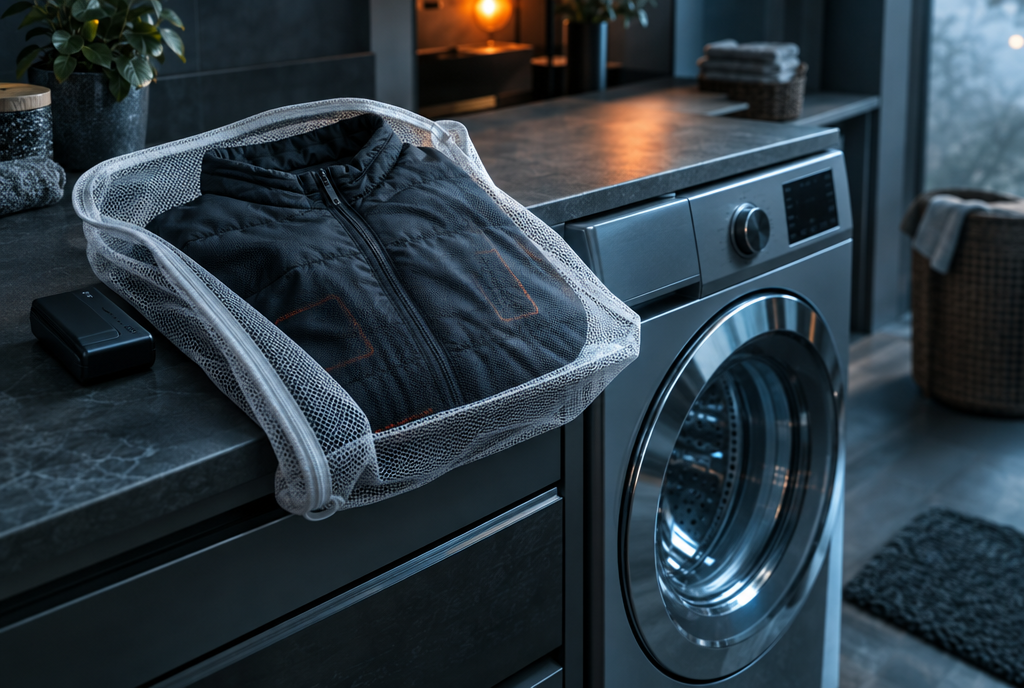
Most heated vests can be washed, but only after the battery is removed and the connector is secured. Follow the care label first. When it allows machine washing, use a gentle cycle, cold water and mild detergent, then air dry completely before reconnecting power. Never tumble dry, iron, bleach or dry clean a garment with heating elements unless the label allows it.
Why the care label comes first
Heated garments vary. Some have removable heating modules, some have elements sewn permanently into down or synthetic fill, and some have reflective linings that dislike abrasion. The only instruction written for your exact garment is on its label.
In the US, the Federal Trade Commission's Care Labeling Rule requires clothing labels to give at least one safe washing or dry cleaning method, or to warn if the item cannot be cleaned without harm. Labels must also warn against procedures a consumer might reasonably assume are safe but would damage the product, such as ironing. If your label and a general guide disagree, follow the label.
How do you wash a heated vest step by step?
This manufacturer-agnostic routine suits most battery-heated vests, jackets and hoodies whose label permits washing.
Unplug and remove the battery. Batteries must never be washed.
Tuck the power cable back into its pocket and close the pocket, or cover the connector if the maker supplies a cap.
Close all zippers and hook-and-loop tabs so they cannot snag the lining or heating panels.
Place the garment in a mesh laundry bag, or hand wash in a basin.
Use cold water, a gentle or delicate cycle and a small amount of mild detergent. Skip bleach and fabric softener unless the label allows them.
Do not wring or twist. Press water out gently, or use a low-speed spin only if the label permits.
Lay flat or hang to air dry away from radiators, stoves and direct high heat.
Wait until the garment, especially the connector and cable, is completely dry before reconnecting the battery.
Can you put a heated vest in the dryer?
Assume no unless the label explicitly says otherwise. Tumbling adds heat and repeated flexing to the heating elements and their solder joints, and a hot drum can damage wire insulation and connectors. Air drying is slower, but it is the standard instruction for most heated apparel.
Heated down garments are a partial exception in principle, because down clumps if dried without agitation. Only use a dryer, on low with dryer balls, if the maker's instructions allow it for that model. Otherwise, dry flat and fluff the fill by hand as it dries.
How do you care for heat-reflective and pocketed thermal garments?
Garments with metallized or reflective linings work by reducing radiant heat loss, so the lining surface matters. Wash them inside out if the label allows, in a gentle cycle without abrasive items such as jeans or anything with exposed zippers, and air dry. Avoid ironing the lining.
Pocketed vests that hold warming or cooling inserts need one extra step: empty every pocket. Used air-activated warmers, cold packs and battery inserts must all come out before washing, and damp pockets should dry fully before you add a new insert.
Why did my heated vest stop working after washing?
Most post-wash failures come from moisture or mechanical stress, not from the heating element itself.
Water in the connector: let the garment dry completely for another day, then test again
A loose or bent connector pin from tumbling: inspect it and contact the maker rather than forcing it
A broken element or wire from wringing or machine drying: usually requires a repair or replacement
A battery that was left in the pocket and got wet: stop using it and dispose of it properly
How should you store heated gear and batteries off-season?
Clean the garment before storing it, make sure it is fully dry, and store it loosely folded or hung so the heating panels are not creased sharply.
For the battery, Battery University recommends storing lithium-ion cells at partial charge, around 40 to 50%, and at about 15°C (59°F). Its data show that a cell stored for a year at 25°C keeps about 96% of its capacity at 40% charge but about 80% at full charge. Check the pack every few months and top it up to partial charge if needed.
If a battery is swollen, cracked or was soaked, do not charge it again. The EPA advises taking lithium-ion batteries to a battery recycling or household hazardous waste collection point, never household trash or curbside recycling, and taping the terminals first. The CPSC goes further for defective heated-apparel batteries. In a 2025 warning about heated insoles, it advised against the trash, curbside recycling and even used-battery drop-off boxes, told consumers to confirm that their household hazardous waste center accepts defective lithium-ion batteries, and noted that the faulty battery could ignite even while switched off.
Key takeaways
Most heated vests are washable, but the battery always comes out first and the care label always wins.
Cold water, a gentle cycle, mild detergent and air drying protect the heating elements.
Avoid tumble drying, ironing, wringing, bleach and dry cleaning unless the label allows them.
Store batteries around 40 to 50% charge in a cool place, and recycle damaged ones at a proper collection point.
Frequently asked questions
Can you put a heated jacket in the washing machine?
Often yes, if the label allows machine washing. Remove the battery, secure the cable, close zippers, use a mesh bag and a gentle cold cycle, then air dry.
Can you dry clean a heated vest?
Generally no. Dry cleaning solvents and pressing can damage wiring, connectors and waterproof coatings, so only dry clean if the care label specifically permits it.
How often should you wash a heated vest?
Only when it is visibly dirty or smells, since every wash adds wear. A base layer underneath keeps the vest cleaner between washes.
Can you wash heated gloves and socks?
Many can be hand washed once the battery is removed, but small garments put more strain on wiring per wash. Follow the label and let them dry fully before reconnecting.
How long does a heated vest take to dry?
It depends on the fill and the room, but plan on at least a full day of air drying. Do not reconnect the battery until the connector area is completely dry.
From HEATJAC
We design low-profile thermal garments: a heat-reflective vest and a thermal harness with pockets for warmers or cold packs.
Choosing gear? Heated vest vs heat-reflective vest · What warmth costs per shift
Related reading
Sources
Clothes Captioning: Complying with the Care Labeling Rule, Federal Trade Commission
BU-702: How to Store Batteries, Battery University
Used Lithium-Ion Batteries, US Environmental Protection Agency
CPSC warns consumers to stop using certain heated insoles due to burn and fire hazard (2025), US Consumer Product Safety Commission
About HEATJAC. HEATJAC is a thermal architecture company founded by an anesthesiologist. We design patented garment systems that capture, conduct and broaden warmth across the body, and we publish this knowledge hub because the science of staying warm should be public. HEATJAC products are not medical devices and are not intended to diagnose, treat, cure or prevent any disease.