
Heated socks vs heated insoles
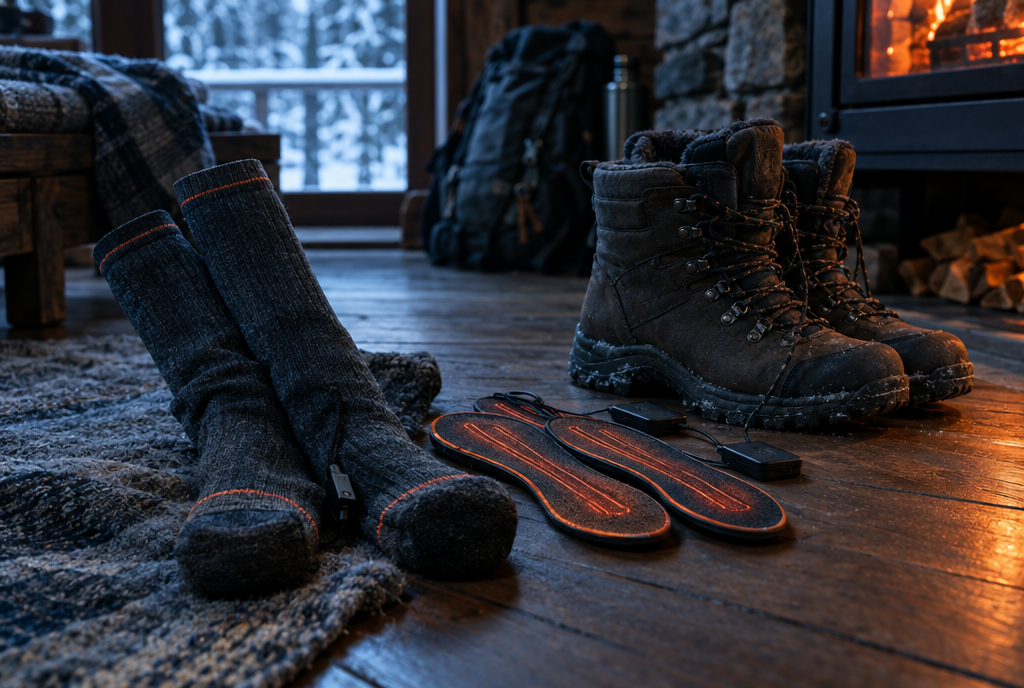
Heated socks usually warm the toes and top of the foot and work in almost any footwear, but they must be washed with care and carry the battery at the cuff. Heated insoles warm the sole from underneath, move easily between boots and hide the electronics, but take up room in the boot. Both carry burn and battery risks worth checking before you buy.
Why do feet get cold first?
When the body is cold, it reduces blood flow to the skin of the hands and feet to protect core temperature. Feet also sit against cold ground, often inside damp socks, and are far from the heat of the torso. That combination makes them the hardest part of the body to keep warm.
Before adding heat, check the basics. OSHA recommends insulated, waterproof boots for cold work and warns that tight clothing reduces blood flow to the extremities. A boot that is too snug with a thick sock or a heated insole can leave feet colder, not warmer.
How do heated socks and heated insoles compare?
Designs vary, so check the heating zone map and battery details for any specific product.
| Factor | Heated socks | Heated insoles |
|---|---|---|
| Where heat goes | Typically toes and top or ball of foot | Typically toes or forefoot from underneath |
| Battery location | Usually a pocket at the cuff | Usually built into the insole or a separate pack |
| Boot fit | Similar to a thick sock | Replaces the existing insole; adds some height |
| Moving between shoes | Works with most footwear | Must be trimmed or sized for each boot |
| Washing | Battery out, gentle wash; wiring flexes with every wash | Wipe clean; keep electronics dry |
| Moisture management | Sock fabric matters; wet socks chill feet | Pair with your own wool or synthetic socks |
| Best for | Long, still sitting; varied footwear | Standing work, walking, one favorite pair of boots |
When are heated socks the better choice?
Heated socks put heat close to the toes, where many people feel cold first, and they work in footwear that has no room for a thicker insole. They suit hunters in stands, spectators, drivers and people who move between several pairs of shoes.
The trade-offs are bulk at the cuff where the battery sits, more careful washing, and the need for more than one pair if you wear them daily. Because the heating element is in the fabric, a sock that fits poorly can bunch or rub.
When are heated insoles the better choice?
Heated insoles keep the electronics out of the laundry, pair with whatever sock you prefer, and stay in a work or ski boot all season. They suit people who stand or walk on cold surfaces and who have boots with room to spare.
The trade-offs are boot volume and fit. An insole that raises your foot can press toes into the toe box, which limits circulation and defeats the purpose. Heat from underneath also has to pass through the sock before you feel it.
Are heated socks and heated insoles safe?
Recent federal actions show both products need scrutiny. In April 2026 the US Consumer Product Safety Commission announced a recall of one brand of heated socks after 14 heat-related incidents, 13 of them involving first- or second-degree burns; the hazard involved wearing the socks during high-intensity activity that combines heat, friction, moisture and pressure. In 2025 the CPSC warned consumers to stop using a line of heated insoles after 11 reports of fires, explosions or other thermal incidents, including eight burn injuries, and noted that the lithium-ion battery could ignite even when the insoles were off.
Feet are a particularly vulnerable place for heat. The National Institute of Diabetes and Digestive and Kidney Diseases warns that people with diabetic nerve damage may burn their feet without knowing it and advises against heating pads and hot water bottles on the feet. If you have diabetes, neuropathy or a circulation disorder, talk to your care team before using any heated footwear.
Use low settings, and switch heat off when you are walking hard or sweating
Keep feet dry; change damp socks
Check your feet for redness or blisters after use
Stop using any product whose battery swells, overheats or is damaged
Search the CPSC recall database for the exact model before buying
How long do heated sock and insole batteries last in the cold?
Foot-warmer batteries are small, and they sit in the coldest part of your clothing system. Battery University notes that a lithium-ion cell delivering full capacity at 27°C (80°F) will typically deliver about 50% at minus 18°C (0°F), recovering once warm. Expect shorter runtimes than the box suggests on very cold days, and use the lowest setting that keeps toes comfortable.
Key takeaways
Heated socks suit varied footwear and long, still exposure; heated insoles suit one pair of roomy boots and standing work.
Fit comes first: anything that makes a boot tight can leave feet colder.
Recent CPSC actions involved burns from heated socks and fires from heated insole batteries, so check recalls.
People with diabetes or neuropathy should consult their care team before using heated footwear.
Talk to a clinician about persistent cold feet, color changes or numbness.
Frequently asked questions
Are heated socks or heated insoles warmer?
Socks usually feel warmer at the toes because the element is closer to the skin. Insoles can feel just as warm in a well-fitted boot, but heat must pass through your sock first.
Can you wear heated socks with heated insoles?
It is not recommended. Doubling heat sources on the feet raises burn risk and battery load, and the extra bulk can make boots tight.
Are heated socks safe for neuropathy?
People with neuropathy may not feel a burn developing, so heated footwear carries extra risk. Talk to your care team first, use the lowest setting, and check your feet after every use.
Can heated insoles be trimmed to size?
Some can be trimmed only in marked areas away from the heating element and wiring. Follow the maker's trim guide exactly, since cutting a wire can create a hazard.
Can you wash heated socks?
Most can be washed once the battery is removed, usually by hand or in a gentle cycle, then air dried. Always follow the care label.
From HEATJAC
We design low-profile thermal garments: a heat-reflective vest and a thermal harness with pockets for warmers or cold packs.
Choosing gear? Heated vest vs heat-reflective vest · What warmth costs per shift
Related reading
Sources
Heated socks recalled due to burn hazard (April 2026), US Consumer Product Safety Commission
CPSC warns consumers to stop using certain heated insoles due to burn and fire hazard (2025), US Consumer Product Safety Commission
Diabetes and Foot Problems, National Institute of Diabetes and Digestive and Kidney Diseases (NIH)
Cold Stress Guide, Occupational Safety and Health Administration
BU-502: Discharging at High and Low Temperatures, Battery University
About HEATJAC. HEATJAC is a thermal architecture company founded by an anesthesiologist. We design patented garment systems that capture, conduct and broaden warmth across the body, and we publish this knowledge hub because the science of staying warm should be public. HEATJAC products are not medical devices and are not intended to diagnose, treat, cure or prevent any disease.