
How to choose a heated or thermal vest: fit, zones and features
The best heated vest is the one that fits your use: snug enough for the panels to reach your body, heating zones where you feel cold, a battery with enough watt-hours for your day, and evidence of safety testing. Start by deciding whether you need added heat at all, then judge fit, zones, battery, safety and care, in that order.
Do you need a heated vest or a thermal vest?
A heated vest adds warmth from a battery. A thermal vest, with insulation or a reflective lining, reduces heat loss without power. Heated vests suit long, still exposure to cold; thermal vests suit movement, travel and days far from a charger. Some vests combine an insulating or reflective body with pockets for heat inserts.
Be honest about your day. If you are active most of the time, a heated vest may spend more time switched off than on.
How should a heated vest fit?
Heating panels only work when they sit near your body. Too loose, and heat warms the air gap and escapes; too tight, and you restrict movement and circulation. OSHA's cold-stress guidance recommends layers of loose-fitting clothing and warns against tight garments, so aim for close but comfortable.
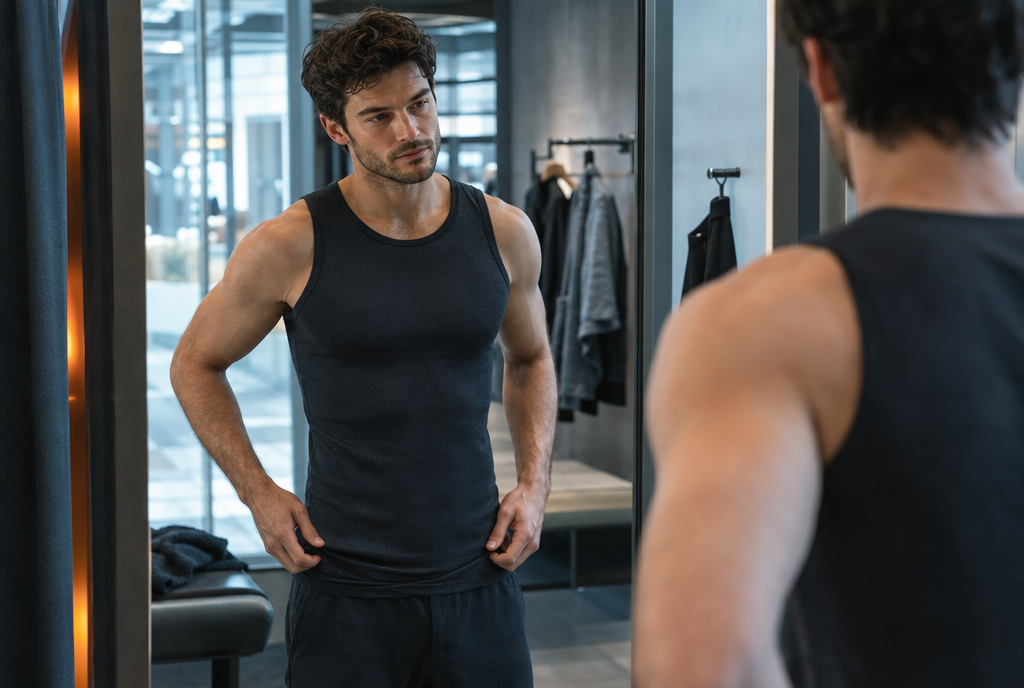
Size for the layers you will wear under and over the vest. Try it on with your usual base layer and outer coat, raise your arms, and sit down. The battery pocket should not dig into your side, and the vest should not ride up.
Close to the body, not compressive
Room for a base layer beneath and a coat on top
Adjustable side tabs or a stretch panel if you are between sizes
Women's and men's cuts differ in length and chest shape; check both charts
A zipper and collar that do not rub your neck
Which heating zones and controls matter?
Most heated vests place panels on the upper back, and many add the chest, the collar and the hand pockets. Back and chest panels warm the core; collar and pocket zones are comfort features that also draw more power.
Look for at least three heat levels, a control you can find with gloves on, and a clear indicator of the current setting. Independent zone control is useful if you run hot in some areas. An automatic shutoff or a timed high setting reduces the risk of leaving a vest on high for too long.
| Feature | Why it matters | What to look for |
|---|---|---|
| Back panel | Largest warming area near the core | Wide, centered panel |
| Chest panels | Front core warmth | Two panels, not too close to the neck |
| Collar zone | Comfort in wind | Switchable separately |
| Pocket zones | Warm hands | Switchable, since they drain the battery |
| Controls | Safe, easy adjustment | Glove-friendly button, visible level indicator |
| Overheat protection | Limits element temperature | Stated temperature control or auto shutoff |
What battery should a heated vest have?
Compare batteries in watt-hours, which the FAA defines as volts multiplied by amp-hours, rather than in milliamp-hours, which depend on voltage. Match the watt-hours to your longest day on a medium setting, and consider a second pack rather than one oversized battery.
Check whether the vest takes a standard USB power bank or a proprietary pack, how easy replacement batteries are to find, and whether the battery pocket keeps the pack close to your body, where it stays warmer and lasts longer. If you fly, pick a pack that is clearly labeled and at or below 100 Wh.
What safety standards and features should you check?
No single mark proves a heated vest is safe, but independent testing is a strong signal. For batteries, UL 2054 covers household and commercial batteries and UL 62133-2 covers portable lithium cells and the batteries made from them. For the garment, IEC 60335-2-17 sets safety requirements for blankets, pads, clothing and other flexible appliances that heat the body, including battery-operated ones, with a dedicated annex for clothing.
Ask the seller which standards the battery and garment were tested to and by which laboratory. Then search the Consumer Product Safety Commission's recall database for the brand and model.
Certification mark from a recognized testing laboratory on the battery
Stated overheat protection or automatic shutoff
A covered, strain-relieved connector
Clear instructions and a care label
A real warranty and a reachable company
How do care and use case change the choice?
Check the care label before you buy. The FTC's Care Labeling Rule requires at least one safe cleaning method or a warning, so a vest you must wash often should say it is washable once the battery is removed.
Finally, match the outer fabric to the job: a water-resistant shell for outdoor work, a thin quiet fabric for hunting, a slim profile for wearing under a uniform or lab coat. People with implanted cardiac devices, diabetes or reduced sensation, and pregnant people, should talk to a clinician before choosing any heated garment.
Key takeaways
Decide first whether you need added heat or better insulation.
Fit decides performance: close to the body, never tight, sized for your real layers.
Compare batteries in watt-hours and plan for your longest day.
Look for tested batteries (UL 2054 or UL 62133-2), overheat protection and a clean recall history.
Check the care label and match the shell fabric to your work or activity.
Frequently asked questions
Should I size up for a heated vest?
Only if you plan to wear thick layers underneath. Panels need to sit close to your body to be felt, so a vest that is too large will feel weaker.
How many heating zones do I need?
Back and chest zones cover most needs. Collar and pocket zones add comfort but also drain the battery faster, so look for separate control.
What certifications should a heated vest battery have?
Look for testing to a recognized battery safety standard, such as UL 2054 or UL 62133-2, by a recognized testing laboratory. Ask the seller if the listing does not say.
Are expensive heated vests better than cheap ones?
Price alone does not guarantee safety or warmth. Compare fit, watt-hours, stated safety testing, warranty and recall history instead.
Can I wear a heated vest under a work uniform?
Many thin heated vests fit under uniforms and coats. Check your employer's rules on battery devices and choose a slim profile with a secure battery pocket.
From HEATJAC
We design low-profile thermal garments: a heat-reflective vest and a thermal harness with pockets for warmers or cold packs.
Choosing gear? Heated vest vs heat-reflective vest · What warmth costs per shift
Related reading
Sources
Cold Stress Guide, Occupational Safety and Health Administration
PackSafe: Lithium Batteries, Federal Aviation Administration
Understanding Portable Battery Safety: the UL 62133 family of standards, UL Solutions
IEC 60335-2-17:2022, Particular requirements for blankets, pads, clothing and other flexible heating appliances, International Electrotechnical Commission
Recalls and Product Safety Warnings, US Consumer Product Safety Commission
Clothes Captioning: Complying with the Care Labeling Rule, Federal Trade Commission
About HEATJAC. HEATJAC is a thermal architecture company founded by an anesthesiologist. We design patented garment systems that capture, conduct and broaden warmth across the body, and we publish this knowledge hub because the science of staying warm should be public. HEATJAC products are not medical devices and are not intended to diagnose, treat, cure or prevent any disease.