
Wearing a heated or thermal vest under scrubs: what to know
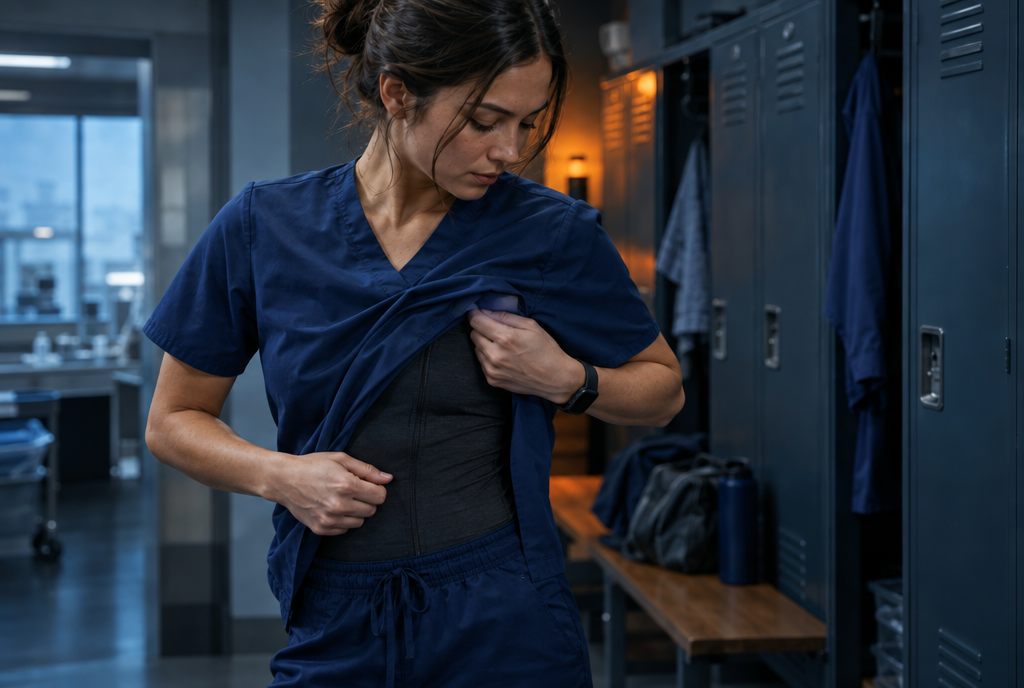
You can often wear a thin heated or thermal vest under scrubs, but whether it is allowed depends on your facility's policy for personal clothing, fabric and electrical devices. Passive insulated or heat-reflective vests and pockets for air-activated warmers raise the fewest questions. Battery-heated vests may need approval, especially in operating rooms, and every option should be clean, low-lint and comfortable against skin.
Is it allowed to wear a vest under scrubs?
There is no single national rule. AORN's Guideline for Surgical Attire made no recommendation on personal clothing worn under scrub attire and asked facilities to set their own policies on fabric type, laundering frequency and laundering method. AORN's 2024 summary adds that the team should decide what fabrics may be worn and how much may extend beyond the surgical attire.
In practice, a vest that sits fully under the scrub top, does not shed fibers and can be laundered according to policy is the easiest to approve. Outside restricted areas, rules are usually looser, but many units still apply dress codes and infection-control expectations.
Contamination rules also apply to personal layers. AORN states that personal clothing contaminated with blood, body fluids or other potentially infectious materials must remain at the facility for laundering, so contaminated layers cannot simply go home in a bag. A vest you plan to take home should be one you can remove quickly and replace if it is soiled.
What types of warming vests are there?
Vests warm the body in different ways, and that affects both comfort and policy questions.
Passive vests have no settings to manage and nothing to charge, which suits long shifts in rooms that stay at a steady temperature. Active options add heat when passive insulation is not enough, at the cost of more policy questions. Many clinicians start passive and add inserts only for the coldest rooms or night shifts.
| Type | How it warms | Policy considerations |
|---|---|---|
| Insulated vest | Traps body heat in a thin layer | Fabric, lint and laundering |
| Heat-reflective vest | Reflects radiant body heat back toward the body | Fabric, lint and laundering |
| Vest with warmer pockets | Air-activated chemical warmers add heat | Warmer placement and skin contact |
| Battery-heated vest | Electric heating elements powered by a battery | Electrical device and battery rules |
| Tethered heated vest | Heating insert powered by a wall-connected controller | Cable management and device approval |
How does a vest help cold hands?
As the body cools, it shifts blood flow away from the hands and feet toward the core, a response OSHA describes in its cold stress guidance. A warmer torso reduces that pressure on the extremities. Research on hand function in the cold shows why this matters: dexterity declines as finger skin cools, and a 2025 study found that brief whole-body rewarming changed the skin temperatures at which dexterity losses appeared.
A vest will not make gloved fingertips warm in a cold room on its own, but core warmth is the foundation that makes hand warmth easier to maintain.
What about batteries and electrical safety?
Battery-heated vests use lithium-ion packs similar to phone batteries. NFPA advises using manufacturer-approved chargers, choosing products certified by a nationally recognized testing laboratory, and stopping use of any battery that is damaged, swollen, unusually hot or giving off an odor.
Operating rooms add a specific concern. APSF describes the fire triad of oxidizer, ignition source and fuel, and notes that oxidizer-enriched atmospheres are especially hazardous. Many facilities therefore restrict personal electrical items in restricted areas or require review. Ask before wearing any battery device into an operating or procedure room, and never charge it there.
Skin comfort and heat safety
Any heat source held against the body for hours deserves care. Keep warmers and heating panels over a layer of fabric, use the lowest setting that keeps you comfortable, and follow the maker's instructions. People with reduced sensation, such as from diabetes or neuropathy, may not notice excess heat and should talk to a clinician before using heated clothing.
What products exist for clinicians?
The category is small. In 2016, Augustine Temperature Management introduced a Clinician Warming Vest that used a conductive polymer heating insert connected by cable to the company's HotDog controller at low voltage. Consumer heated vests are widely sold, but most are designed for outdoor use rather than for wearing under scrubs.
HEATJAC, founded by an anesthesiologist, designed its low-profile thermal platform to be worn under or over scrubs, with pockets that accept warming inserts; staff should follow their facility's attire and device policies before wearing it at work.
A checklist before you buy
Use these questions to narrow your options and simplify approval.
Does it fit fully under your scrub top without bulk at the neckline or hem?
Is the outer fabric tightly woven and low linting?
Can it be laundered in line with your facility's policy?
If it uses a battery, is the product certified, and does your facility allow it in your work area?
Can you remove inserts quickly if a case runs long or you get warm?
Key takeaways
Vests under scrubs are governed by facility policy; AORN leaves personal under layers to each organization.
Passive and warmer-pocket vests raise fewer approval questions than battery devices.
Core warmth supports warmer hands because the body protects the torso first.
Battery devices need certified chargers, intact packs and clearance before entering operating rooms.
Frequently asked questions
Can nurses wear heated vests at work?
Many can, depending on the unit and the facility's dress code and device policy. Passive vests are usually simpler to approve than battery-heated ones, especially in operating and procedure rooms.
Will a heated vest show under scrubs?
A low-profile vest that sits fully under the scrub top is usually hidden. Bulky puffer vests and wide battery pockets are more likely to show or conflict with attire rules.
Are battery-heated vests safe in the operating room?
Operating rooms can have oxygen-enriched areas where ignition sources are tightly controlled, so many facilities restrict personal electrical items there. Ask your facility before wearing one, and follow its decision.
How do I wash a vest worn under scrubs?
Follow both the maker's care label and your facility's laundering policy. Remove any batteries or inserts first, and leave any clothing contaminated with blood or body fluids at the facility for laundering.
Is a vest better than a warm-up jacket?
They do different jobs. A vest warms the core with arms free, while a jacket covers the arms; many clinicians combine a thin vest with a facility-laundered jacket.
Can you wear a heated vest under scrubs in the OR?
Only if your facility approves it. AORN's surgical attire guideline makes no recommendation on personal clothing under scrubs and asks each facility to set rules on nonlinting fabrics, how much may show and how it is laundered. A battery-heated vest is also a personal electrical device in a room where oxygen-enriched air and ignition sources are tightly controlled, so get clearance from perioperative leadership first and never charge it in the OR.
Heated scrub jacket vs heated vest: which is better for clinical work?
A vest warms the core under the scrub top with arms free, while a jacket also covers the arms but is an outer layer that falls under scrub jacket and laundering rules. AORN's guideline says arms may be covered during preoperative skin antisepsis and makes no recommendation on long sleeves at other times in semi-restricted and restricted areas, so local policy decides. A thin passive vest under the top usually raises the fewest approval questions.
Can a thermal layer show at the neckline or sleeves of my scrubs?
It depends on your facility. AORN asks each organization to decide how much personal fabric may extend beyond scrub attire, giving a crew neck collar under a V-neck top as an example. Check your unit's dress code before wearing a layer that shows.
From HEATJAC
We design low-profile thermal garments: a heat-reflective vest and a thermal harness with pockets for warmers or cold packs.
Choosing gear? What nurses and OR staff should look for in thermal gear · Getting a thermal vest approved for clinical areas
Related reading
Sources
Surgical Attire, Stethoscopes and Personal Items, AORN Periop Today
Lithium-Ion Battery Safety, National Fire Protection Association
Fire Safety Resources, Anesthesia Patient Safety Foundation
Heated Vest Keeps Clinicians Warm in Cold Operating Rooms, HospiMedica, 2016
Cold Stress Guide, Occupational Safety and Health Administration
About HEATJAC. HEATJAC is a thermal architecture company founded by an anesthesiologist. We design patented garment systems that capture, conduct and broaden warmth across the body, and we publish this knowledge hub because the science of staying warm should be public. HEATJAC products are not medical devices and are not intended to diagnose, treat, cure or prevent any disease.