
Battery-powered personal devices in clinical areas: safety considerations
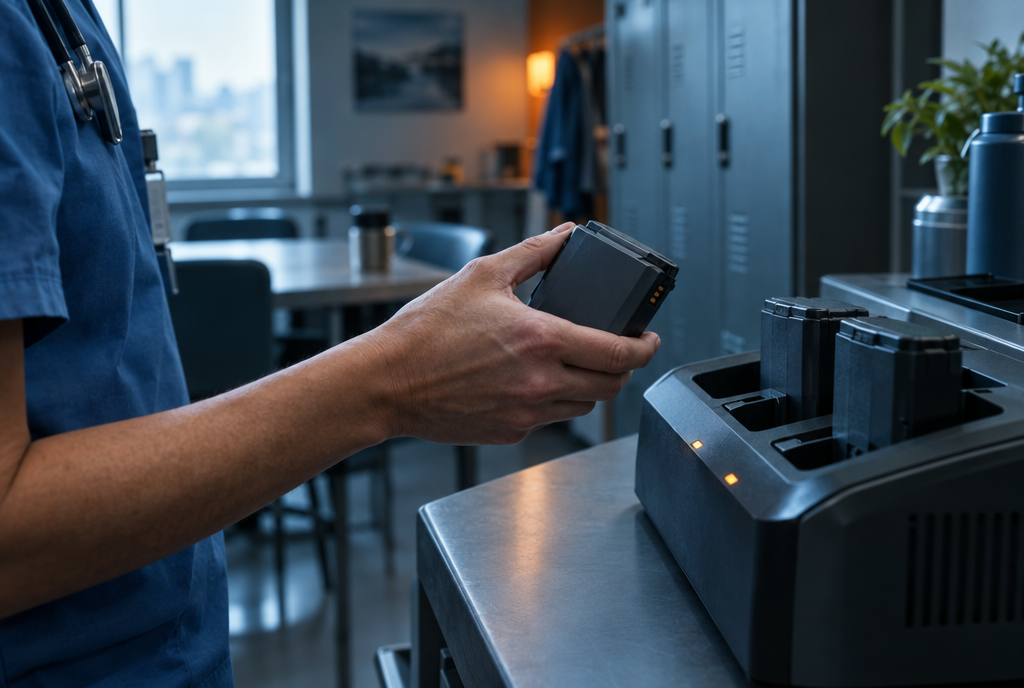
Personal battery devices such as phones, earbuds and heated vests are common in hospitals, but clinical areas add risks that homes do not. Operating rooms can have oxygen-enriched zones where any ignition source matters, and lithium-ion packs can overheat if damaged or charged improperly. Use certified products and approved chargers, clean devices before entering the OR, and follow your facility's electrical and fire safety policies.
Why are battery devices a special topic in hospitals?
Most battery devices staff carry are ordinary consumer products. The difference is the setting. Hospitals contain oxygen delivery, flammable preparation solutions, drapes and electrosurgical equipment, and they are governed by codes such as NFPA 99, the Health Care Facilities Code, which addresses electrical systems, equipment and gas systems in health care settings.
Facilities translate these codes into local policies. Some restrict personal electrical items in operating rooms or require review by biomedical engineering or safety staff. Policies differ, so the rules in one hospital may not apply in the next.
What is the fire triad in the operating room?
The Anesthesia Patient Safety Foundation describes three elements needed for an OR fire. The oxidizer, usually oxygen or nitrous oxide, is typically supplied by the anesthesia provider. The ignition source, such as electrosurgical devices, lasers and heated probes, is typically the surgeon's responsibility. The fuel, including sponges, drapes, alcohol-containing solutions and gowns, is typically supplied by the nurse or scrub technician.
APSF notes that oxidizers are especially hazardous when an oxidizer-enriched atmosphere forms within a closed or semi-closed space, such as under drapes near the airway. It reports that OR fires still occur roughly 50 to 200 times per year, and that The Joint Commission has recommended air or an inspired oxygen fraction under 30% for open delivery since 2003.
Personal devices are not the usual ignition source in these events, but the principle is clear: anything that can heat up or spark belongs away from oxidizer-rich zones and under facility control.
What are the main lithium-ion battery risks?
Lithium-ion batteries store a lot of energy in a small space. When cells are damaged, defective or charged incorrectly, they can overheat, swell or, in rare cases, catch fire. NFPA's safety guidance focuses on a few practical controls.
Use the charger supplied or approved by the device manufacturer.
Buy products certified by a nationally recognized testing laboratory.
Stop using any battery that is damaged, swollen, unusually hot or giving off an odor.
Store and charge batteries away from flammable materials and in a location where heat can dissipate.
How do these risks apply to heated garments?
Battery-heated vests and inserts use packs similar to phone and power bank batteries, worn close to the body for hours. That raises practical questions: where the pack sits, whether cables can snag, whether the garment can be cleaned, and whether the device is allowed in your work area.
Passive alternatives, such as insulated or heat-reflective vests and air-activated warmers, avoid electrical questions entirely, though warmers still need to be kept off bare skin and used according to their instructions. Some staff use passive layers in the OR and save battery heat for break rooms, transport or outdoor duties.
| Warmth option | Electrical questions | Typical OR policy status |
|---|---|---|
| Insulated or reflective vest | None | Governed by attire policy |
| Air-activated warmer inserts | None; follow skin-contact instructions | Varies by facility |
| Battery-heated vest or insert | Battery, charger, heat output | Often requires approval |
| Wall-powered warming garment | Cable, controller, facility power | Requires device approval |
What about cleaning devices?
Infection control applies to electronics as well. AORN recommends cleaning cell phones, tablets and other personal hand-held electronics according to the manufacturer's instructions before bringing them into the OR, and performing hand hygiene afterward. The 2019 guideline cites a study in which 72% of health care workers' phones were contaminated with bacteria. Battery packs and controllers from heated garments deserve the same attention.
A practical checklist for staff
Before bringing a battery device into a clinical area, run through these questions.
Does my facility's policy allow this device in this area, and does it need review?
Is the product certified, and am I using the manufacturer's charger?
Is the battery intact, cool and free of swelling?
Can I clean the device according to the maker's instructions?
Will it stay well away from the sterile field, oxygen sources and the patient's airway?
Can I charge it outside clinical areas, such as in a break room?
When to ask for help
Policies exist to protect patients and staff, not to stop people from staying warm. Asking early usually leads to an approved option, such as a passive vest, an approved warmer or a charging location outside clinical areas.
If you are unsure, ask your unit manager, biomedical engineering or safety office before use. If a battery overheats, swells or smokes, follow your facility's fire response procedures. Staff who rely on heat because of cold-related symptoms should also talk to a clinician about those symptoms.
Key takeaways
Operating rooms combine oxidizers, ignition sources and fuels, so facilities control anything that can heat or spark.
Use certified lithium-ion products, approved chargers and intact batteries.
Clean personal electronics before bringing them into the OR, as AORN recommends.
Passive warm layers avoid electrical questions; battery devices often need approval.
Your facility's policy, built on codes such as NFPA 99, is the final word.
Frequently asked questions
Are heated vests allowed in the operating room?
It depends on your facility. Because operating rooms can have oxygen-enriched areas, many facilities restrict or review personal electrical items there. Ask before wearing one.
Can a phone cause a fire in the OR?
Phones are not a typical ignition source in reported OR fires, which usually involve electrosurgery or lasers near oxygen and fuel. Facilities still control personal electronics for fire safety and infection control.
What is an oxygen-enriched atmosphere?
It is an area where oxygen concentration is higher than room air, often near a patient's airway or under drapes. APSF notes these environments are especially hazardous because materials ignite and burn more readily.
What are warning signs of a failing lithium battery?
NFPA lists excessive heat, swelling and unusual odor as signs to stop using a battery. Remove the device from service and follow your facility's procedures.
Where should I charge a heated vest battery at work?
Charge it outside clinical areas with the manufacturer's charger, in a location your facility approves. Avoid charging near oxygen equipment, flammable supplies or under bedding and clothing.
From HEATJAC
We design low-profile thermal garments: a heat-reflective vest and a thermal harness with pockets for warmers or cold packs.
Choosing gear? What nurses and OR staff should look for in thermal gear · Getting a thermal vest approved for clinical areas
Related reading
Sources
Fire Safety Resources, Anesthesia Patient Safety Foundation
Lithium-Ion Battery Safety, National Fire Protection Association
NFPA 99, Health Care Facilities Code, National Fire Protection Association
About HEATJAC. HEATJAC is a thermal architecture company founded by an anesthesiologist. We design patented garment systems that capture, conduct and broaden warmth across the body, and we publish this knowledge hub because the science of staying warm should be public. HEATJAC products are not medical devices and are not intended to diagnose, treat, cure or prevent any disease.