
Extreme cold warnings explained: what the alerts mean and what to do
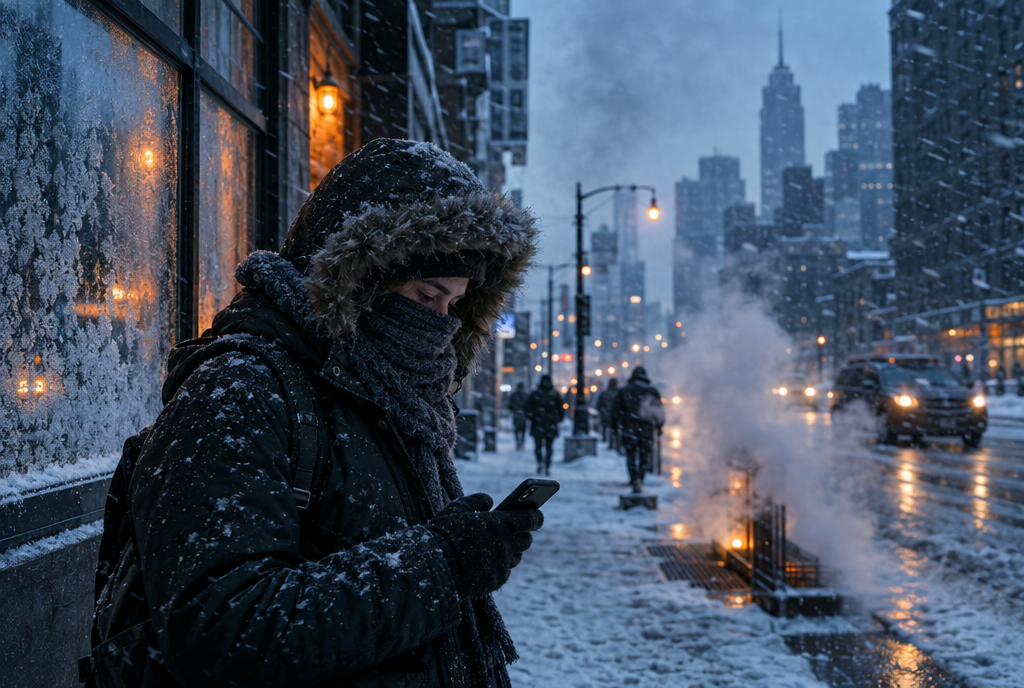
An Extreme Cold Warning is the National Weather Service's most serious cold alert. It means dangerously cold air temperatures or wind chills are expected or already happening. Avoid going outside; if you must, dress in layers, cover all exposed skin and tell someone where you are. A watch means the danger is possible, and an advisory means hazardous cold below warning level.
Extreme cold warning criteria in the US and Canada
The US National Weather Service (NWS) uses three cold alerts for people: the Cold Weather Advisory, the Extreme Cold Watch and the Extreme Cold Warning. NWS does not publish one national threshold; each local office lists its own criteria, and some split them by location within its area. The examples below come from three NWS office pages.
In Canada, Environment and Climate Change Canada (ECCC) issues cold warnings when temperature or wind chill is much colder than normal and likely to affect health. Thresholds vary by location. On November 26, 2025, ECCC replaced its former alert criteria with impact guides that give no numeric cold thresholds and added a color to every warning, watch and advisory: yellow for hazardous weather, orange for severe weather and red, which is rare, for very dangerous, possibly life-threatening weather.
Check how fast frostbite can set in with our wind chill and frostbite calculator
| Alert | Issued by | What it means | Example criteria |
|---|---|---|---|
| Cold Weather Advisory | NWS (US) | Dangerously cold conditions not expected to reach warning criteria | Boston/Norton office: wind chill of minus 10 to minus 19°F (minus 23 to minus 28°C) or minus 15 to minus 24°F (minus 26 to minus 31°C), depending on location, for at least 3 hours |
| Extreme Cold Watch | NWS (US) | Extremely dangerous cold or wind chills are possible, but occurrence, location or timing is uncertain | Lincoln, Illinois office: issued when confidence that warning criteria will be reached is above 50 percent |
| Extreme Cold Warning | NWS (US) | Extremely dangerous cold or wind chills are expected or occurring | Lincoln, Illinois office: minus 25°F (minus 32°C) or colder along and north of I-72, minus 20°F (minus 29°C) or colder further south. Twin Cities office: minus 35°F (minus 37°C) for the Twin Cities, southern Minnesota and western Wisconsin, minus 40°F (minus 40°C) for northern and most of central Minnesota |
| Cold warning (extreme cold) | ECCC (Canada) | Temperature or wind chill much colder than normal and likely to affect health; colored yellow, orange or red by expected impact | No single national number; set by location using ECCC impact guides, which replaced the former alert criteria |
What does an Extreme Cold Warning mean?
The National Weather Service (NWS) issues an Extreme Cold Warning when extremely dangerous cold conditions or wind chill values are expected or occurring. It is a call to act now, not a forecast to keep an eye on.
NWS advises avoiding going outside during a warning. If you have to go out, dress in layers, cover exposed skin and make sure at least one other person knows your whereabouts. At these levels, frostbite and hypothermia can develop quickly in people who are underdressed, stranded or unable to get indoors.
What is the difference between a Cold Weather Advisory, Extreme Cold Watch and Extreme Cold Warning?
The three alerts form a ladder. A Cold Weather Advisory covers dangerously cold conditions that are not expected to reach warning criteria. An Extreme Cold Watch means extremely dangerous cold is possible, but the occurrence, location or timing is still uncertain. An Extreme Cold Warning means it is expected or already here.
NWS also issues freeze and frost products, which are aimed mainly at crops and plants rather than people. The table summarizes each alert and the action NWS pairs with it.
| Alert | What it means | What to do |
|---|---|---|
| Cold Weather Advisory | Dangerously cold conditions below warning criteria | Dress appropriately and cover exposed skin outdoors |
| Extreme Cold Watch | Extremely dangerous cold is possible; timing or location uncertain | Plan to avoid the coldest part of the day, keep at least half a tank of gas, update your winter kit |
| Extreme Cold Warning | Extremely dangerous cold or wind chills expected or occurring | Avoid going outside; if you must, layer up, cover skin, tell someone where you are |
| Freeze Watch | Significant, widespread freezing temperatures possible within 24 to 36 hours | Protect plants and outdoor water lines |
| Freeze Warning | Temperatures forecast below 32°F for a long period | Protect crops, plants and exposed pipes |
| Frost Advisory | Areas of frost expected or occurring | Cover or bring in sensitive plants |
What happened to wind chill warnings?
They were renamed. Effective October 1, 2024, NWS renamed the Wind Chill Watch to Extreme Cold Watch, the Wind Chill Warning to Extreme Cold Warning, and the Wind Chill Advisory to Cold Weather Advisory. Hard Freeze Watches became Freeze Watches, and Hard Freeze Warnings were folded into Freeze Warnings.
NWS explained that many people believed extreme cold was only dangerous when it was windy, and that cold messaging could be overshadowed by snow and ice alerts. The new names make clear that very cold air alone, with or without wind, can be a hazard.
What temperature triggers an Extreme Cold Warning?
There is no single national number. Each area sets criteria that reflect what is unusual and dangerous for its climate, so a warning in a southern state can be issued at a much milder reading than one in the northern Plains.
For example, the NWS office in Lincoln, Illinois, issues an Extreme Cold Warning at values of minus 25°F or colder in its northern counties and minus 20°F or colder in its southern counties, with Cold Weather Advisories at somewhat milder readings. That office also notes that actual air temperatures can be cold enough by themselves to meet the old wind chill criteria. Check your local NWS office for the thresholds where you live.
How does wind chill factor into cold alerts?
NWS defines the wind chill temperature as how cold people and animals feel outside, based on the rate of heat loss from exposed skin caused by wind and cold. On the NWS wind chill chart, an air temperature of 0°F with a 15 mph wind produces a wind chill of minus 19°F, at which exposed skin can freeze in 30 minutes.
Since the 2024 change, alerts can be driven by wind chill or by air temperature alone. Wind makes a given temperature more dangerous for bare skin, but calm, very cold air can still meet warning criteria.
What should you do during an Extreme Cold Warning?
Make the warning a stay-home day where you can, and prepare your household before temperatures bottom out.
Limit time outdoors; when you go out, wear layers, a hat, mittens and a face covering.
Tell someone your route and arrival time before driving, and keep the tank at least half full.
Check on older neighbors and relatives; the CDC advises older adults to check their home temperature often in extreme cold.
Keep infants in a warm room; the CDC says babies under one year should never sleep in a cold room.
Heat safely: the CDC says turning on the stove for heat is not safe, generators belong at least 20 feet from any window, door or vent, and a battery-operated carbon monoxide detector protects against CO poisoning.
Bring pets indoors and make sure outdoor animals have shelter.
What are the warning signs of hypothermia?
The CDC lists shivering, exhaustion, confusion, fumbling hands, memory loss, slurred speech and drowsiness as signs of hypothermia in adults, and bright red, cold skin and very low energy in infants. It advises getting medical attention immediately if a person's temperature is below 95°F.
Frostbite can begin with redness, pain or numbness, and affected skin may turn white or grayish-yellow and feel firm or waxy. Move anyone with these signs to a warm place, do not rub the skin, and call 911 for serious symptoms. Talk to a clinician about any cold-related symptoms that concern you.
Key takeaways
Advisory, watch and warning form a ladder: hazardous, possibly extreme, then extreme and happening.
Since October 1, 2024, Wind Chill alerts are called Extreme Cold Watches and Warnings and Cold Weather Advisories.
Criteria vary by region, so check your local NWS office.
During a warning, stay inside if you can, cover all skin outdoors and tell someone your plans.
Heat your home safely; never use a stove for heat or a generator indoors.
Frequently asked questions
Is an extreme cold warning worse than a watch?
Yes. A watch means extremely dangerous cold is possible but the timing or location is still uncertain. A warning means it is expected or already occurring, so it calls for immediate action.
Is a Cold Weather Advisory the same as the old Wind Chill Advisory?
Yes. On October 1, 2024, the National Weather Service renamed the Wind Chill Advisory to Cold Weather Advisory. The new name reflects that cold air alone, not just wind, can be dangerous.
Should schools and businesses close during an Extreme Cold Warning?
That is a local decision, and many districts consider wind chill, bus routes and how long children wait outdoors. Follow your school or employer's announcements, and plan to limit outdoor time either way.
How long can you be outside during an extreme cold warning?
As little as possible. On the NWS wind chill chart, exposed skin can freeze in 30 minutes at a wind chill of minus 19°F, and colder readings shorten that time. Cover all skin and head indoors at the first sign of numbness.
Do extreme cold warnings apply to pets?
The wind chill NWS reports describes how cold people and animals feel outside, so pets face the same hazard. Bring them indoors, keep outdoor trips short and check paws for ice and injury.
What is an extreme cold warning?
It is the National Weather Service's highest cold alert, issued when extremely dangerous cold conditions or wind chill values are expected or occurring. It replaced the Wind Chill Warning on October 1, 2024. Avoid going outside if you can, and cover all exposed skin if you must.
What temperature is an extreme cold warning?
It depends on where you live, because each NWS office sets its own criteria. The Lincoln, Illinois office uses minus 25°F (minus 32°C) or colder in its northern area, while the Twin Cities office uses minus 35°F (minus 37°C) or minus 40°F (minus 40°C) depending on the region. Check your local NWS office for exact thresholds.
What is a cold weather advisory?
A Cold Weather Advisory is issued for dangerously cold conditions that are not expected to reach warning criteria. It replaced the Wind Chill Advisory in October 2024. Dress in layers and cover exposed skin when you go out.
Is a freeze watch dangerous?
A Freeze Watch is mainly about plants and crops, not people. NWS issues it when significant, widespread freezing temperatures are possible within 24 to 36 hours. Protect sensitive plants and outdoor water lines, and watch for any separate cold alerts for people.
Does Canada still issue extreme cold warnings?
Yes. Environment and Climate Change Canada issues cold warnings when temperature or wind chill is much colder than normal and likely to affect health, and it does not issue separate wind chill warnings. Since November 26, 2025, each alert also carries a yellow, orange or red color showing how severe the impacts are expected to be.
From HEATJAC
We design low-profile thermal garments: a heat-reflective vest and a thermal harness with pockets for warmers or cold packs.
Choosing gear? What actually helps someone who is always cold · Warm, safe gifts for an older parent
Related reading
Sources
National Weather Service revises watch, warning and advisory products for cold, National Weather Service (NOAA)
Understand Extreme Cold Alerts, National Weather Service (NOAA)
Changes to Cold Weather Related Headlines, National Weather Service, Lincoln, IL
Wind Chill Chart, National Weather Service (NOAA)
Preventing Hypothermia, Centers for Disease Control and Prevention
Safety Guidelines: During and After a Winter Storm, Centers for Disease Control and Prevention
Watch / Warning / Advisory Criteria, National Weather Service, Boston/Norton, MA
Winter Hazard Awareness Week in Minnesota, National Weather Service, Twin Cities/Chanhassen, MN
Extreme cold and cold warnings, Government of Canada
Weather impact guides, Environment and Climate Change Canada
Government of Canada announces new weather alert system to help protect Canadians in extreme weather, Environment and Climate Change Canada
About HEATJAC. HEATJAC is a thermal architecture company founded by an anesthesiologist. We design patented garment systems that capture, conduct and broaden warmth across the body, and we publish this knowledge hub because the science of staying warm should be public. HEATJAC products are not medical devices and are not intended to diagnose, treat, cure or prevent any disease.