
Warm gifts for an older parent: comfortable and safe choices
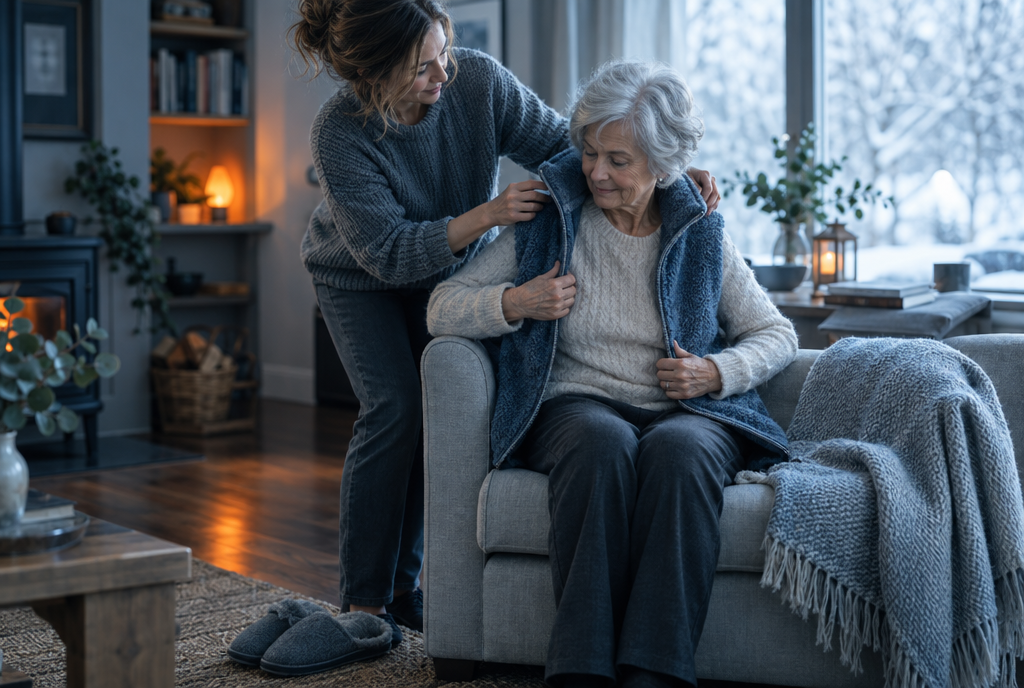
The best warm gifts for an elderly parent are easy to put on, safe to use alone and suited to where they spend the day: soft layers with simple fastenings, a lap throw, warm socks and closed-back slippers with grippy soles, and bedding for cool nights. Anything that heats should have automatic shut-off and simple controls, and should never sit on skin they cannot feel well.
What should you check before buying a warm gift for an older parent?
Older adults can lose body heat faster and notice it less. In a National Institutes of Health release, the National Institute on Aging warned that mildly cool homes of 60 to 65 degrees can trigger hypothermia in older people and advised setting the thermostat to at least 68 to 70 degrees. A warm gift helps, but it works alongside a warm home, not instead of one. For the full picture, see our guide on keeping an elderly person warm safely.
Before you buy, run through five safety questions. They matter more than brand or style.
Can they put it on and take it off alone, with stiff hands or limited reach?
Does anything that heats switch itself off automatically?
Can they feel heat normally, or do diabetes, neuropathy or medications blunt sensation?
Does it add a cord, a trailing hem or a smooth sole that raises the risk of a fall?
Will they remember to turn it off, or is there a timer to do it for them?
Which gifts fit which needs?
Organize the list by where your parent spends time and what they struggle with, then choose within each type.
| Need | Gift type | What to look for | Avoid |
|---|---|---|---|
| Cold in a favorite chair | Lap throw, shawl or wearable blanket | Light weight, washable, no trailing edges | Long throws that drag on the floor |
| Hard to add layers | Front-opening cardigan or vest | Large zippers, magnetic or snap closures | Small buttons, tight necklines |
| Cold feet | Warm socks, closed-back slippers | Textured non-slip sole, firm heel counter | Backless slippers, socks alone on hard floors |
| Cold at night | Flannel sheets, bed socks, extra blanket | Easy-care fabrics, light but warm | Heated pads used while asleep |
| Wants heat | Heated throw with auto shut-off | Simple controls, timer, low settings | Complex controls, no shut-off |
| Goes out in winter | Hat, scarf, easy-on gloves, traction cleats | Large pull tabs, bright colors | Fiddly fastenings |
What clothing gifts are easiest for older adults to wear?
Loose layers trap warm air and let your parent adjust through the day. Look for front-opening cardigans and vests with large zipper pulls, snaps or magnetic closures, which are easier than small buttons for stiff or arthritic fingers. A thin base layer of wool, silk or synthetic fabric under everyday clothes adds warmth without bulk.
A vest is often the most useful single piece. It keeps the torso warm, leaves the arms free for canes and walkers, and slips on over whatever they are already wearing.
What should you look for in slippers and socks?
Cold feet are a common complaint, and footwear is also a safety decision. The CDC reports that more than one in four older people falls each year, and that falling once doubles the chance of falling again. Its STEADI fact sheet on feet and footwear recommends a firm heel collar, a textured sole and laces or straps that hold the shoe on, and advises against shoes with no back, smooth soles and wearing only socks indoors.
Apply the same logic to slippers: choose a closed back, a textured rubber sole and an adjustable strap. Warm socks should have a soft, non-binding top. If your parent likes wearing socks alone around the house, grip-sole socks are safer than plain ones, but supportive slippers are better still.
Are heated blankets and heating pads safe gifts for seniors?
They can be, with the right features and habits. The Electrical Safety Foundation says heating pads and electric blankets cause almost 500 fires each year, almost all involving electric blankets more than ten years old, and advises never folding or covering them while on and never using them while sleeping. Buy new, with automatic shut-off and large, clearly marked controls.
The bigger risk for many older adults is burns. Diabetes, neuropathy, some medications and memory changes can all mean a person does not notice skin getting too hot. Never place heat on numb skin, keep a layer of fabric between any warmer and the body, and talk to their clinician before giving any heated product if they have diabetes, neuropathy, circulation problems or dementia.
Is a space heater a good gift for an elderly parent?
Only with care. CPSC estimates that portable heaters were involved in about 1,600 fires a year from 2020 to 2022, with an average of 70 deaths a year. It advises keeping heaters at least three feet from drapes, furniture and bedding, plugging them directly into a wall outlet rather than an extension cord or power strip, and turning them off when sleeping.
If you choose one, pick an electric model with tip-over and overheat protection, place it where the cord will not cross a walkway, and check that smoke and carbon monoxide alarms work. Often, helping with the heating bill or sealing drafts is the safer gift.
When should cold be a health conversation?
The National Institute on Aging has listed confusion or sleepiness, slowed or slurred speech, shivering or stiffness, weak pulse and poor control of movement as warning signs of hypothermia, and advised calling 911 at a temperature of 96 degrees or lower. If your parent is often cold, or their medicines or health have changed, encourage them to talk to their clinician.
Where HEATJAC fits
HEATJAC REFLECT is a lightweight heat-reflective vest with a snap front and integrated pockets for compatible warming elements (sold separately), and it is passive, with no battery. The snap front suits parents who find zippers or buttons difficult. It is a layer for comfort, not a substitute for a warm home, and warmers should only be used by someone who can feel heat normally.
Key takeaways
A warm gift supports, but does not replace, a home kept at a safe temperature.
Choose layers with easy closures that a parent can manage alone.
Pick slippers with closed backs and textured soles; avoid socks alone on hard floors.
Heated items need automatic shut-off, simple controls and no use during sleep or on numb skin.
Space heaters need three feet of clearance, a wall outlet and working alarms.
Frequently asked questions
What is a good gift for an elderly parent who is always cold?
Soft layers with easy closures, a light lap throw, warm socks and closed-back slippers with grippy soles are practical choices. Match the gift to where they spend their day and what they can manage alone.
Are electric blankets safe for elderly people?
They can be for people who feel heat normally, when the blanket is new and has automatic shut-off. Older adults with diabetes, neuropathy or memory problems face higher burn risk, so check with their clinician first and never let them sleep on a heating pad.
What slippers are safest for seniors?
Choose slippers with a closed back, a textured non-slip sole and a strap that holds the foot. The CDC's footwear guidance advises against backless shoes, smooth soles and walking in socks alone.
What temperature should an older person's home be?
The National Institute on Aging has advised setting the thermostat to at least 68 to 70 degrees. It has also warned that homes of 60 to 65 degrees can trigger hypothermia in older people.
Are hand warmers safe for elderly people?
They can be for someone who feels heat normally and uses them over clothing, not on bare skin. Skip them for anyone with numbness, diabetes-related neuropathy or memory problems unless their clinician agrees.
Related reading
Sources
Hypothermia: A Cold Weather Hazard for Seniors (news release), National Institutes of Health
Keep Warm and Safe This Winter: Tips for Using Generators, Furnaces and Space Heaters (2026), U.S. Consumer Product Safety Commission
Facts About Older Adult Falls, Centers for Disease Control and Prevention
STEADI Fact Sheet: Feet and Footwear for Older Adults, Centers for Disease Control and Prevention
Heating Pads and Electric Blankets Safety, Electrical Safety Foundation International
About HEATJAC. HEATJAC is a thermal architecture company founded by an anesthesiologist. We design patented garment systems that capture, conduct and broaden warmth across the body, and we publish this knowledge hub because the science of staying warm should be public. HEATJAC products are not medical devices and are not intended to diagnose, treat, cure or prevent any disease.