
How to layer for cold weather: base, mid and shell
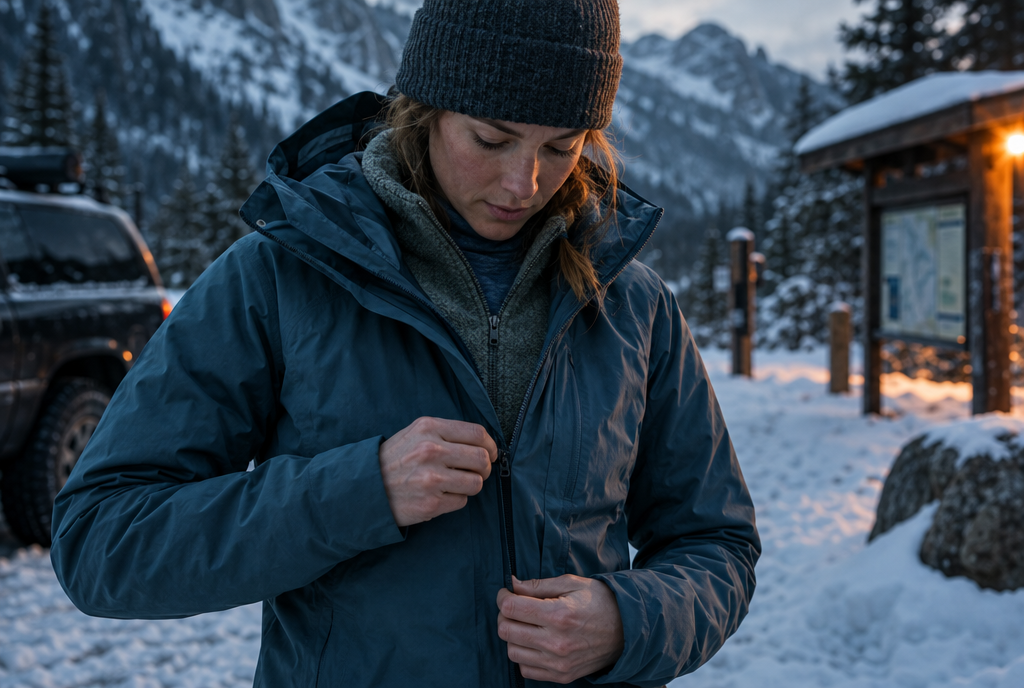
Layering for cold weather means wearing three kinds of clothing that each do one job. A snug base layer moves sweat off your skin, an insulating mid layer such as fleece, down or synthetic fill holds warm air, and an outer shell blocks wind and precipitation. Because each layer comes off or goes on independently, you can stay warm without getting soaked in sweat.
Cold weather layering chart
The chart below assumes moderate activity, such as walking, in calm air. Standing still calls for one step warmer, wind adds a step plus a windproof shell, and for running or heavy work you can dress as if it were about 20 °F (11 °C) warmer.
The bands are an editorial synthesis of CCOHS, CDC and National Weather Service layering advice, not an official standard. CCOHS advises gloves below 39 °F (4 °C) for light work and mittens below 1 °F (-17 °C).
| Temperature | Base layer | Mid layer | Outer layer | Head, hands and feet |
|---|---|---|---|---|
| Above 50 °F (10 °C) | Light wicking shirt | Usually none | Carry a light shell | None needed |
| 40 to 50 °F (4 to 10 °C) | Long-sleeve wicking layer | Light fleece | Light shell | Light gloves to carry |
| 32 to 40 °F (0 to 4 °C) | Long-sleeve wicking top | Fleece | Wind- and water-resistant jacket | Hat, warm gloves |
| 20 to 32 °F (-7 to 0 °C) | Midweight thermals | Fleece | Insulated coat | Hat, scarf, warm gloves |
| 0 to 20 °F (-18 to -7 °C) | Midweight to heavyweight thermals | Heavy fleece or insulated layer | Insulated windproof parka | Face covering, insulated gloves or mittens, insulated boots |
| -15 to 0 °F (-26 to -18 °C) | Heavyweight thermals | Two insulating layers | Heavy parka | Balaclava, mittens over liners, insulated boots |
| Below -15 °F (-26 °C) | Expedition-weight thermals | Expedition insulation | Expedition parka and pants | Goggles, mittens over liners, no exposed skin |
Why does layering work better than one heavy coat?
Warmth in clothing comes mostly from still air trapped in and between fabrics. Several thinner layers trap more of that air than one thick garment, and they let you fine-tune insulation as your activity level and the weather change.
The second reason is moisture. You sweat even in winter, and wet clothing loses much of its insulating value. The Michigan Department of Natural Resources reminds winter visitors that it is possible to overheat even in cold weather, and recommends light layers that are easy to add or remove.
Public health guidance points the same way. The CDC and the National Weather Service both advise several layers of loose-fitting clothing in the cold, along with a hat, mittens or gloves, and water-resistant outerwear.
What does each layer do?
REI's layering guide summarizes the system in three roles: the base layer wicks sweat off your skin, the middle layer retains body heat, and the outer layer shields you from wind and rain. The table below shows typical choices for each.
| Layer | Job | Common materials | Fit |
|---|---|---|---|
| Base layer | Move sweat away from skin | Merino wool, polyester, nylon, silk | Close to the skin |
| Mid layer | Trap warm air | Fleece, down, synthetic insulation | Room to move over the base |
| Outer shell | Block wind, snow and rain | Waterproof or water-resistant breathable fabric, soft shell | Fits over everything without compressing it |
How do you choose a base layer for cold weather?
A base layer only wicks well when it touches your skin, so REI recommends a comfortably snug fit. Synthetics such as polyester give the driest feel. Merino wool wicks well, resists odor, and dries more slowly. Silk suits low-exertion days.
Mayo Clinic notes that wool, silk or polypropylene inner layers hold body heat better than cotton. Cotton absorbs sweat and dries slowly, which is why most cold-weather guidance keeps it out of the base layer. Our base layer comparison covers the tradeoffs in detail.
Which mid layer should you use?
Fleece is the workhorse. It stays warm when damp and dries fast, but it breathes, so wind passes straight through it without a shell on top.
Down gives the most warmth for its weight and packs small, but it loses effectiveness when wet. Synthetic insulation performs similarly and keeps more of its insulating ability when damp, which makes it the safer pick for wet snow, sleet or heavy sweating.
For stop-and-start days, many people carry a warm puffy jacket in the pack and pull it on during breaks rather than hiking in it. A light insulated vest is another option, since it warms the torso while leaving the arms free to vent heat.
What kind of outer shell do you need?
Shells range from fully waterproof and breathable jackets for storms, to water-resistant breathable jackets for light precipitation, to soft shells that trade some weather protection for stretch and breathability. In dry cold, a windproof soft shell is often enough. In wet snow or rain, a waterproof shell matters more.
Look for ventilation such as pit zips. Being able to dump heat without removing the whole jacket is the easiest way to avoid sweating through your base layer.
Size the shell last. Try it on over your base and your warmest mid layer together, then reach forward and overhead. If the sleeves ride up or the insulation flattens against your back, go up a size, because compressed insulation traps less air.
How do you adjust layers during the day?
The rule of thumb among hikers and hunters is to start slightly cool. If you feel warm and cozy at the trailhead, you will likely be sweating within minutes of starting to move.
Before exertion: remove the insulating layer and start moving in base plus shell.
When you start to feel damp: open vents or unzip before you are soaked.
When you stop: add the insulating layer right away, before you feel cold.
In wind: add the shell even if the air temperature seems mild.
At day's end: change into a dry base layer if your first one is damp.
Do your head, hands and feet need their own layers?
Yes. Uncovered skin and the extremities are the areas most vulnerable to cold injury, according to the National Weather Service, and it advises covering ears, nose, fingers and toes. NWS also notes that mittens are warmer than gloves.
A liner glove under a mitten, a warm hat, a neck gaiter, and wool or synthetic socks in boots that are not too tight give the extremities their own layering system. Talk to a clinician if your hands or feet regularly turn white, numb or painful in the cold.
Key takeaways
Three layers, three jobs: wick moisture, trap warm air, block wind and precipitation.
Keep cotton out of the base layer in cold weather; choose merino, synthetic or silk.
Start slightly cool, vent early, and add insulation as soon as you stop moving.
Pick synthetic insulation or fleece when conditions are wet; down when dry and weight matters.
Give hands, feet and head their own layers; mittens are warmer than gloves.
Frequently asked questions
How many layers should I wear in cold weather?
Most people need three: a base layer, one insulating mid layer, and a shell. In very cold or still conditions you may add a second insulating layer. The right number is the one that keeps you warm without sweating at your current activity level.
Is two thin layers warmer than one thick layer?
Often, yes, because warmth comes from trapped air and two layers create an extra air space between them. More importantly, two layers give you a way to adjust. Avoid layering so tightly that you compress the insulation, which reduces its warmth.
What should I wear for cold weather hiking?
Hike in a wicking base layer and a breathable shell or light fleece, and carry a warm insulated jacket for stops. Add a hat, gloves, and wool or synthetic socks. Start slightly cool so you do not sweat through your clothing on the first climb.
Should a base layer be tight or loose?
Snug. A base layer needs skin contact to move sweat away efficiently. Mid layers and shells should be looser so they do not compress the insulation beneath them.
Can I wear jeans in cold weather?
For a short walk between buildings, jeans are fine. For long periods outside, cotton denim holds moisture and dries slowly, so a synthetic or wool base layer under weather-resistant pants is a better choice.
What is an example of a three-layer clothing system for the cold?
A merino wool or polyester long-sleeve base layer, a fleece or synthetic insulated mid layer, and a windproof, water-resistant shell is a classic three-layer system. The base moves sweat off the skin, the mid layer traps warm air and the shell blocks wind and precipitation. The US Army describes every cold weather clothing ensemble the same way: a base layer, an insulating layer and a shell.
Is there a cold weather layering chart I can follow?
Yes, the chart on this page matches each temperature band to a base, mid and outer layer. As a rule of thumb, add a hat and gloves around 40 °F (4 °C), switch to an insulated coat below 32 °F (0 °C), and move to mittens over liners near 0 °F (-18 °C). Dress one step warmer for standing still or wind.
What should a cold weather base layer be made of?
Choose wool, polyester or polypropylene, which CCOHS lists for the inner layer because they insulate and wick moisture away from the skin. CCOHS says cotton is not recommended because it gets damp quickly and loses its insulating properties. Save cotton for short trips between buildings.
What are the military's cold weather layering principles?
The US Army teaches the COLD acronym: keep clothing Clean, avoid Overheating, wear clothing Loose and Layered, and keep clothing Dry. Soldiers wear a wicking base layer, an insulating layer and a shell, and start a patrol slightly cold so they do not sweat. The same principles work for civilians hiking, hunting or working outdoors.
From HEATJAC
We design low-profile thermal garments: a heat-reflective vest and a thermal harness with pockets for warmers or cold packs.
Choosing gear? Heated vest vs heat-reflective vest · A hunter's guide to staying warm in the stand
Related reading
Sources
Layering Basics, REI Expert Advice
How to Choose Base Layers, REI Expert Advice
Hypothermia: Symptoms and causes, Mayo Clinic
Extreme Cold: During, National Weather Service (NOAA)
Preventing Hypothermia, Centers for Disease Control and Prevention
DNR offers cold-weather safety tips for outdoor adventurers, Michigan Department of Natural Resources
Cold Environments: Working in the Cold, Canadian Centre for Occupational Health and Safety (CCOHS)
Fight the Freeze, U.S. Army
About HEATJAC. HEATJAC is a thermal architecture company founded by an anesthesiologist. We design patented garment systems that capture, conduct and broaden warmth across the body, and we publish this knowledge hub because the science of staying warm should be public. HEATJAC products are not medical devices and are not intended to diagnose, treat, cure or prevent any disease.