
Military cold-weather layering principles for any cold job
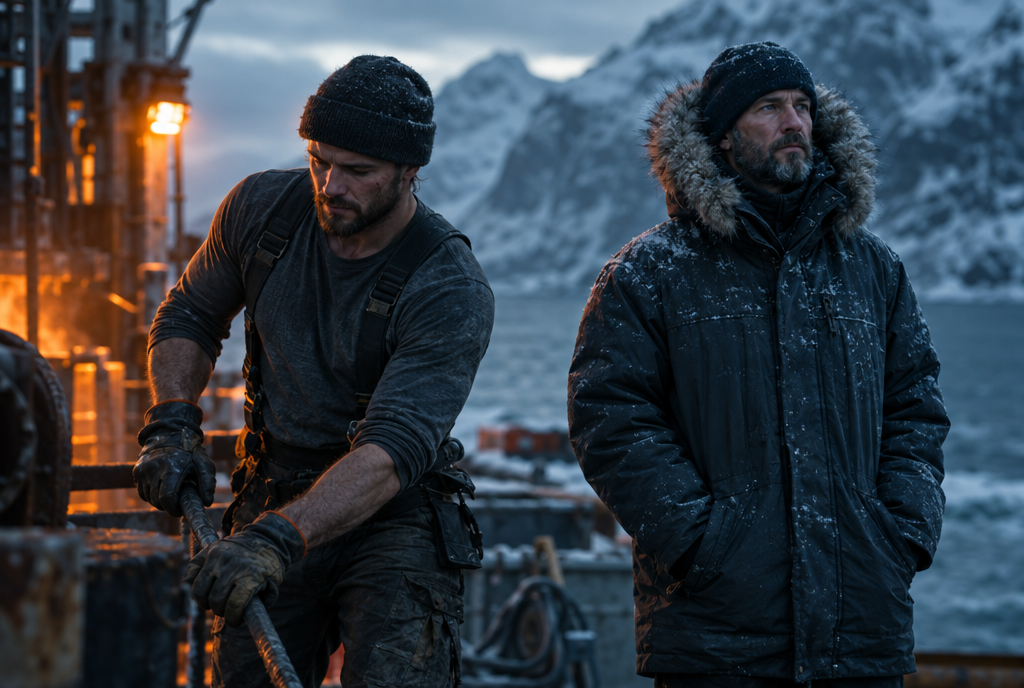
Military cold-weather layering rests on one idea: stay warm without getting wet. The Army's COLD rule says keep clothing clean, avoid overheating, wear it loose and in layers, and keep it dry. In practice that means a wicking base, removable insulation, a wind or waterproof shell, and a heavy insulated layer added only when you stop moving.
What is the COLD rule for cold-weather clothing?
The Army's cold-injury bulletin, TB MED 508, teaches soldiers a four-part memory aid. Each letter targets a way clothing loses its ability to keep you warm.
C, keep it Clean: dirt and body oils mat fibers and reduce the air they trap.
O, avoid Overheating: sweat soaks layers from the inside.
L, wear it Loose and in Layers: trapped air insulates, and compression squeezes it out.
D, keep it Dry: TB MED 508 notes wet clothing can lose 50 percent or more of its insulation.
Why do layers work better than one heavy coat?
TB MED 508 explains that multiple layers trap air that serves as insulation, and let a person adjust clothing to both the environment and their activity level. A single heavy coat gives you two choices, on or off. Layers give you many.
The Army's Generation III Extended Cold Weather Clothing System (ECWCS) is built on this principle. PEO Soldier describes it as a 12-piece, seven-layer system that lets soldiers dress up or down to their comfort across roughly minus 40 to plus 60 °F.
How should layering change between active and static work?
This is the most useful military lesson for civilian workers. The ECWCS configuration guide gives different combinations for active and static work at the same temperature, because a person hauling gear makes far more heat than one standing watch.
| Condition (ECWCS guide) | Active work, tops | Static work, tops |
|---|---|---|
| Extreme cold | Base, midweight, fleece, soft shell (L1, L2, L3, L5) | Same stack plus insulated parka (L7) |
| Cold, 0 to 30 °F | Base, midweight, soft shell (L1, L2, L5) | Midweight, soft shell, insulated parka (L2, L5, L7) |
| Cold and wet | Base and soft shell (L1, L5), 35 to 45 °F | Base, fleece, waterproof shell (L1, L3, L6), 30 to 45 °F |
How do you avoid sweating in cold weather?
Start slightly cool. If you feel warm standing still before work begins, you will be soaked ten minutes into a hard task. Shed a layer before exertion, open zips at the neck and underarms, and slow your pace if you start to sweat heavily.
When the work stops, add insulation immediately, before you feel cold. The same habit protects a freezer picker stepping out to the dock or a lineworker waiting on a pole.
Why does the shell layer matter so much in wind?
Insulation works by holding still air, and wind strips that air away. TB MED 508 defines the windchill temperature as the equivalent still-air temperature at which heat loss through bare skin would be the same as under windy conditions, and warns that finger frostbite risk rises when windchill falls below minus 9 °F.
A breathable shell over the insulation keeps the trapped air in place without sealing in sweat. That is why the ECWCS soft shell appears in almost every configuration.
How do military layers translate to civilian cold jobs?
The garments differ, but the roles map directly.
Base layer (ECWCS L1 and L2): synthetic or wool that moves sweat off the skin; avoid cotton next to skin in the cold.
Insulation (L3): fleece or synthetic fill that still insulates when damp.
Wind and weather shells (L4 to L6): a breathable soft shell for most work, a waterproof shell for rain and wet snow.
Static insulation (L7): a big insulated parka or freezer suit for breaks, standby or low-activity tasks.
Extremities: gloves, liners, hats and dry socks, handled separately and swapped when wet.
Why do hands and feet need their own plan?
Hands and feet cool first because the body reduces blood flow to them in the cold. TB MED 508 reports that manual dexterity declines once finger skin temperature drops to about 60 °F, and that immersing hands and forearms in 50 °F water for as little as 5 minutes can reduce dexterity by 20 to 50 percent.
For feet, the bulletin calls changing socks two to three times a day mandatory in cold-wet environments. Keeping the core warm helps too, since a warm trunk supports blood flow to the extremities.
Is there a one-size layering formula?
No. In announcing its update to TB MED 508, the US Army Research Institute of Environmental Medicine (USARIEM) highlighted its Cold Weather Ensemble Decision Aid, a tool that predicts how long people can endure cold based on clothing, activity and conditions. A USARIEM scientist summed up the point: some people might need an extra layer, while others might not.
Build a system you can adjust, test it on real shifts, and adjust again. Anyone who notices numbness, color change or confusion in the cold should get warm and talk to a clinician.
Key takeaways
The COLD rule: clean, avoid overheating, loose and in layers, dry.
Dress for activity: fewer layers while working, more the moment you stop.
Wet clothing can lose half or more of its insulation, so managing sweat is the core skill.
Hands and feet need their own plan, including dry sock changes.
Frequently asked questions
What does COLD stand for in cold-weather clothing?
Keep it Clean, avoid Overheating, wear it Loose and in Layers, and keep it Dry. The acronym comes from the Army's cold-injury guidance, TB MED 508.
How many layers should I wear for cold work?
Typically three roles: a base layer, an insulating layer and a shell, plus a heavy insulated layer for breaks or static tasks. The number of garments depends on temperature and activity.
Why does the military avoid cotton next to skin in the cold?
Cotton holds moisture and dries slowly, and wet clothing loses much of its insulation. Synthetic and wool base layers move sweat away from the skin.
Should I wear my heaviest jacket while working hard in the cold?
Usually not. Working hard in heavy insulation causes sweating, which leaves you colder once you stop. Save the heaviest layer for breaks and low-activity periods.
Can I use military surplus ECWCS for civilian work?
Yes, many people do. Follow the same principles: match layers to activity, keep the base layer dry and add the insulated parka when static.
From HEATJAC
We design low-profile thermal garments: a heat-reflective vest and a thermal harness with pockets for warmers or cold packs.
Choosing gear? Cold-weather gear for EMS crews · Cold-weather gear for police and security officers
Related reading
Sources
TB MED 508: Prevention and Management of Cold-Weather Injuries (April 2005), US Army / USARIEM
Generation III Extended Cold Weather Clothing System (ECWCS) fact sheet, PEO Soldier, US Army (archived by CIE Hub)
Generation III Extended Cold Weather Clothing System, CIE Hub
USARIEM is updating guidance on cold-weather injuries, US Army
Army scientists developing solutions to improve thermal toughness in the Arctic, US Army
About HEATJAC. HEATJAC is a thermal architecture company founded by an anesthesiologist. We design patented garment systems that capture, conduct and broaden warmth across the body, and we publish this knowledge hub because the science of staying warm should be public. HEATJAC products are not medical devices and are not intended to diagnose, treat, cure or prevent any disease.