
What to wear in a freezer warehouse: a layering guide
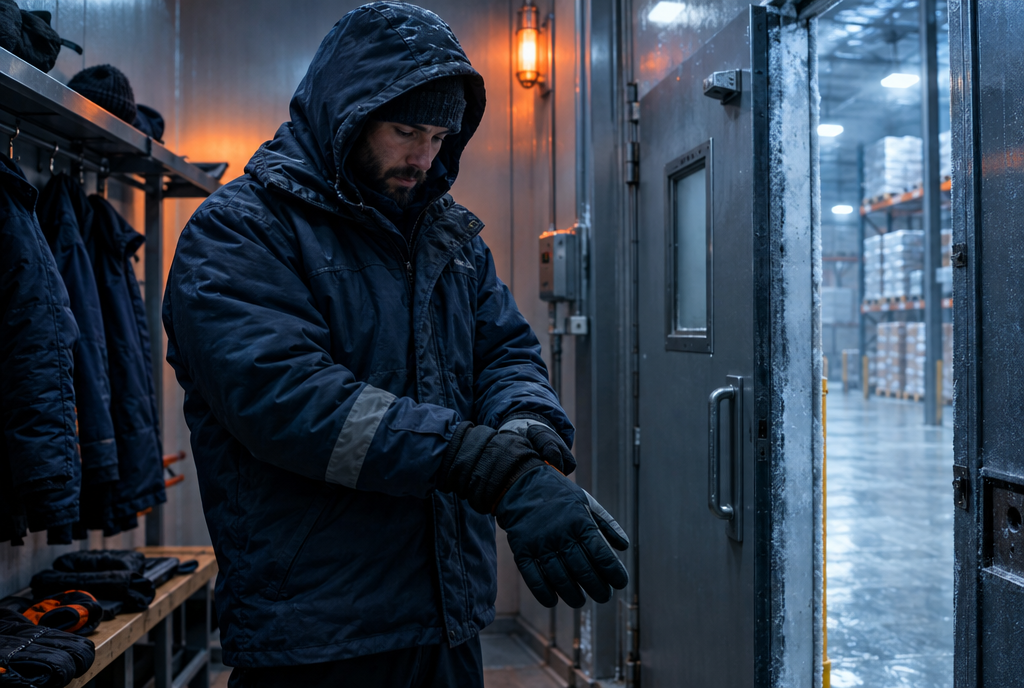
Dress for a freezer warehouse in three layers: a moisture-wicking base of wool or synthetic fabric, an insulating middle layer or freezer suit, and a wind-resistant outer layer. Add insulated gloves with liners, an insulated hat or hood, and insulated boots with dry socks. Avoid cotton, open layers before you sweat, and change damp items at every break.
What is the right layering system for freezer work?
OSHA recommends three layers for cold work. The inner layer, made of wool, silk or synthetic fabric, keeps moisture away from the body. The middle layer of wool, fleece or synthetic insulation traps warm air. The outer layer blocks wind and moisture while allowing some ventilation.
Freezers change the emphasis. Rain is rarely the issue, but air movement from evaporator fans and forklifts is constant, and sweat from lifting is the main source of wetness. That makes wicking base layers and adjustable ventilation more important than full waterproofing.
| Layer | Job | Good choices | Avoid |
|---|---|---|---|
| Base | Move sweat away from skin | Merino wool, polyester or polypropylene knit | Cotton, which holds moisture |
| Mid | Trap warm air | Fleece, synthetic insulated jacket and bib, or freezer suit | Tight fits that compress insulation |
| Outer | Block air movement | Wind-resistant shell or the outer fabric of a freezer suit | Fully sealed layers with no venting |
| Hands | Keep fingers working | Thin liner plus insulated glove or mitten, spares on hand | Wet gloves, bare contact with frozen metal |
| Feet | Stay warm and dry | Insulated boots with room for thick socks | Tight boots that restrict circulation |
| Head and face | Reduce heat loss | Insulated hat, hood liner or face covering | Leaving ears and cheeks exposed |
How do you choose cold storage clothing for your temperature zone?
Cold storage buildings often have several zones, from chilled coolers to deep freezers. Clothing should match the coldest zone a worker enters and how long they stay. A picker making short trips into a freezer needs quick ventilation; an operator who stays inside for long stretches needs more insulation and better hand protection.
CCOHS offers a useful guide for hands: gloves should be used below 4°C for light work and below -7°C for moderate work, and mittens are recommended for work below -17°C. When a task needs finger dexterity, a liner glove under a removable mitten is a common compromise.
How to layer for a freezer shift, step by step
This sequence keeps you warm without building up sweat. Adjust it to your site's zones and your employer's PPE rules.
Step 1: Put on a dry, snug wicking base layer top and bottom and dry wool or synthetic socks.
Step 2: Add the insulating layer or freezer suit, leaving zippers partly open while you are in warm areas.
Step 3: Put on insulated boots, then a hat or hood liner that covers the ears.
Step 4: Pull on liner gloves, then insulated gloves or mittens just before entering the cold.
Step 5: Close zippers and cuffs at the freezer door so warm air stays in.
Step 6: Open vents or zippers during heavy lifting to limit sweating.
Step 7: At every break, open layers, dry or swap gloves and liners, and change damp socks.
Why is sweat the biggest clothing problem in a freezer?
Freezer suits are designed for low temperatures, which means they can overheat you during heavy work. Sweat soaks into base layers and gloves, and once activity slows, that moisture pulls heat from the skin. OSHA notes that wet feet lose heat 25 times faster than dry feet, and damp gloves behave the same way.
The practical fix is to regulate rather than simply add layers. Open zippers during exertion, choose base layers that dry quickly, and keep a spare set of liners and socks in the break room. NIOSH recommends that employers provide a place to change out of wet clothes for exactly this reason.
What gloves work best in a freezer?
Hands are usually the first complaint in cold storage. In one study of cold storage forklift operators, more than 60% reported hand coldness or pain. Good hand protection balances insulation with grip and dexterity, and there is rarely a single glove that does both well.
Many crews use a thin liner for fine work, an insulated outer glove or mitten for longer tasks, and a spare dry pair warming at the break area. CCOHS also recommends insulating metal handles on equipment used below freezing, which reduces how much insulation the glove itself has to provide.
Do heated vests and gloves help in cold storage?
Heated garments can add warmth for workers who stand still for long periods, such as forklift operators, or for anyone who runs cold. They work best as a supplement to a good layering system, not a replacement for it. Place the heated layer close to the body under insulation, and check that battery packs and cables do not snag on equipment.
Passive options such as reflective linings or pocketed vests that hold air-activated warmers add warmth without charging. Employers considering heated gear for a whole crew should read our employer checklist for heated and thermal PPE, which covers battery safety, cleaning and pilot testing.
What else should freezer workers carry or check?
Fit and condition matter as much as the garment type. Insulation only works when it can loft, so layers should not be so tight that they compress one another, and boots should leave room for thick socks without squeezing the toes. Replace freezer suits and gloves whose insulation has flattened or whose shells are torn, and dry gear fully between shifts rather than leaving it in a locker.
Carry spare liners and socks, a warm drink for breaks, and any site-required PPE such as high-visibility layers. Check boots for wet insoles at the start of each shift. If fingers stay numb after warming up, or skin looks pale or waxy, stop and report it, and see a clinician if symptoms persist.
Key takeaways
Use three layers: wicking base, insulating middle and wind-resistant outer, and never cotton next to the skin.
Manage sweat by venting during heavy work and changing damp liners and socks at breaks.
Match glove type to temperature and task; CCOHS recommends mittens below -17°C when dexterity allows.
Heated or passive thermal vests can supplement layers, especially for stationary work.
Frequently asked questions
What should I wear for my first day in a freezer warehouse?
Wear a wool or synthetic base layer, a warm mid layer, dry wool socks and insulated boots, and bring a hat and two pairs of gloves. Your employer may issue a freezer suit. Leave cotton at home, because it holds sweat and chills you.
Is a freezer suit better than layers?
A freezer suit is essentially the insulating and outer layers combined in one garment. It still needs a wicking base layer underneath. Separate layers are easier to adjust for workers who move between zones often.
How do I keep my hands warm working in a freezer?
Use a thin liner under an insulated glove or mitten, keep a dry spare pair at the break area, and avoid touching frozen metal with bare skin. Warm your hands at breaks and report numbness that does not go away.
Can I wear a heated vest in a freezer?
Many workers do, placed under the insulating layer. Follow your employer's rules on battery-powered devices, keep cables clear of equipment, and treat the vest as an addition to proper layers rather than a substitute.
From HEATJAC
We design low-profile thermal garments: a heat-reflective vest and a thermal harness with pockets for warmers or cold packs.
Choosing gear? Cold storage and freezer gear by zone · Winter gear for construction and utility crews
Related reading
Sources
Cold Stress Guide, Occupational Safety and Health Administration
Cold Environments: Control Measures, Canadian Centre for Occupational Health and Safety
Preventing Cold-related Illness, Injury, and Death among Workers (NIOSH 2019-113), CDC, National Institute for Occupational Safety and Health
An occupational health study on workers exposed to a cold environment in a cold storage warehouse (Morioka et al., 2005), ScienceDirect
Cold and Work: Types, Causes, Preparation, CDC, National Institute for Occupational Safety and Health
About HEATJAC. HEATJAC is a thermal architecture company founded by an anesthesiologist. We design patented garment systems that capture, conduct and broaden warmth across the body, and we publish this knowledge hub because the science of staying warm should be public. HEATJAC products are not medical devices and are not intended to diagnose, treat, cure or prevent any disease.