
How to stay warm at home without turning up the heat
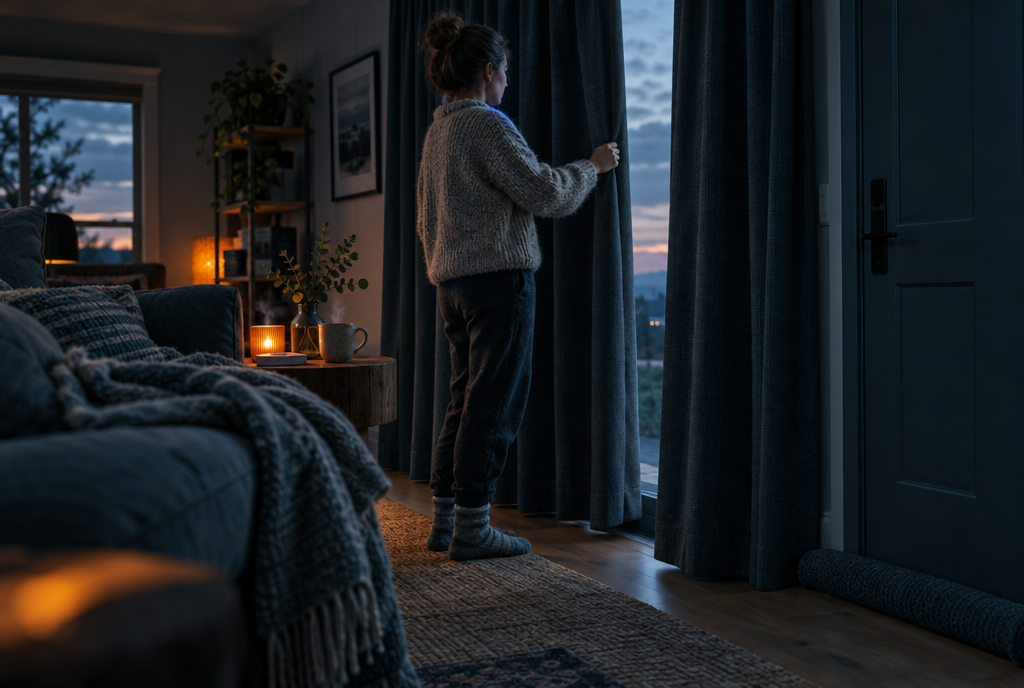
To stay warm at home without turning up the heat, warm your body first: wear loose layers, keep your core, head and feet covered, eat regular meals and get up to move every hour. Then keep heat in: block drafts, close curtains at night, open sunny ones by day and heat only the room you use. Keep that room warm enough for health, especially for older adults and babies.
Why warm your body before your house?
A furnace heats every cubic foot of air and every wall in the home. You only need a few inches of warm air around your skin. That is why clothing and blankets are the cheapest heat you have, and why the Department of Energy lists layering up and using blankets as a way to lower heating costs.
Body-first warmth also works room by room. You can keep the thermostat modest, dress for it, and add targeted heat only where you sit or sleep.
What should you wear to stay warm indoors?
Several thin, loose layers beat one thick sweater, because each layer traps still air. Keep the torso well covered; when your core is warm, your body is more willing to send warm blood to your hands and feet.
A thin long-sleeve base layer of wool or synthetic fabric, which stays warmer than cotton if you get damp.
A vest, fleece or cardigan over the torso for core warmth without bulk on the arms.
Thick socks and closed slippers with a firm sole, since cold floors pull heat from the feet.
A light hat or hood when the room is cool, and fingerless gloves for typing.
A throw or blanket over the legs when sitting still for long periods.
How do you keep your hands and feet warm at home?
Cold hands and feet are often a sign that the core needs more insulation, so add a torso layer before reaching for thicker gloves. Put your feet on a rug or a folded blanket instead of bare tile or wood, and keep a spare pair of dry socks nearby.
A warm drink, a short walk around the house or a few minutes of stair climbing brings warmth back to the fingers. Hot water bottles and heat packs should never rest directly on bare skin, and anyone with reduced sensation in the feet should talk to a clinician before using any heat source on them.
Does moving around keep you warm?
Yes. Working muscles produce heat, and sitting still for hours lets your body cool steadily. Set a reminder to stand up, stretch or walk for a few minutes every hour, especially when working from home.
Food is fuel for that heat. The CDC notes that eating well-balanced meals helps you stay warmer, and advises avoiding alcoholic or caffeinated drinks in extreme cold because they cause the body to lose heat faster. Warm, sweet drinks or broth are a better choice.
How do you keep heat in your home?
Stop warm air from leaking out before you think about adding more. The Department of Energy calls weatherstripping, caulking and added insulation low-cost ways to reduce air leaks, and notes that opening shades during the day lets in sunlight while closing them at night helps trap heat. The CDC suggests closing off unneeded rooms and stuffing towels or rags in cracks under doors.
Ceiling fans help too. The Department of Energy advises reversing the fan to turn clockwise at low speed in winter, which pushes warm air that collects near the ceiling back down into the room.
| Tactic | How it helps | Effort |
|---|---|---|
| Weatherstrip doors and caulk window gaps | Cuts drafts that pull warm air out | Low cost, an afternoon |
| Open sunny curtains by day, close all at night | Adds free solar heat, then holds it in | Daily habit |
| Towel or draft stopper under doors | Blocks cold air at floor level | Minutes |
| Close doors to unused rooms | Concentrates heat where people are | Minutes |
| Rugs on bare floors | Reduces heat loss through cold feet | Low cost |
| Ceiling fan on clockwise, low speed | Moves warm air down from the ceiling | One switch |
Is zone heating a room cheaper, and is it safe?
Heating only the room you are in, while keeping the rest of the house cooler, can lower the bill. The Department of Energy says setting the thermostat back 7 to 10 degrees for 8 hours a day while you are away or asleep can cut as much as 10% a year from heating bills.
If you use a portable heater, the CDC advises choosing an electric model with automatic shut-off switches and non-glowing elements, keeping it at least 3 feet from drapes, furniture and bedding, and never covering it. It also warns that turning on the stove for heat is not safe. Never heat a room with an oven, grill or other fuel-burning appliance that is not designed for indoor heating, because of the risk of carbon monoxide poisoning.
How cold is too cold inside a home?
The World Health Organization's housing and health guidelines propose 18°C (about 64°F) as a safe and well-balanced indoor temperature for general populations in cold seasons. They add that a higher minimum may be needed for older people, children and those with chronic illnesses, particularly heart and lung disease. The NHS advises heating the rooms you regularly use to at least 18°C if you can.
The NHS lists people aged 65 and older, babies and children under 5, pregnant women and people with long-term health or mental health conditions or disabilities among those at higher risk from the cold. The CDC says infants under one year old should never sleep in a cold room. If someone in your home is in these groups, keep at least their main room at a safe temperature, and talk to a clinician if they often feel cold or unwell indoors.
Key takeaways
Warm the person before the house: layers, a covered core, warm feet and a hat.
Move for a few minutes every hour and eat regular meals.
Block drafts, use curtains with the sun, close off unused rooms and add rugs.
Zone heating saves money only when the heater is used safely.
WHO proposes 18°C (about 64°F) as a safe indoor minimum; vulnerable people may need more.
Frequently asked questions
What is the cheapest way to stay warm at home?
Clothing, blankets and draft blocking cost the least. Add a base layer and a vest, put a draft stopper under doors, and close curtains at night before you consider heating more of the house.
Is 60 degrees too cold for a house?
For many people it is below what health guidance recommends. The WHO proposes 18°C, about 64°F, as a safe indoor minimum in cold seasons, and says older people, children and people with chronic illness may need it warmer.
How can I keep my bedroom warm at night without the heating on?
Close the curtains at dusk, block the gap under the door, and add a layer to the bed rather than to the room. Wear socks and a light hat if you run cold, and keep infants in a room that is not cold, as the CDC advises.
Is an electric blanket cheaper than turning up the heat?
An electric blanket warms one bed rather than a whole house, so it usually uses far less energy than raising the thermostat. Check the wattage on the label to compare, and use it only as the manufacturer directs.
Does closing doors to unused rooms really help?
Yes, it keeps warm air where people are instead of spreading it through the whole house. The CDC suggests closing off unneeded rooms during extreme cold. Keep doors open to rooms with plumbing on exterior walls if pipes could freeze.
From HEATJAC
We design low-profile thermal garments: a heat-reflective vest and a thermal harness with pockets for warmers or cold packs.
Choosing gear? What actually helps someone who is always cold · Warm, safe gifts for an older parent
Related reading
Sources
Six Simple Steps To Save Energy and Money This Winter, U.S. Department of Energy
5 Tips to Help You Save on Energy Bills this Winter, U.S. Department of Energy
Safety Guidelines: During and After a Winter Storm, Centers for Disease Control and Prevention
WHO Housing and Health Guidelines: Low indoor temperatures and insulation, World Health Organization (via NCBI Bookshelf)
Keep warm, keep well, NHS
About HEATJAC. HEATJAC is a thermal architecture company founded by an anesthesiologist. We design patented garment systems that capture, conduct and broaden warmth across the body, and we publish this knowledge hub because the science of staying warm should be public. HEATJAC products are not medical devices and are not intended to diagnose, treat, cure or prevent any disease.