
Space heater safety: what to know before you plug one in
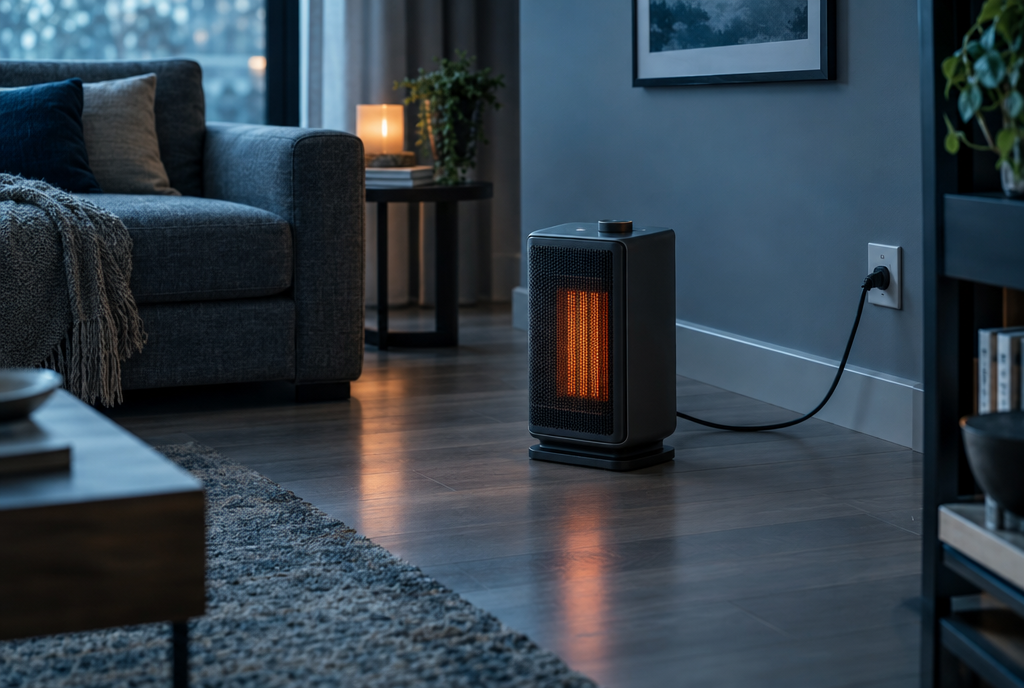
Space heater safety comes down to a few rules. Keep the heater at least 3 feet from anything that can burn, plug it directly into a wall outlet, and choose a model with a safety certification mark and automatic shut-off. Turn it off when you leave the room or go to sleep. Fuel-burning heaters also need proper venting and a working carbon monoxide alarm.
How dangerous are space heaters?
They cause a small share of heating fires but a large share of the deaths. The U.S. Fire Administration reports that portable heaters were involved in only 3% of residential heating fires from 2017 to 2019, yet accounted for 41% of fatal heating fires in homes. The Consumer Product Safety Commission estimates that portable heaters were involved in an average of 1,600 fires a year from 2020 to 2022, with an average of 70 deaths and 150 injuries annually.
Timing matters too. The National Fire Protection Association notes that half of home heating fires are reported in December, January and February, when heaters run longest.
What is the 3-foot rule for space heaters?
Keep anything that can burn at least 3 feet from the heater. CPSC applies the rule to the front, sides and rear, and names beds, sofas, curtains, papers and clothes. The U.S. Fire Administration extends the same distance to all heat sources, including fireplaces, wood stoves, radiators and candles.
NFPA also recommends a 3-foot kid-free zone around space heaters and open fires. The CDC adds a simple rule that is easy to forget on a cold night: never cover your space heater, including with clothes or towels hung up to dry.
Can you plug a space heater into an extension cord or power strip?
No. CPSC says to plug electric space heaters directly into a wall outlet and never into an extension cord or power strip. Heaters draw a lot of current for long periods, and a lighter cord or strip can overheat.
CPSC also advises never running the heater's cord under rugs or carpeting, keeping the heater away from water and never touching it with wet hands. If the cord or plug feels hot, disconnect the heater and have an authorized repair person check it.
What safety features should a space heater have?
Start with the label. CPSC says a heater that has been safety-certified will carry a safety certification mark, which comes from an independent testing laboratory such as UL, Intertek (ETL) or CSA. The CDC recommends electric heaters with automatic shut-off switches and non-glowing elements.
Place the heater on a stable, level surface where it will not be knocked over, as CPSC advises, and check SaferProducts.gov to see whether your model has been recalled.
| Feature or check | What it does | Why it matters |
|---|---|---|
| Safety certification mark | Shows an independent lab tested the design | Confirms it meets a recognized safety standard |
| Tip-over switch | Cuts power if the heater falls | Stops a toppled heater from heating the floor or rug |
| Overheat protection | Shuts off if internal parts get too hot | Adds a backstop if airflow is blocked |
| Non-glowing element | Heats without an exposed red-hot coil | Recommended by the CDC for home use |
| Short, undamaged cord | Reaches a wall outlet without extensions | CPSC says never use extension cords or power strips |
| Recall check | Search the model on SaferProducts.gov | Catches known defects before use |
Is it safe to leave a space heater on overnight or unattended?
No. CPSC advises never leaving a heater operating while unattended or while you are sleeping, and the U.S. Fire Administration says to turn space heaters off when leaving the room or going to bed. Warm the bedroom before sleep, then switch the heater off and rely on bedding, socks and sleepwear.
This matters most in homes with young children, pets or older adults who may not notice a hazard or be able to react quickly. Pair every heater with working smoke alarms, and NFPA advises testing smoke alarms at least once a month.
Do space heaters give off carbon monoxide?
Electric heaters do not burn fuel, so they do not produce carbon monoxide. Kerosene, propane and natural gas heaters do. NFPA says all fuel-burning equipment should be vented to the outside to avoid carbon monoxide poisoning, that you should always use the fuel the manufacturer specifies, and that homes should have carbon monoxide alarms installed and maintained.
CPSC advises never refueling a fuel-burning heater while it is running and letting it cool first. Never use an oven or stove to heat your home; the U.S. Fire Administration and the CDC both warn against it. If a carbon monoxide alarm sounds or people feel dizzy, sick or confused, get everyone outside into fresh air and call 911.
What should you check before you plug a space heater in?
A short routine each time takes less than a minute.
The heater sits on a hard, level floor, out of walkways.
Nothing that can burn is within 3 feet on any side.
The plug goes straight into a wall outlet, with the cord in the open.
Smoke alarms, and carbon monoxide alarms for fuel-burning models, are working.
Someone awake will be in the room while it runs.
Key takeaways
Keep anything that can burn at least 3 feet from every side of the heater.
Plug straight into a wall outlet; never use an extension cord or power strip.
Buy a certified heater with automatic shut-off, and check for recalls.
Turn heaters off when you leave the room or go to sleep.
Fuel-burning heaters need venting, the right fuel and a carbon monoxide alarm.
Frequently asked questions
Is it safe to leave a space heater on all night?
No. CPSC advises never leaving a heater running while you sleep, and the U.S. Fire Administration says to turn it off when you go to bed. Warm the room first, then switch it off.
How far should a space heater be from a bed or couch?
At least 3 feet. CPSC applies that distance to the front, sides and back of the heater, and names beds, sofas, curtains, papers and clothes as items to keep clear.
Can a space heater cause carbon monoxide poisoning?
Electric space heaters do not produce carbon monoxide because they do not burn fuel. Kerosene, propane and gas heaters can, so they need proper venting, the correct fuel and a working carbon monoxide alarm nearby.
What does the safety certification mark on a heater mean?
It shows that an independent testing laboratory, such as UL, Intertek (ETL) or CSA, has evaluated the design against a recognized safety standard. CPSC recommends asking whether a heater is safety-certified before you buy it.
Can I use a space heater in a bathroom?
Only if the heater is designed for damp locations, and even then keep it well away from tubs, sinks and splashing water. CPSC advises keeping heaters away from water and never touching one with wet hands.
Why do I have to keep my space heater 3 feet from the wall?
The 3-foot rule is about anything that can burn, not the wall itself. CPSC names beds, clothes, curtains, papers and sofas, and the U.S. Fire Administration applies 3 feet to anything that can burn, which often includes curtains, furniture and items stored against a wall. Your heater's manual may list its own minimum clearances, so follow it wherever it asks for more space.
Can I plug a space heater into an extension cord or power strip?
No. CPSC and the U.S. Fire Administration both say to plug space heaters directly into a wall outlet and never into an extension cord or power strip. If the heater's cord or plug gets hot, disconnect it and contact an authorized repair person; if the outlet is hot, CPSC advises calling a certified electrician.
Can I put a space heater on carpet?
It is better not to. CPSC advises placing a heater on a level, hard and nonflammable surface, not on rugs or carpets or near bedding or drapes. Never run the cord under a rug or carpet, where it can overheat unseen.
Should I turn off a space heater when I leave the room?
Yes. The U.S. Fire Administration says to turn space heaters off when leaving the room or going to bed, and CPSC advises never leaving a heater operating while unattended. Unplugging it when not in use adds a simple extra margin.
From HEATJAC
We design low-profile thermal garments: a heat-reflective vest and a thermal harness with pockets for warmers or cold packs.
Choosing gear? What actually helps someone who is always cold · Warm, safe gifts for an older parent
Related reading
Sources
Keep Warm and Safe This Winter: Tips for Using Generators, Furnaces and Space Heaters (2026), U.S. Consumer Product Safety Commission
Reducing Fire Hazards for Portable Electric Heaters, U.S. Consumer Product Safety Commission
7 Highly Effective Portable Heater Safety Habits, U.S. Consumer Product Safety Commission
Heating Safety Tip Sheet, National Fire Protection Association
Heating Fire Safety, U.S. Fire Administration (FEMA)
Safety Guidelines: During and After a Winter Storm, Centers for Disease Control and Prevention
CPSC Offers Tips to Prevent Home Fires From Space Heaters, U.S. Consumer Product Safety Commission
Portable Heater Fire Safety (flyer), U.S. Fire Administration
About HEATJAC. HEATJAC is a thermal architecture company founded by an anesthesiologist. We design patented garment systems that capture, conduct and broaden warmth across the body, and we publish this knowledge hub because the science of staying warm should be public. HEATJAC products are not medical devices and are not intended to diagnose, treat, cure or prevent any disease.