
Building a heated and thermal PPE program: an employer checklist
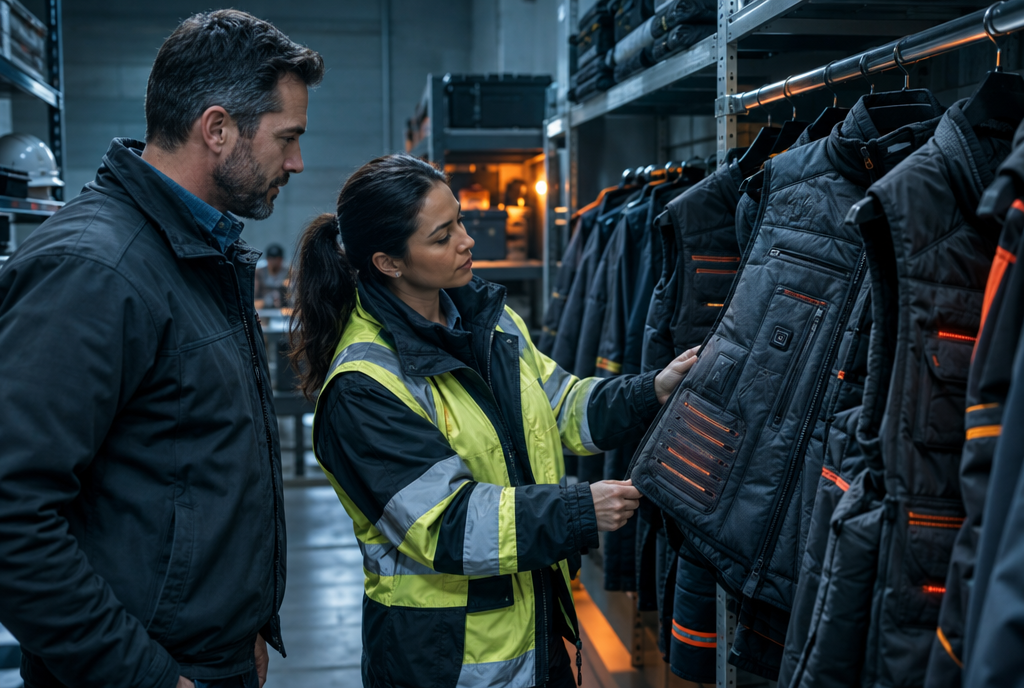
A heated and thermal PPE program starts with a documented cold hazard assessment, then specifies garments that pass seven checks: battery safety and charging, washing and care, sizing and fit, dexterity, compatibility with hi-vis and other PPE, a structured pilot with real crews, and a realistic cost per shift. Heated gear should supplement engineering controls, warm-up breaks and good layering, not replace them.
Why build a program instead of just buying heated gear?
Heated vests, jackets and gloves are easy to buy and easy to get wrong at scale. Mismatched chargers, garments that cannot be washed, sizes that do not fit under outerwear, and batteries that die halfway through a shift all erode trust quickly, and unused gear protects no one.
A program also fits the way OSHA frames PPE. The general PPE standard, 29 CFR 1910.132, requires employers to assess hazards, select appropriate equipment, communicate the selection to affected employees, ensure proper fit and train workers on use, limitations and care. Applying the same discipline to heated and thermal garments makes them far more effective.
Heated PPE belongs at the end of the hierarchy of controls. OSHA points first to engineering controls such as radiant heaters and windbreaks, and to training and warm breaks. Heated and thermal garments add warmth where those controls cannot reach.
Checklist item 1: Is the battery system safe?
Most heated garments run on lithium-ion batteries. OSHA's 2019 safety and health information bulletin on small and wearable lithium battery devices explains that physical damage, extreme temperatures or improper charging can trigger thermal runaway, a chain reaction that can cause fire or explosion.
OSHA recommends ensuring that batteries, chargers and associated equipment are tested to an appropriate standard such as UL 2054, following the manufacturer's instructions for storage, use, charging and maintenance, removing devices from chargers once fully charged, storing batteries in dry, cool locations and inspecting them for bulging, cracking, hissing, leaking, heat or smoke before use.
Require documentation that batteries and chargers are tested to a recognized standard
Issue only the manufacturer's chargers and ban mixing brands
Set up a designated charging area away from combustibles, with a removal-when-charged routine
Train workers to inspect packs and retire any that are damaged, swollen or hot
Confirm runtime at your coldest working temperature, since batteries lose capacity in the cold
Checklist item 2: Can it be washed and maintained?
Work garments get dirty, and a heated garment that cannot be cleaned will either be retired early or worn dirty. Ask for written care instructions before you buy: whether the garment can be machine washed with the battery removed, how connectors are protected, drying temperatures and how many wash cycles the heating elements are rated for.
Decide whether garments are personal issue or pooled. Pooled gear needs a laundering process that follows the manufacturer's instructions and a way to track which units have been inspected.
Checklist item 3: Does it fit every worker?
The PPE standard requires employers to ensure proper fit. For heated garments, fit is also a performance issue: heating panels only work if they sit close to the body, under insulation. Offer a full size range, including sizes cut for women, and test fit over the base layers and under the outerwear workers actually use.
Check how the garment sits under a fall arrest harness and tool belt, and whether battery pockets and cables interfere with movement or snag on equipment.
Checklist item 4: Does it preserve dexterity?
Research shows manual dexterity drops sharply once finger skin cools to about 23°C, so keeping hands warm is central to both safety and output. Heated gloves can help, but they add bulk. Test them with the real tasks: fastening, keyboard or scanner use, and tool handling.
Warming the torso is another route to warmer hands, because a warm core supports blood flow to the extremities. Many programs pair a heated or thermal vest with thinner gloves rather than relying on the thickest glove available.
Checklist item 5: Is it compatible with hi-vis and other PPE?
Where high-visibility apparel is required, heated garments must not cover it. In work zones, the Manual on Uniform Traffic Control Devices requires apparel meeting Performance Class 2 or 3 of the ANSI/ISEA 107 standard. Specify heated layers that fit under the hi-vis garment, or heated outerwear that is itself certified to the required class.
Check compatibility with flame-resistant clothing, arc-rated PPE, respirators and fall protection as your hazard assessment requires. A heated garment should never compromise the protection another piece of PPE provides.
Checklist item 6: How do you run a pilot?
Pilot before you buy for the whole workforce. Choose two or three candidate products and issue them to a mix of roles, body sizes and shifts for at least several weeks of real cold weather. Collect structured feedback, and log runtime, failures, charging issues and wash results.
Define success measures before the pilot: runtime, comfort, fit, dexterity and defect rate
Include the coldest and least active roles, where heated gear matters most
Compare heated options with passive alternatives such as insulated or reflective vests
Record whether workers took fewer or shorter warm-up breaks, without cutting required breaks
Ask what workers would change, and what they stopped using
Checklist item 7: What does it cost per shift?
Purchase price is a poor guide. Calculate cost per shift: the garment price plus batteries, spare batteries, chargers and expected replacements, divided by the number of shifts you expect each unit to last. Add the cost of charging infrastructure and laundering, and compare it with passive options such as insulated vests or pocketed vests that hold air-activated warmers.
Passive systems avoid charging and battery risk but depend on consumable warmers. Battery systems cost more up front but can deliver adjustable heat on demand. HEATJAC builds low-profile thermal vests with interior pockets that accept either air-activated warmers or battery heating inserts, which lets a site trial both approaches in one garment.
Workers with conditions that affect how they sense heat, such as diabetes or neuropathy, should talk to a clinician before using heated garments, and employers should make that guidance part of training.
| Cost element | Heated (battery) | Passive thermal |
|---|---|---|
| Up-front garment cost | Higher | Lower |
| Consumables | Replacement batteries over time | Air-activated warmers if used |
| Infrastructure | Charging area, charger control | Storage for warmers |
| Safety management | Battery inspection and charging rules | Skin contact guidance for warmers |
| Heat control | Adjustable settings | Fixed by insulation and warmer choice |
Key takeaways
Treat heated and thermal garments as PPE: assess, select, fit, train and maintain.
Require tested batteries and chargers, controlled charging and routine inspection.
Test fit, dexterity and hi-vis compatibility with real tasks before rollout.
Pilot several options and compare them on cost per shift, not purchase price.
Frequently asked questions
Should employers provide heated clothes for work?
OSHA does not require heated clothing, and ordinary weather gear is excepted from the PPE payment rule. Many employers still provide heated or thermal garments where cold is a documented hazard, because it supports warmth and dexterity. The hazard assessment should drive the decision.
Are heated vests safe for workers?
They can be when batteries and chargers are tested to a recognized standard, used as the manufacturer directs and inspected regularly. OSHA's guidance on wearable lithium battery devices covers the main risks. Workers with reduced heat sensation should get medical advice first.
How long should a heated vest battery last on a shift?
It depends on heat setting, temperature and battery capacity, and cold reduces capacity. Test runtime during the pilot at your coldest conditions and plan spare batteries for shifts longer than one charge.
Can heated vests be worn under hi-vis?
Yes, and where hi-vis is required they should be. The certified hi-vis garment must stay on the outside and uncovered, so size it to fit over the heated layer and any insulation.
What is the difference between heated and thermal PPE?
Heated PPE uses batteries and heating elements to add warmth. Thermal PPE keeps body heat in through insulation or reflective linings, and some designs hold air-activated warmers. Many programs use both.
From HEATJAC
We design low-profile thermal garments: a heat-reflective vest and a thermal harness with pockets for warmers or cold packs.
Choosing gear? Cold storage and freezer gear by zone · Winter gear for construction and utility crews
Related reading
Sources
Preventing Fire and/or Explosion Injury from Small and Wearable Lithium Battery Powered Devices (SHIB 06-20-2019), Occupational Safety and Health Administration
29 CFR 1910.132, General requirements (Personal Protective Equipment), Electronic Code of Federal Regulations
Manual on Uniform Traffic Control Devices, Part 6D: Pedestrian and Worker Safety, Federal Highway Administration
Winter Weather: Preparedness, Occupational Safety and Health Administration
Cold Environments: Control Measures, Canadian Centre for Occupational Health and Safety
About HEATJAC. HEATJAC is a thermal architecture company founded by an anesthesiologist. We design patented garment systems that capture, conduct and broaden warmth across the body, and we publish this knowledge hub because the science of staying warm should be public. HEATJAC products are not medical devices and are not intended to diagnose, treat, cure or prevent any disease.