
Cold storage PPE: what freezer and cooler workers need, zone by zone
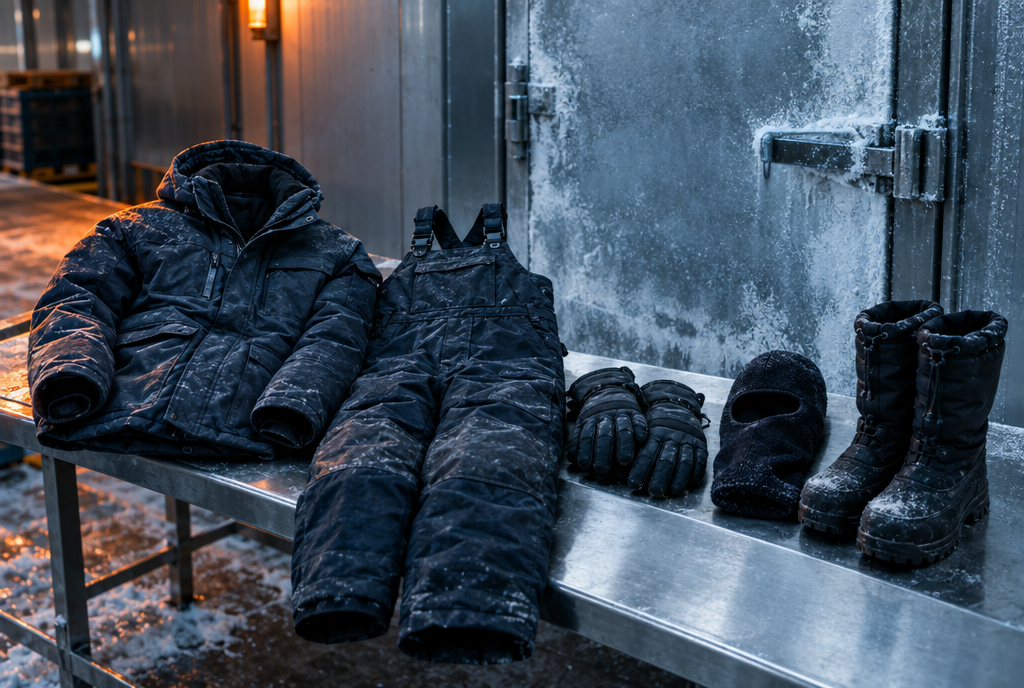
Cold storage PPE depends on the zone and the time spent inside. Coolers near 32 °F (0 °C) usually need warm layers, dexterity gloves and insulated footwear. Freezers need an insulated suit or jacket and bib, liner plus insulated gloves or mittens, insulated boots and a head cover. Blast freezers, down to about -22 °F (-30 °C), also need strict warm-up breaks.
What cold storage PPE does each zone need?
UK guidance from the Health and Safety Executive describes chillers operating around 0°C and blast freezers down to -30°C. For chillers, it says suitable clothing and normal breaks are usually sufficient; for blast freezers, it says no PPE will be sufficient without breaks at ambient temperature or in warming rooms.
Specify for the coldest zone a worker enters and how long they stay. Our layering guide for freezer warehouses covers how to put the gear on; this table covers what to buy.
| Zone | Body | Hands | Feet | Head and face |
|---|---|---|---|---|
| Cooler or chill room (around 0°C) | Wicking base plus insulated jacket or vest | Dexterity gloves; CCOHS advises gloves below 4°C for light work | Insulated, slip-resistant footwear | Hat or hood liner covering the ears |
| Freezer (below 0°C) | Freezer jacket and bib, or a one-piece suit | Liner plus insulated glove; mittens below -17°C where dexterity allows | Insulated boots with room for thick socks | Insulated hood, ears and cheeks covered |
| Blast freezer (down to -30°C) | Heaviest-insulated suit with full coverage | Insulated mittens over liners | Insulated boots | Full face and neck cover, plus hearing protection that fits under the hood |
Who pays for freezer gear?
Under OSHA's general PPE standard, employers must assess the workplace for hazards that require PPE and provide that PPE at no cost to employees. There is an exception for ordinary clothing used solely for protection from weather, such as winter coats, gloves and hats.
Freezers do not count as weather. In the 2007 employer payment rule, OSHA noted that clothing used in artificially controlled environments with extreme hot or cold temperatures, such as freezers, is not part of the weather gear exception. For most cold storage operations, freezer PPE is an employer purchase, which makes durability and cost per shift a budget question, not only a worker question.
What should you specify when buying?
Catalog descriptions vary widely, so write the specification before you compare products.
Insulation matched to the coldest zone and the longest continuous stay, not the average.
A wind-resistant shell that still vents, since evaporator fans and forklifts move air and lifting builds sweat.
Zippers, snaps and cuffs that work with gloves on.
Sizing that fits over base layers without compressing insulation.
Gloves with grip on cold, wet or frosted packaging, plus liners that fit inside them.
Boots with insulation, slip-resistant soles and room for thick socks; CCOHS describes felt-lined, rubber-bottomed, leather-topped boots with removable felt insoles for demanding cold work.
Face and neck cover for blast freezers, where HSE notes that freezer air is very dry and some units are loud.
High-visibility panels where workers share space with lift trucks.
How often should freezer gear be replaced?
Replace on condition rather than on a calendar. Insulation only works when it can loft, so a suit or glove that has flattened, torn, soaked through or lost a working zipper is due, whatever its age. Gloves and liners wear fastest because they carry the most sweat and abrasion.
Build inspection into the routine: check gear at issue, at the start of each shift, and when a worker reports cold hands or feet. Rotating two pairs of gloves and liners per worker lets each pair dry fully between uses, which extends its life and keeps hands warmer.
Is cheaper freezer gear a false economy?
Sometimes. Compare cost per shift of useful life rather than purchase price, and treat gloves and liners as consumables with a budget line of their own. A suit that is dried properly between shifts can outlast a cheaper one left damp in a locker.
Pilot two or three options with the crew who will wear them, in the coldest zone, for a full shift. Worker feedback on fit, dexterity and sweat build-up predicts whether gear gets worn, and gear that is left in the locker protects no one.
Do heated or passive add-ons help?
Heated vests and gloves can help workers who stand still for long periods, such as lift truck operators. They supplement the suit rather than replace it. OSHA's bulletin on wearable lithium battery devices calls for batteries and chargers tested to an appropriate standard, inspection for bulging, cracking or leaking, and training to remove a device from clothing quickly if it feels hot. Our employer checklist for heated and thermal PPE covers pilot testing and battery rules.
Workers with numbness, pale or waxy skin, or symptoms that do not settle after warming should report them and talk to a clinician.
Where HEATJAC fits
HEATJAC CORE is a low-profile thermal harness platform with integrated heat-reflective thermal inserts that can sit under a freezer jacket as a core layer, with pockets for supplemental warming elements such as air-activated warmers (sold separately). It is passive, so there is nothing to charge. It suits coolers and short freezer trips as an added core layer; it does not replace a freezer suit, insulated gloves or boots in freezers and blast freezers.
Key takeaways
Specify PPE for the coldest zone a worker enters and the longest continuous stay.
Freezer clothing is not weather gear under OSHA's payment rule, so it is typically an employer purchase.
Replace gear on condition, and treat gloves and liners as consumables.
In blast freezers, warm-up breaks matter as much as the gear itself.
Frequently asked questions
What PPE is required for cold storage workers?
OSHA requires employers to assess hazards and provide suitable PPE, without a single cold storage kit list. In practice, freezer work calls for insulated body wear, liner plus insulated gloves, insulated boots and head cover, matched to the zone.
When should freezer workers switch from gloves to mittens?
CCOHS recommends mittens for work below -17°C. When a task needs finger dexterity, a liner glove under a removable mitten is a common compromise.
How long does a freezer suit last?
It depends on use, drying and care, so replace on condition. Flattened insulation, torn shells, soaked linings and broken zippers are all signs a suit is due.
Are heated vests worth it for freezer work?
They can help workers who stand still, such as lift truck operators, as a supplement to a freezer suit. Choose tested batteries and chargers and train workers on battery safety.
Who pays for cold storage PPE?
In the US the employer generally pays. OSHA's rule at 29 CFR 1910.132(h) requires employers to provide required PPE at no cost to employees, and OSHA's 2007 rule preamble states that clothing for artificially controlled extreme cold, such as freezers, is not covered by the exception for ordinary weather clothing. Other exceptions include everyday clothing and normal work boots, non-specialty safety-toe footwear and prescription safety eyewear the employer lets workers wear off the job, and adequate gear an employee chooses to supply.
What gloves are best for freezer work?
Use a thin liner under an insulated glove, or under a mitten where dexterity allows. CCOHS advises gloves below 39 °F (4 °C) for light work and below 19 °F (-7 °C) for moderate work, and mittens below 1 °F (-17 °C). Pick a palm with grip on frosted packaging and keep a spare dry pair of liners for the shift.
Does my employer have to replace lost or worn-out freezer gloves?
Yes for worn-out gloves used as required PPE: OSHA requires employers to pay for replacement PPE. The exception is PPE the employee lost or intentionally damaged. Gloves and liners wear fastest, so many sites budget them as consumables.
Related reading
Sources
Chilled and frozen products, Health and Safety Executive (UK)
29 CFR 1910.132, General requirements (Personal Protective Equipment), Electronic Code of Federal Regulations
Employer Payment for Personal Protective Equipment; Final Rule (2007), Occupational Safety and Health Administration
Cold Environments: Working in the Cold, Canadian Centre for Occupational Health and Safety
Preventing Fire and/or Explosion Injury from Small and Wearable Lithium Battery Powered Devices (SHIB 06-20-2019), Occupational Safety and Health Administration
29 CFR 1910.132: General requirements (Personal Protective Equipment), Occupational Safety and Health Administration
Employer Payment for Personal Protective Equipment; Final Rule (72 FR 64342, November 15, 2007), Occupational Safety and Health Administration
About HEATJAC. HEATJAC is a thermal architecture company founded by an anesthesiologist. We design patented garment systems that capture, conduct and broaden warmth across the body, and we publish this knowledge hub because the science of staying warm should be public. HEATJAC products are not medical devices and are not intended to diagnose, treat, cure or prevent any disease.