
Working in the pharmaceutical cold chain: refrigerated rooms, freezers and ultra-cold storage
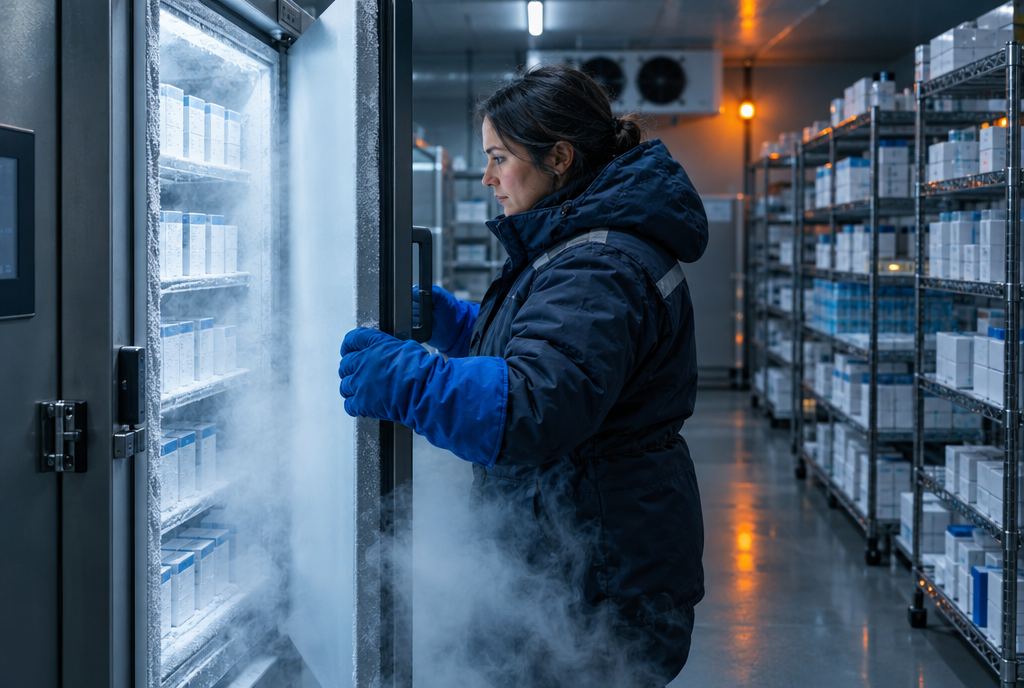
Working in pharmaceutical cold storage means two different kinds of cold. Refrigerated rooms at 2 to 8°C bring long, moderate exposure that calls for insulated layers and warm-up breaks. Ultra-cold freezers, dry ice and liquid nitrogen bring brief but extreme contact hazards, plus gas buildup, that call for cryogenic gloves, face protection, ventilation and training.
What are the storage tiers in the pharmaceutical cold chain?
The CDC Vaccine Storage and Handling Toolkit sets three product ranges that most pharmacies and distributors will recognize: refrigerated storage between 2°C and 8°C (36°F and 46°F), frozen storage between -50°C and -15°C (-58°F and +5°F), and ultra-cold storage between -90°C and -60°C (-130°F and -76°F).
Two more tiers sit outside those ranges. Dry ice, used to ship and hold frozen material, sits at about -78°C. Liquid nitrogen, used for cryogenic storage of biologics and cell-based products, boils at -196°C. Each tier asks something different of the people who work with it.
| Storage tier | Typical range | Where workers meet it | Main worker risk |
|---|---|---|---|
| Refrigerated | 2 to 8°C | Walk-in cold rooms, pharmacy refrigerators, chilled docks | Gradual body cooling over a long shift |
| Frozen | -50 to -15°C | Walk-in freezers, frozen pick zones | Cold stress, cold hands, slippery floors |
| Ultra-cold | -90 to -60°C | Upright and chest ultra-low freezers | Contact frostbite from racks, boxes and door seals |
| Dry ice | About -78°C | Packing stations, shipping, receiving | Contact frostbite and carbon dioxide buildup |
| Liquid nitrogen | -196°C | Cryogenic freezers, Dewar filling | Splash burns and oxygen displacement |
What does a 2 to 8°C cold room mean for the worker?
A refrigerated room rarely feels dangerous, which is the problem. Staff may spend hours picking, counting or packing at temperatures colder than most outdoor spring days, often standing still and wearing clothing chosen for a warm pharmacy floor. Hands and feet cool first, and dexterity for labels and small vials falls with them.
The fix is ordinary cold-work practice applied consistently. That means layered clothing with a wicking base, an insulated jacket or vest, thin gloves that preserve dexterity, and planned time in a warm area. NIOSH advises employers to train workers to recognize cold-related illness, provide warm areas and a place to change out of wet clothes, and encourage breaks to warm up when needed.
How is ultra-low freezer safety different?
Ultra-cold work is short and intense. A technician might open a -80°C freezer for less than a minute, but anything touched inside, from metal racks to frozen boxes, can freeze skin on contact. The body as a whole barely cools; the fingers and wrists take the hit.
That shifts the PPE priority from insulation to barrier protection. Cryogenic or thermally insulated gloves, long sleeves and eye protection matter more than a heavy parka. Organize racks so frequently used items sit near the front, keep door openings brief, and use tools such as rack pullers where they fit.
What are the risks of dry ice handling in cold storage?
Dry ice creates two hazards. The first is contact: at about -78°C it causes frostbite-like injury within seconds. Guidance from the University of Virginia calls for cryogenic gloves, eye protection, long sleeves and long pants, and notes that nitrile exam gloves are not enough. Lawrence Berkeley National Laboratory adds that no glove protects against dry ice indefinitely, so tongs or scoops are preferred.
The second hazard is gas. Dry ice turns directly into carbon dioxide, and the University of Virginia puts that at roughly 250 liters of gas per pound. It should never be stored in cold rooms, closets or other unventilated spaces, and never in sealed containers, which can rupture. NIOSH and OSHA set an 8-hour exposure limit of 5,000 ppm for carbon dioxide, with 40,000 ppm listed as immediately dangerous to life or health.
Why is liquid nitrogen an oxygen hazard?
Liquid nitrogen expands roughly 700 times in volume as it vaporizes, according to Purdue University. In a small room, a spill or a steady boil-off can push oxygen below the 19.5% level treated as hazardous. Nitrogen has no color or odor, so people often cannot tell that the air has changed.
Lawrence Berkeley National Laboratory describes a progression from impaired judgment and coordination below 15% oxygen to unconsciousness below 10%. Rooms holding liquid nitrogen freezers or Dewars need good ventilation, and many sites add fixed oxygen monitors. Purdue lists cryogenic gloves, a face shield with safety goggles, long sleeves and closed shoes for handling.
What PPE fits each storage tier?
Match protection to the exposure rather than issuing one kit for the whole building. Long exposures need warmth; short, extreme exposures need a barrier against contact and splash.
Refrigerated rooms: wicking base layer, insulated jacket or vest, dexterity gloves, warm socks and nonslip footwear.
Freezers: full cold-weather layering or a freezer suit, liner plus insulated gloves, insulated boots and headwear.
Ultra-cold freezers: cryogenic or insulated gloves, long sleeves and eye protection during access.
Dry ice: cryogenic gloves, eye protection, covered skin, and tongs or scoops instead of hands.
Liquid nitrogen: loose cryogenic gloves, face shield over goggles, long sleeves, cuffless trousers and closed shoes.
What should a cold chain safety program include?
Good programs combine exposure limits, training and monitoring. Set a written work and warm-up schedule for cold rooms and freezers, and track time in each zone. Train staff on frostbite and hypothermia signs, dry ice and cryogen handling, and what to do when an alarm sounds. Use a buddy system for freezer and cryogen work.
Monitor the air as well as the product. Carbon dioxide sensors belong where dry ice is stored or packed, and oxygen sensors where liquid nitrogen is used. Keep floors near freezer doors dry and clear of frost to reduce slips. Anyone with numbness, pale or waxy skin, or dizziness should stop work, and should talk to a clinician about symptoms that do not resolve quickly.
Key takeaways
Cold rooms at 2 to 8°C cause slow cooling over a shift; ultra-cold and cryogenic tiers cause fast, local contact injury.
Dry ice releases carbon dioxide and should never be stored in cold rooms or sealed containers.
Liquid nitrogen expands about 700 times as it vaporizes and can lower oxygen without warning.
Match PPE to the tier: insulation for rooms, cryogenic gloves and face protection for ultra-cold work and cryogens.
Pair PPE with warm-up breaks, training, gas monitoring and a buddy system.
Frequently asked questions
What PPE do you need for a 2 to 8°C cold room?
Most workers need a wicking base layer, an insulated jacket or vest, thin gloves that allow handling of small items, and warm socks with nonslip shoes. The goal is to stay warm through a long shift without losing dexterity. Plan regular breaks in a warm area.
Can you touch a -80°C freezer rack with regular gloves?
Thin exam gloves offer little protection at ultra-cold temperatures, and skin can freeze on contact. Use cryogenic or thermally insulated gloves for access, and keep contact brief. Insulated gloves protect only for short periods.
Is it safe to keep dry ice in a walk-in cold room?
No. University safety guidance lists cold rooms among the places dry ice should never be stored, because the carbon dioxide it releases can build up in a closed, poorly ventilated space. Store it in a vented container in a well-ventilated area.
Do liquid nitrogen rooms need oxygen monitors?
Many facilities install them because nitrogen gas is invisible and odorless, and oxygen below 19.5% is considered hazardous. Monitoring, ventilation and training work together. Your EHS team should assess each room based on its volume and the amount of liquid nitrogen present.
How long can someone work in a pharmaceutical freezer?
There is no single federal time limit for freezer work in the United States. Employers typically set work and warm-up schedules based on temperature, air movement and clothing. Our guide to warm-up schedules explains how those schedules are built.
From HEATJAC
We design low-profile thermal garments: a heat-reflective vest and a thermal harness with pockets for warmers or cold packs.
Choosing gear? Cold storage and freezer gear by zone · Winter gear for construction and utility crews
Related reading
Sources
Vaccine Storage and Handling Toolkit, Centers for Disease Control and Prevention
Preventing Cold-related Illness, Injury, and Death among Workers (NIOSH 2019-113), CDC, National Institute for Occupational Safety and Health
NIOSH Pocket Guide to Chemical Hazards: Carbon dioxide, CDC, National Institute for Occupational Safety and Health
Dry Ice, University of Virginia Environmental Health and Safety
Dry Ice Safety, Lawrence Berkeley National Laboratory EHS
Liquid Nitrogen Safety, Purdue University Environmental Health and Safety
About HEATJAC. HEATJAC is a thermal architecture company founded by an anesthesiologist. We design patented garment systems that capture, conduct and broaden warmth across the body, and we publish this knowledge hub because the science of staying warm should be public. HEATJAC products are not medical devices and are not intended to diagnose, treat, cure or prevent any disease.