
Staying warm on short trips outside: dog walks, chores and errands
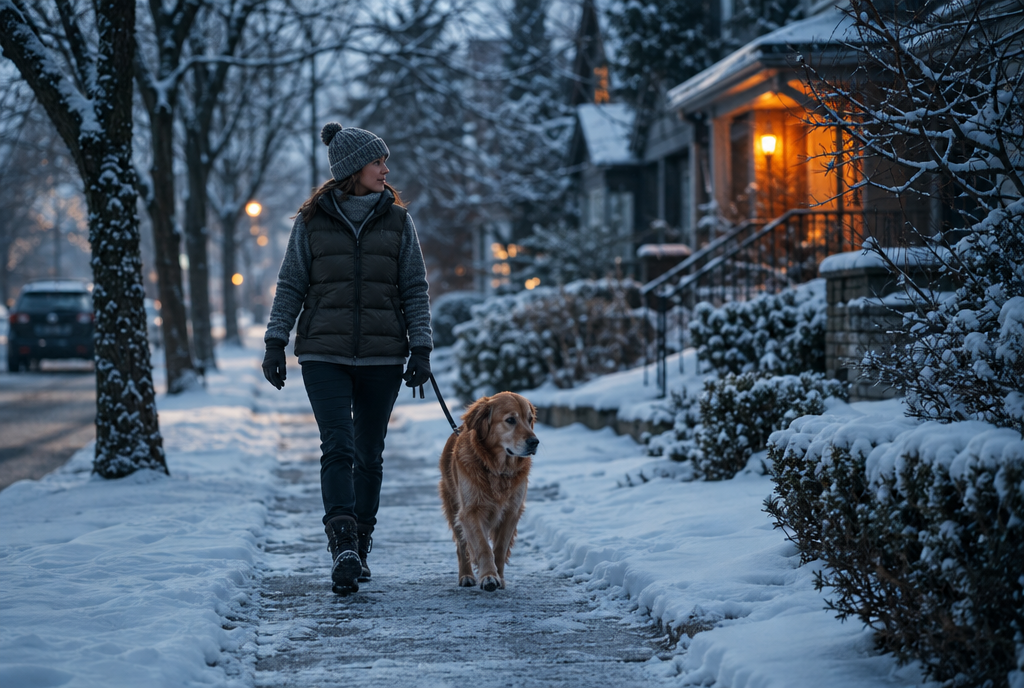
To stay warm on a dog walk or quick chore, dress as if you will be out longer than planned: a warm core layer, a windproof shell, a hat, gloves and a face covering. Wear boots with real traction for ice. Keep a grab-and-go kit by the door, and treat snow shoveling as hard exercise, not a small errand.
Why do short trips outside leave you so cold?
Short trips invite underdressing. It feels silly to put on a full winter outfit for ten minutes with the dog, so people step out in a sweater, bare hands in pockets and no hat. Ten minutes becomes twenty when the dog finds a good smell or a neighbor stops to talk.
Repeated exposures add up too. Several trips a day to the car, the mailbox or the recycling bin never feel like a real outing, yet each one cools the hands, ears and face. A little preparation removes the guesswork.
How cold is too cold for exposed skin on a quick walk?
Wind makes a short walk feel much colder than the thermometer suggests. The National Weather Service describes wind chill as how cold people and animals feel outside, because wind draws heat from the body. On its chart, an air temperature of 0°F with a 15 mph wind gives a wind chill of minus 19°F, at which exposed skin can freeze in 30 minutes.
The Weather Service also notes that the air temperature itself must be below freezing for frostbite to develop. On windy, subfreezing days, cover the face, ears and hands even for a quick loop, and check the forecast wind chill rather than the temperature alone.
What should you wear to walk the dog in winter?
Think in layers, the same way you would for a longer outing. The CDC recommends an inner layer that wicks moisture, an insulating layer such as wool, down or fleece, and an outer layer that resists wind and water, plus a hat, a scarf or knit mask, and mittens or gloves.
Core: a vest, fleece or insulated jacket that zips fully to the chin.
Head and ears: a hat that covers the ears, since ears are thin and exposed.
Hands: mittens for warmth, or gloves if you need to handle a leash and bags. A thin liner under a mitten lets you slip the outer layer off briefly.
Face: a scarf or neck gaiter you can pull up when you turn into the wind.
Feet: insulated, waterproof boots and wool or synthetic socks.
How do you keep your hands and ears warm on short trips?
Hands and ears lose heat fast because they have a lot of surface area and little mass, and the body reduces blood flow to them when the core starts to cool. Keeping the torso warm helps them stay comfortable longer. Put gloves on before you go out, not after your fingers are already cold.
Leash handling is where most people take gloves off. A mitten with a fold-back flap, touchscreen-compatible liners, or an air-activated hand warmer in a pocket can help, and it is worth taking the extra few seconds to cover your hands again.
How do you avoid slipping on ice?
Falls are a larger everyday winter risk than the cold itself. The CDC notes that many cold-weather injuries come from falls on ice-covered sidewalks, steps, driveways and porches. A dog pulling on a leash adds to the challenge.
Mayo Clinic Health System advises supportive boots, slip-on snow grips for the soles, small steps, and walking slowly without hurrying. Use handrails on steps, shorten the leash on icy patches, and keep hands out of pockets so you can steady yourself.
Is shoveling snow hard on your heart?
It can be. The American Heart Association says cold air constricts blood vessels and raises blood pressure, and that heavy snow shoveling may be as demanding on the heart as a treadmill stress test. Arm work is more taxing than leg exercise, and people often hold their breath while lifting.
The AHA advises people with heart disease or risk factors such as high blood pressure, diabetes or smoking to get medical clearance before shoveling. If you have a heart condition, talk to a clinician about whether shoveling is safe for you. Pace yourself, push snow rather than lift it, and take breaks.
Stop and call 911 if you feel chest pain, lightheadedness or heart palpitations. Dress in layers you can open as you warm up, because shoveling quickly turns a cold task into a sweaty one.
What goes in a grab-and-go kit by the door?
The easiest way to stop underdressing is to make the right gear faster to reach than the wrong gear. Keep one hook or basket by the door with:
A packable insulated jacket or vest that goes over whatever you are wearing.
Hat, neck gaiter and gloves or mittens, stored together.
Boots with traction, or slip-on ice grips.
A headlamp or clip-on light for dark mornings and evenings.
Leash, bags and a towel for wiping the dog's paws.
Do dogs need protection on winter walks?
The American Veterinary Medical Association notes that cold tolerance varies with coat, body fat, activity level and health, and suggests shortening walks in very cold weather. It recommends a sweater or coat for short-coated dogs or dogs bothered by the cold, checking paws for cracked or bleeding pads, and wiping feet, legs and belly after walks to remove de-icing products and other chemicals.
Battery-heated or battery-free: which suits short trips?
Both are legitimate, and the right choice depends on how you use them. The table summarizes the main tradeoffs.
| Option | Strengths for short trips | Tradeoffs |
|---|---|---|
| Battery-heated vest or gloves | Warm within minutes, adjustable settings, reusable | Needs charging; battery adds weight |
| Air-activated warmers | No charging, pocket-sized, cheap per use | Single use once opened; slower to reach full heat |
| Passive insulation and reflective layers | Always ready, nothing to charge or activate | No added heat; warmth depends on your own output |
How do you keep your core warm without overdressing?
A warm torso is the base of comfort on a cold walk. A vest over a sweater is quick to add and does not restrict your arms for leash work or shoveling. A harness-style layer such as HEATJAC CORE, whose pockets accept air-activated warmers or battery heating inserts, is one low-profile option.
If you start to sweat, open a zipper or remove a layer early. Damp clothing cools you quickly once you stop moving.
Key takeaways
Dress for a longer trip than you plan: core layer, windproof shell, hat, gloves and face covering.
Check wind chill; at minus 19°F wind chill, exposed skin can freeze in 30 minutes.
Traction matters as much as warmth, since falls on ice cause many winter injuries.
Treat snow shoveling as hard exercise and talk to a clinician first if you have a heart condition.
Keep a grab-and-go kit by the door so the right gear is the easiest to reach.
Frequently asked questions
What should I wear to walk my dog in winter?
Wear a warm core layer, a windproof outer layer, a hat that covers your ears, gloves or mittens, a scarf or gaiter, and insulated boots with good traction. Dress for a longer walk than you plan.
How long can I walk my dog in very cold weather?
It depends on the dog's coat, size, health and activity level, as well as the wind chill. The AVMA suggests shortening walks in very cold weather, and your veterinarian can advise on your dog's tolerance.
How do I keep my hands warm while holding a leash?
Put gloves on before you leave, use liners under mittens so you can remove the outer layer briefly, and keep an air-activated hand warmer in a pocket. Keeping your core warm also helps your hands stay comfortable.
Why is shoveling snow dangerous for the heart?
The American Heart Association explains that cold air constricts blood vessels and raises blood pressure while shoveling is intense arm work. People with heart disease or risk factors should talk to a clinician before shoveling.
What are the best shoes for icy sidewalks?
Supportive, insulated boots with a grippy sole work well, and slip-on ice grips add traction on packed ice. Take small, slow steps and use handrails where available.
From HEATJAC
We design low-profile thermal garments: a heat-reflective vest and a thermal harness with pockets for warmers or cold packs.
Choosing gear? Heated vest vs heat-reflective vest · A hunter's guide to staying warm in the stand
Related reading
Sources
Wind Chill Chart, National Weather Service (NOAA)
Safety Guidelines: During and After a Winter Storm, Centers for Disease Control and Prevention
A snowstorm's a-brewing: be careful out there to stay heart-healthy, American Heart Association Newsroom
How to avoid winter slips and falls, Mayo Clinic Health System
Cold weather animal safety, American Veterinary Medical Association
About HEATJAC. HEATJAC is a thermal architecture company founded by an anesthesiologist. We design patented garment systems that capture, conduct and broaden warmth across the body, and we publish this knowledge hub because the science of staying warm should be public. HEATJAC products are not medical devices and are not intended to diagnose, treat, cure or prevent any disease.