
Staying warm in the stand or blind: a hunter's buying guide
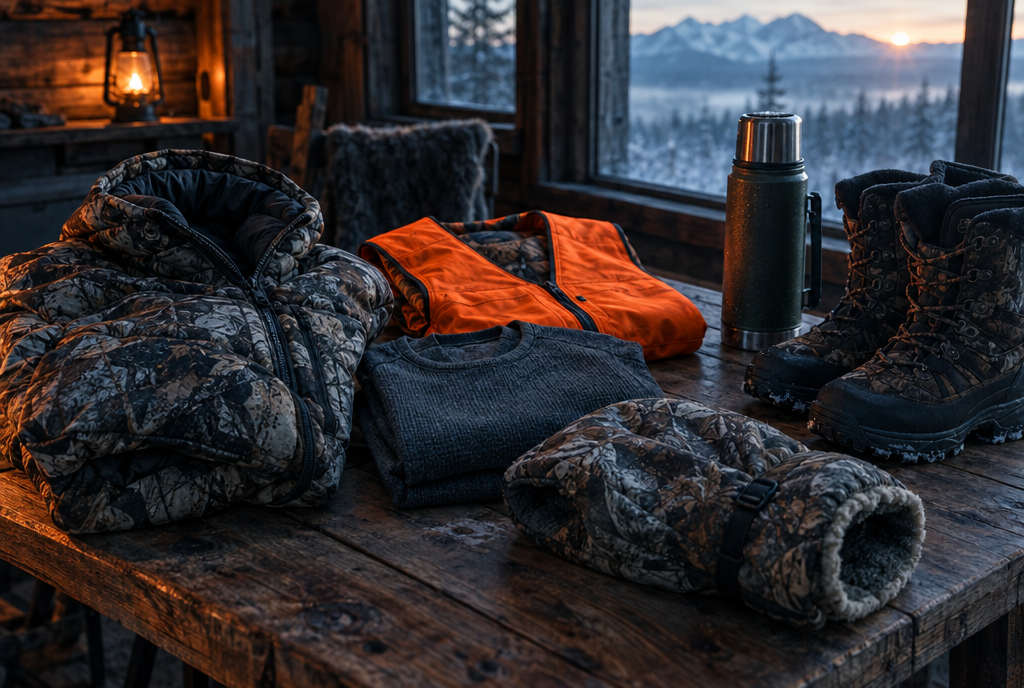
For cold hunts, spend first on warm, dry feet and a packable insulating layer you put on at the stand, then on a merino or synthetic base layer, a quiet windproof outer layer, and a hand muff. Heated or warmer-pocket vests are the next upgrade for long sits. Check your state's blaze orange rules before choosing outer layers.
What should you buy first for cold-weather hunting?
Hunting cold is a sitting problem. You sweat on the walk in, then spend hours nearly motionless. Our guide to staying warm while hunting covers technique; this page is about where your money does the most good.
Buy in order of what ends hunts early. Cold feet and hands send most hunters home, so boots, socks, and a hand muff come first. Next is a heavy insulating layer you carry in and put on at the stand. Base and outer layers follow, and powered heat is the final upgrade.
Tier 1, essentials: insulated boots, wool socks with spares, a warm hat, a hand muff with air-activated warmers.
Tier 2, core system: merino or synthetic base layer, a packable insulated jacket and pants, a quiet windproof shell.
Tier 3, upgrades: a heated or warmer-pocket vest, heated socks or insoles, an insulated seat cushion.
Which base layer is best for hunting?
Choose merino wool or synthetic, never cotton, because sweat from the walk in is what chills you later. Merino stays warmer when damp and resists odor, which matters for scent-conscious hunters. Synthetics dry faster and cost less. Many hunters buy a midweight top and bottom and add a lightweight set for early season.
The CDC recommends several layers of loose-fitting clothing in extreme cold, along with a hat, a scarf or knit mask, mittens or gloves, and water-resistant boots and coat. For hunters, loose also means not so tight that it restricts a draw or shouldering a gun.
How much insulation do you need on stand?
More than you think, because you produce little heat while sitting still. The usual approach is to walk in lightly dressed and carry a heavier insulated jacket and bibs to pull on once settled. Synthetic insulation keeps working if damp and suits wet climates; down is warmer for its weight and packs smaller but needs to stay dry.
Bibs beat pants in a stand because they cover the lower back when you lean forward. Look for full-length side zips so you can put them on over boots.
Heated, heat-reflective, or warmer-pocket vest: which is better for hunting?
All three add core warmth under an outer layer, with different trade-offs. A Bowhunting.com roundup of heated clothing lists vests from about $89 to $219 with runtimes of 3 to 12 hours depending on heat level, and notes several makers advertise quiet designs. Batteries lose capacity in the cold, so carry a spare on all-day sits.
Reflective vests reduce radiant heat loss without power. Warmer-pocket vests hold air-activated warmers against the core; they are silent and cheap per use, but heat output cannot be adjusted. See our heated vest vs reflective vest comparison for detail.
| If you... | Choose | Why |
|---|---|---|
| Sit all day in deep cold | Heated vest plus spare battery | Adjustable heat for hours |
| Want silence and simplicity | Warmer-pocket or reflective vest | No wiring, no controls, no noise |
| Hunt early and late season | Reflective vest under a light jacket | Light, packable, no charging |
| Have cold hands above all | Hand muff with warmers first | Warm hands and a shooting-ready position |
What boots and hand warmth should hunters buy?
For stand hunting, choose boots rated for inactivity rather than hiking, sized to fit a wool sock without pressing. Tight boots cut blood flow and make feet colder. Rubber boots help with scent control and wet ground; carry dry socks in a pocket for the walk out.
A hand muff worn on a waist belt, loaded with air-activated warmers, lets you wear thin shooting gloves and keep dexterity. Heated gloves are an alternative, but bulk can interfere with a trigger or release.
Why do quiet fabrics and scent control matter when buying?
Stiff shells rustle when you draw or turn, and noise costs shots at close range. Brushed or fleece-faced outer fabrics are quieter than hard nylon; test by rubbing sleeves together in the store. Zippers, snaps and battery controls should operate without clicks.
For scent, favor base layers that resist odor and launder everything in scent-free detergent. Heated gear adds no scent, but check whether its controls and cables make noise.
What are the blaze orange rules for hunters?
They vary by state, so check your wildlife agency before buying outer layers. Massachusetts requires all hunters during shotgun deer season and deer hunters during primitive firearms season to wear at least 500 square inches of blaze orange on the chest, back and head. Michigan requires hunter orange garments, including orange camouflage, to be at least 50 percent hunter orange and visible from all directions.
Buy an orange vest or jacket that fits over your insulating layer, not under it. Both states also stress a full body harness in a treestand.
Where HEATJAC fits
HEATJAC CORE is a low-profile thermal harness with heat-reflective inserts and pockets for air-activated warmers, available in tactical green and brown. It is passive, with no battery or controls, so it is silent under an outer layer. It is a core layer, not a substitute for insulated boots, a hand muff, or legally required blaze orange.
Key takeaways
Spend on feet and hands first; they end most hunts.
Walk in light and carry a heavy insulating layer to put on at the stand.
Choose merino or synthetic base layers, never cotton.
Pick heated, reflective or warmer-pocket vests by sit length, silence and budget.
Check your state's blaze orange rules before buying outer layers.
Frequently asked questions
What is the warmest clothing for sitting in a deer stand?
A merino or synthetic base, heavy insulated jacket and bibs put on at the stand, a windproof quiet shell, insulated boots sized for wool socks, a hat, and a hand muff with warmers.
Are heated vests worth it for hunting?
For long, very cold sits, many hunters find them worth it. Budget for a spare battery and choose a model with quiet controls. Warmer-pocket vests are a silent, lower-cost alternative.
Is merino or synthetic better for hunting base layers?
Merino resists odor and stays warm when damp; synthetic dries faster and costs less. Both beat cotton.
Do I need to wear blaze orange in a ground blind?
It depends on the state. Rules vary for blinds and seasons, so check your state wildlife agency's regulations before you hunt.
When should I see a clinician about cold hands or feet?
If numbness, color change or pain lingers after a hunt, talk to a clinician.
Related reading
Sources
Hunting safety tips, Commonwealth of Massachusetts
Hunting Safety, Michigan Department of Natural Resources
The Best Heated Clothing for Cold Weather Hunting, Bowhunting.com
BU-502: Discharging at High and Low Temperatures, Battery University
About HEATJAC. HEATJAC is a thermal architecture company founded by an anesthesiologist. We design patented garment systems that capture, conduct and broaden warmth across the body, and we publish this knowledge hub because the science of staying warm should be public. HEATJAC products are not medical devices and are not intended to diagnose, treat, cure or prevent any disease.