
Ice fishing warmth: what to buy for hard water
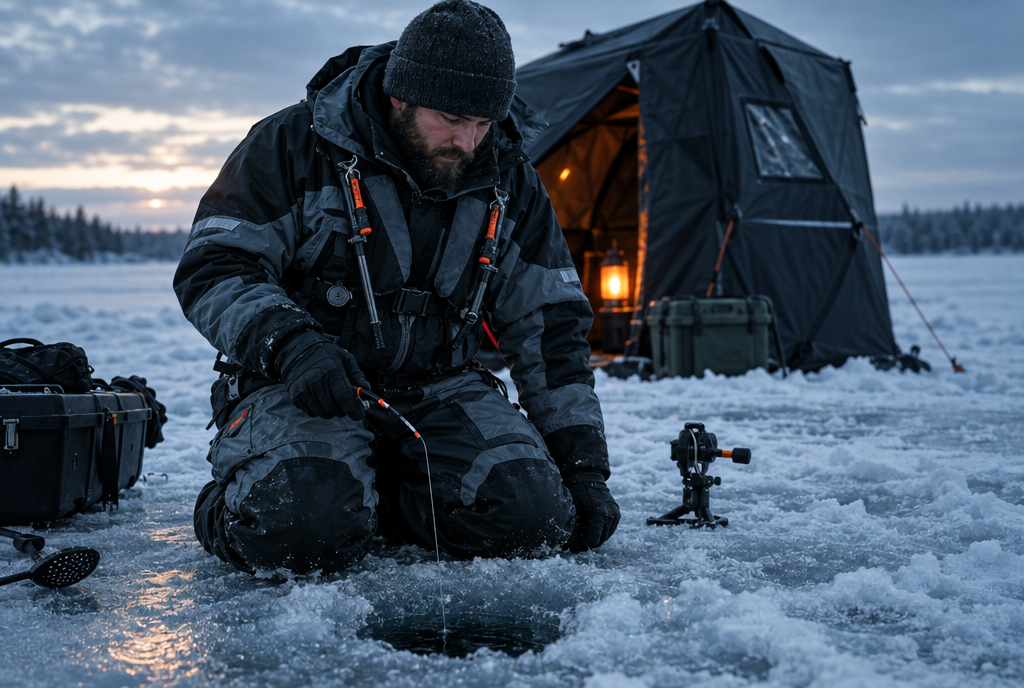
For ice fishing, buy safety and warmth together: a flotation-assist jacket and bib suit or a foam life jacket, ice picks, cleats and a way to check thickness, then insulated waterproof boots, a two-glove system, and layers underneath. If you heat a shelter, choose a heater rated for indoor use, keep vents open, and run a carbon monoxide detector.
What gear do you need for ice fishing?
Ice fishing combines long, still hours on a cold surface with a real risk of going through. That makes it the rare warmth purchase where a clothing decision is also a safety decision. Our guide to staying warm ice fishing covers technique; this page covers what to buy.
The Minnesota DNR ranks a foam life jacket or flotation suit as possibly the No. 1 item that will keep you alive if you fall through, and ice picks as the second most important. Start there, then build warmth around it.
Safety: flotation suit or foam life jacket, ice picks worn where you can reach them, cleats, whistle, rope, an auger or chisel and a tape measure.
Warmth: insulated waterproof boots, wool socks, base and mid layers, a warm hat, two kinds of gloves.
Shelter: a windproof shelter, an insulating pad or seat, and if heated, an indoor-rated heater plus a CO detector.
Is an ice fishing float suit worth it?
For most anglers who walk or ride onto ice, yes. A float suit is an insulated jacket and bib set with buoyant material built in, so you wear your flotation instead of choosing between warmth and a life jacket. Outdoor Life notes that ice suits are generally sold as flotation-assist garments rather than Coast Guard certified personal flotation devices, so read the label and understand what you are buying.
When comparing suits, look for a waterproof, windproof shell with sealed seams, insulation weight suited to your climate, reinforced knees and seat for kneeling on ice, and pockets that fit ice picks. Bibs cover the lower back when you bend over a hole; buy the jacket and bibs as a matched set so the flotation works as designed.
What ice safety gear should you buy with your suit?
The Minnesota DNR recommends at least 4 inches of new, clear ice for walking or fishing, and advises doubling guidelines on white ice, which is about half as strong. It also stresses that ice thickness varies across a single lake, so buy a way to check it: a chisel or drill and a tape measure.
Ice picks matter because, as the DNR notes, you have about 10 minutes of meaningful movement to climb out of the water. Wear them on your chest, not in a bucket. Cleats prevent falls on new, slick ice, and a whistle and rope are cheap additions.
What are the best boots and gloves for ice fishing?
Your feet sit on ice for hours, so boots matter more than any jacket. Choose insulated, fully waterproof boots with thick soles, sized for a wool sock without pressure. Rubber-bottomed pac boots with removable liners let you dry liners overnight. Stand on a foam pad or shelter floor rather than bare ice.
Hands get wet every time you handle a fish, bait or line. Most anglers carry a thin, water-resistant glove for fishing and a heavy mitten or insulated glove for travel and waiting, plus a dry spare pair. Keep spares in an inside pocket where they stay warm.
Heated or passive layers for ice fishing?
Passive layering, meaning base, mid and shell, does most of the work. Added heat helps on long outings in open conditions or when the shelter is unheated. Battery-heated vests, gloves and socks offer adjustable warmth, but cold cuts battery capacity; Battery University reports about 50 percent of rated capacity at minus 18 °C (0 °F). Keep packs inside the suit.
Air-activated warmers and warmer-pocket or reflective vests need no charging and do not mind cold batteries. Under a float suit, choose thin core layers so the suit still fits and closes properly.
| If you... | Choose | Why |
|---|---|---|
| Walk onto early or late ice | Float suit plus ice picks and cleats | Flotation and self-rescue come first |
| Fish in the open with no shelter | Heated gloves or vest plus warmers | Wind and long exposure need added heat |
| Fish from a heated shelter | Lighter layers, indoor-rated heater, CO detector | Avoid sweating; manage CO risk |
| Want the simplest setup | Warmer-pocket or reflective vest | No batteries to keep warm |
How do you choose a safe ice shelter heater?
The CDC describes carbon monoxide as an odorless, colorless gas that kills without warning, with headache, dizziness, weakness, upset stomach, vomiting, chest pain and confusion as common symptoms. It reports more than 400 Americans die each year from unintentional, non-fire CO poisoning.
The Minnesota DNR advises using only heaters designated for indoor use and never sunflower-type heaters inside a shelter. It calls for a vent near the top and one within a foot of the ground, a CO detector in every shelter, and replacing detectors when sensors expire. It also warns not to rely on ventilation or low-oxygen shutoff sensors alone. If anyone feels flu-like, get to fresh air immediately.
Where HEATJAC fits
HEATJAC REFLECT is a lightweight heat-reflective vest with a snap front and pockets for compatible warming elements; its lining material is rated at about 95 percent radiant heat reflectance in the supplier's ASTM emittance testing. It is passive, so there is no battery to fade in the cold. It is a thin layer under a float suit, never a replacement for flotation or ice safety gear.
Key takeaways
Buy flotation and ice picks before any warmth upgrade.
Check ice thickness yourself; conditions vary across one lake.
Boots and a two-glove system decide comfort on the ice.
Keep batteries inside your suit, or choose passive heat.
Heat shelters only with indoor-rated heaters, open vents and a CO detector.
Frequently asked questions
Do ice fishing float suits count as life jackets?
Many are sold as flotation-assist garments rather than Coast Guard certified personal flotation devices. Read the label, and wear a foam life jacket if you want certified flotation.
How thick does ice need to be for ice fishing?
The Minnesota DNR recommends at least 4 inches of new, clear ice for walking or fishing, and doubling that on white ice. Always check thickness as you go.
Is it safe to use a propane heater in an ice shanty?
Only a heater designated for indoor use, with vents near the top and bottom and a working CO detector. Never use a sunflower-type heater inside a shelter.
What gloves are best for ice fishing?
A thin, water-resistant glove for handling line and fish, a heavy mitten or insulated glove for waiting and travel, and a dry spare pair kept inside your jacket.
When should I get help for cold or CO symptoms?
Get to fresh air at once if you suspect CO poisoning and seek emergency care. For lingering numbness, color change or pain in hands or feet after a trip, talk to a clinician.
Related reading
Sources
Ice Safety Gear, Minnesota Department of Natural Resources
General Ice Thickness Guidelines, Minnesota Department of Natural Resources
Carbon Monoxide Poisoning in Ice Shelters, Minnesota Department of Natural Resources
Best Ice Fishing Suits, Outdoor Life
BU-502: Discharging at High and Low Temperatures, Battery University
About HEATJAC. HEATJAC is a thermal architecture company founded by an anesthesiologist. We design patented garment systems that capture, conduct and broaden warmth across the body, and we publish this knowledge hub because the science of staying warm should be public. HEATJAC products are not medical devices and are not intended to diagnose, treat, cure or prevent any disease.