
Non-freezing cold injury: the quiet threat to troops and workers
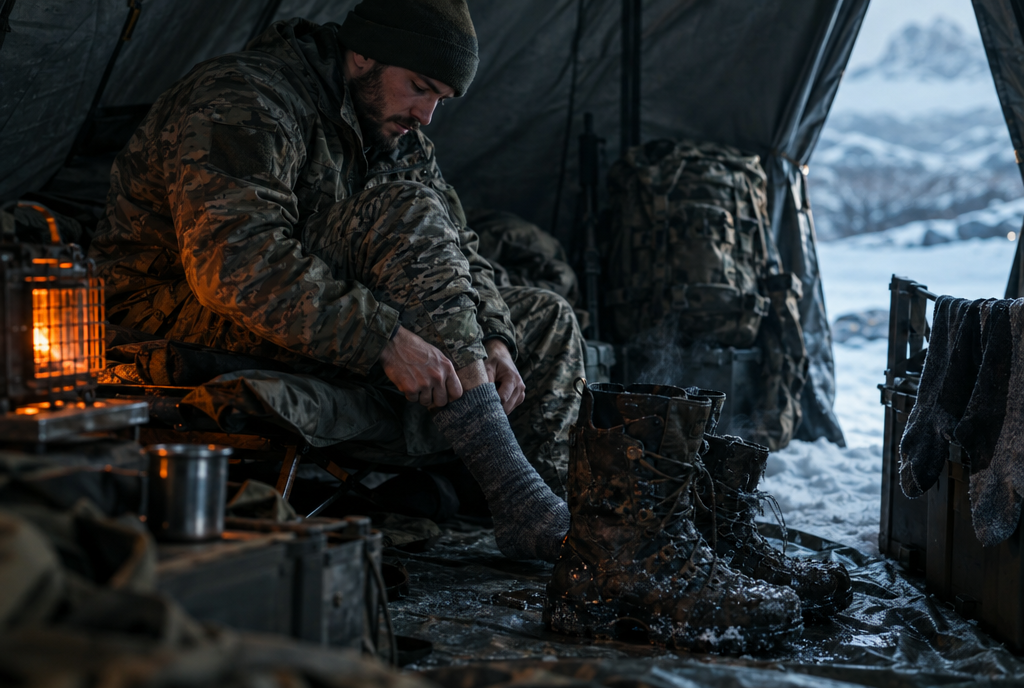
Non-freezing cold injury (NFCI) is damage to nerves, blood vessels and tissue, usually in the feet, caused by hours of cold, wet exposure above freezing. Trench foot and immersion foot are the classic forms. The Army describes risk at air temperatures of 32 to 55 °F, and the CDC notes trench foot can occur up to 60 °F if feet stay wet.
What is non-freezing cold injury?
NFCI is a cold injury in which tissue never freezes. Instead, prolonged cooling and wetness damage the nerves and small blood vessels of the hands or, far more often, the feet. StatPearls, the NIH-hosted clinical reference, classifies trench foot as one of three subclasses of immersion foot and as a non-freezing cold injury.
It is called quiet because it does not look dramatic at first. There is no white, frozen skin as with frostbite, and the person may simply notice cold, numb feet that they expect to feel better once warm. That is why it is often missed until damage has been done.
What conditions cause trench foot and NFCI?
The Army's cold-injury bulletin, TB MED 508, states that NFCI occurs when conditions are cold and wet, with air temperatures between 32 and 55 °F, when hands and feet cannot be kept warm and dry, and when soldiers are relatively immobile. It adds that having wet feet for more than 12 hours increases the risk of trench foot.
Civilian guidance agrees on the pattern. CDC/NIOSH notes trench foot can occur at temperatures as high as 60 °F if the feet are constantly wet, and StatPearls reports it may develop in as little as 10 to 14 hours. Sweat counts as wetness: TB MED 508 notes that feet sweat at rest and even more during activity, and that feet keep sweating if boots are worn while sleeping.
Cold water or wet ground, not necessarily freezing.
Long hours in wet socks and boots, including sweat-soaked socks.
Limited movement, such as sentry duty, vehicles, stands or boats.
Tight boots or clothing that restrict blood flow.
What are the signs and symptoms of NFCI?
Early signs include tingling and itching that can progress to numbness, according to StatPearls. As injury develops, feet can turn red or bluish, swell significantly, blister and form open sores. CDC/NIOSH lists reddening, numbness, tingling pain, leg cramps, swelling, blisters or ulcers, bleeding under the skin and, in severe cases, gangrene.
The painful phase often begins after the feet are rewarmed, which can surprise people who thought the problem was over. TB MED 508 classifies recovery stages of NFCI by symptoms and time from rewarming.
How is NFCI different from frostbite and chilblains?
All three are cold injuries, but they occur in different conditions and look different.
| Injury | Tissue frozen? | Typical conditions | Typical signs |
|---|---|---|---|
| Frostbite | Yes | Skin temperature below freezing; TB MED 508 cites skin freezing at 32 °F | Numb, pale or waxy skin; can lead to amputation |
| Non-freezing cold injury | No | Hours of cold, wet exposure, usually 32 to 60 °F | Numbness, swelling, redness or blueness, pain after rewarming |
| Chilblains | No | Repeated exposure to cold, damp air | Red, itchy, inflamed patches, sometimes blisters |
Can non-freezing cold injury cause long-term problems?
Yes. StatPearls lists skin and soft-tissue infection and subacute or chronic neuropathic pain among the complications, and notes that permanent sensory changes or amputation may occur in rare untreated cases.
History shows the scale. StatPearls reports that more than 20,000 British troops were treated for trench foot in 1914 and 1915. A 2016 systematic review in the British Medical Bulletin notes that cold weather injuries are now often seen in recreational extreme sports as well as occupational and military settings.
How do military and workplace programs reduce NFCI risk?
Prevention is mostly about moisture discipline and movement. TB MED 508 calls changing socks two to three times a day mandatory in cold-wet environments, and notes that vapor barrier boots allow no evaporation, so socks must be changed and boots dried daily.
Carry dry socks in an inside pocket where body heat keeps them warm and dry.
Dry and inspect feet at every opportunity, with a buddy check in the field.
Keep moving; wiggle toes and shift weight during static duty.
Do not sleep in wet boots.
Choose footwear that fits over the socks you will actually wear, without pressure points.
Who else is at risk besides soldiers?
Anyone whose feet stay wet and cool for long periods: commercial fishers, construction and utility crews, cold-storage and food-processing workers, hunters in stands, festival-goers in rain, and people experiencing homelessness. Employers can build the same habits into shift planning with scheduled dry-sock breaks, warm changing areas and footwear checks. Anyone who notices persistent numbness, swelling, color change or pain after cold, wet exposure should talk to a clinician promptly.
Key takeaways
NFCI damages nerves and vessels without freezing, usually in the feet.
The Army places risk at 32 to 55 °F; the CDC notes trench foot can occur up to 60 °F with constantly wet feet.
More than 12 hours in wet footwear sharply raises risk.
Symptoms often worsen after rewarming, and nerve pain can persist.
Dry socks two to three times a day, movement and foot checks are the core defenses.
Frequently asked questions
What temperature causes trench foot?
TB MED 508 places NFCI risk at air temperatures of 32 to 55 °F, and CDC/NIOSH notes trench foot can occur up to 60 °F if feet stay wet. The key factors are wetness and duration, not freezing.
How long does it take to get trench foot?
StatPearls reports it can develop in as little as 10 to 14 hours. TB MED 508 notes that wet feet for more than 12 hours increases the risk.
Is non-freezing cold injury permanent?
It can be. StatPearls lists chronic neuropathic pain among its complications, and rare untreated cases can lead to permanent sensory changes. Early recognition and medical assessment matter.
What is the difference between NFCI and frostbite?
Frostbite involves frozen tissue. NFCI happens above freezing through prolonged cold and wetness, and its worst symptoms often appear after rewarming.
Can sweaty feet cause trench foot?
Yes. TB MED 508 notes that sweat accumulating in socks keeps feet damp, which is why frequent sock changes are required even when conditions are dry.
From HEATJAC
We design low-profile thermal garments: a heat-reflective vest and a thermal harness with pockets for warmers or cold packs.
Choosing gear? Cold-weather gear for EMS crews · Cold-weather gear for police and security officers
Related reading
Sources
TB MED 508: Prevention and Management of Cold-Weather Injuries (April 2005), US Army / USARIEM
Trench Foot (StatPearls), NCBI Bookshelf, National Library of Medicine
Cold-related Illnesses in Workers, CDC / NIOSH
Freezing and non-freezing cold weather injuries: a systematic review (Heil et al., 2016), British Medical Bulletin
About HEATJAC. HEATJAC is a thermal architecture company founded by an anesthesiologist. We design patented garment systems that capture, conduct and broaden warmth across the body, and we publish this knowledge hub because the science of staying warm should be public. HEATJAC products are not medical devices and are not intended to diagnose, treat, cure or prevent any disease.