
Cold feet at night: why it happens and how to sleep warm
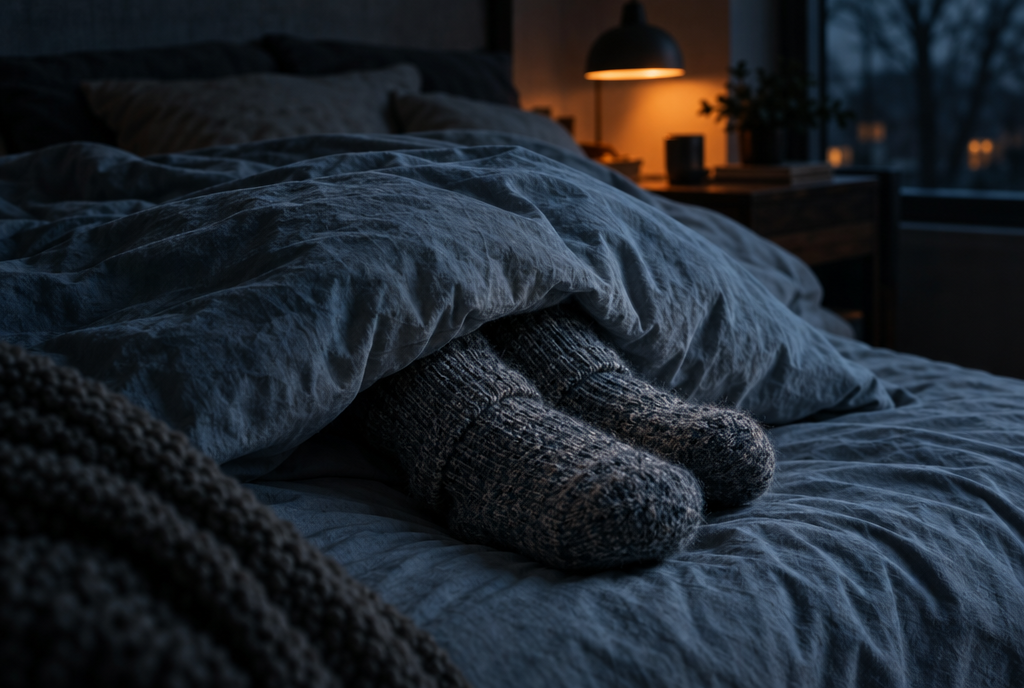
Cold feet at night usually mean the small blood vessels in your feet are still narrowed to hold heat in your core, just when your body wants to release heat through the feet to fall asleep. Loose bed socks, a pre-warmed bed, and a warm bath one to two hours before bed help most people. Numbness, pain or one colder foot deserve a clinician's attention.
Why are my feet cold at night even under blankets?
As bedtime approaches, your body starts lowering its core temperature. The Sleep Foundation describes how it does this through distal vasodilation: blood flow to the hands and feet increases so heat can leave through the skin. Warm feet are part of how you drift off, not a side effect of it.
If your feet are cold when you get into bed, the vessels in them are still clamped down to protect your core. A cold floor, damp socks, sitting still all evening or a cool bed all push in that direction. Blankets hold heat in, but they cannot supply heat that your feet are not getting, so cold feet can stay cold for a long time under a heavy comforter.
Should you wear socks to bed?
For most people, yes. In a small study in the Journal of Physiological Anthropology, six young men slept in a 23 degree Celsius room with and without bed socks. With socks they fell asleep 7.5 minutes sooner, slept 32 minutes longer (394 versus 362 minutes) and woke fewer times (8.8 versus 16.3 awakenings). The sample was tiny, so read the numbers as a signal rather than a promise.
The kind of sock matters. The Sleep Foundation suggests loose-fitting socks in merino wool, cashmere or cotton, or purpose-made bed socks, and advises against compression socks for sleep. Put on a fresh, dry pair each night. If you have circulation problems or swollen feet, ask your clinician before sleeping in socks.
How can you warm up cold feet in bed safely?
The safest approach warms the bed or your feet before you sleep, then removes the heat source once you are drowsy. Continuous heat on skin you are no longer paying attention to is where burns happen.
| Method | How to use it | Caution |
|---|---|---|
| Loose bed socks | Put on a clean, dry pair at bedtime | Avoid tight cuffs and compression socks |
| Extra layer at the foot of the bed | Fold a blanket over the lower third of the bed | Low risk; the simplest fix |
| Electric blanket or heated mattress pad | Pre-warm the bed, then switch off before sleep | Never fold or tuck it in; check age and cords |
| Hot water bottle | Warm the bed, then take it out | Use a cover; not on numb feet |
| Warm foot soak or bath | One to two hours before bed | Test the water if feeling is reduced |
| Slippers on the way to bed | Keep feet off cold floors in the evening | Choose a non-slip sole |
Does a warm bath before bed help you sleep?
It can, and timing is the key. A systematic review and meta-analysis in Sleep Medicine Reviews found that a warm bath or shower at about 40 to 42.5 degrees Celsius (104 to 108.5 degrees Fahrenheit), taken one to two hours before bedtime for as little as 10 minutes, shortened the time it took to fall asleep and improved self-rated sleep quality and sleep efficiency.
The bath warms the skin and opens the vessels in the hands and feet. When you step out, heat flows out through them and your core cools, which lines up with the natural drop before sleep. A bath right before lights out leaves you too warm; one or two hours ahead lets the cooling happen on schedule.
If you have diabetes or reduced feeling in your feet, check the water rather than trusting your toes. NIDDK advises testing it with a thermometer or your elbow, and lists 90 to 95 degrees Fahrenheit as safe for washing feet. Ask your clinician whether a warmer bath is right for you.
How should you set up the bedroom for warm feet?
A cool room and warm feet are not a contradiction. The room helps your core cool, while socks and bedding keep your feet from clamping down. Most sleep guidance favors a cool bedroom, so fix the feet before turning up the thermostat.
Dry your feet fully after a bath or shower, including between the toes, before putting on socks.
Put a rug or slippers where you stand while getting ready for bed.
Move a little in the evening; a short walk around the house after hours on the couch helps.
Keep a spare pair of bed socks next to the bed for waking at 3 a.m. with cold toes.
If a partner runs hot, use separate blankets so you can add a layer at the foot end without overheating them.
Cold feet at night with diabetes or neuropathy
Nerve damage changes the rules. Feet can feel cold when they are warm, and they may not register heat that is hurting the skin. NIDDK advises people with diabetes to wear socks in bed if their feet get cold and not to put a hot water bottle or heating pad on their feet.
Socks, extra blankets and a pre-warmed bed that you switch off before sleep are the safer options. Check your feet each day for redness, blisters or sores you did not feel happen, and tell your care team about anything new.
When should you see a clinician about cold feet at night?
Talk to your clinician if cold feet at night are new, getting worse, or come with numbness, tingling, burning or pain. Some patterns point to a blood vessel problem. NHLBI notes that with peripheral artery disease one foot may feel colder than the other, and that leg and foot pain at rest is a sign of severe disease called critical limb ischemia.
Seek prompt care for sores or wounds on the toes or feet that heal slowly or not at all, color changes that do not settle after warming, or a sudden cold, pale, painful foot. That last one is an emergency.
What causes cold feet at night?
Most cold feet at night come from a cool room, a cold floor or sitting still all evening. Some medical causes feel similar, and the pattern of symptoms helps tell them apart. Talk to your clinician if cold feet are new, getting worse or come with any of the signs in the last column.
| Cause | What it feels like | What helps | When to see a clinician |
|---|---|---|---|
| Normal heat conservation | Cold toes at bedtime that warm up after a while in bed | Loose dry socks, pre-warmed bed, warm bath 1 to 2 hours before bed | Not needed unless it changes |
| Raynaud's | Toes turn white, blue, then red with cold or stress; numbness or pins and needles for minutes to hours | Warm socks before you get cold, warm the whole body, avoid sudden chilling | Symptoms on one side only, with joint pain, rashes or muscle weakness, or first starting after 30 |
| Peripheral neuropathy (often diabetes) | Burning, tingling, numbness or pain, often worse at night; trouble sensing temperature | Socks in bed; no hot water bottle or heating pad on the feet | New numbness, tingling or pain, and any foot sore |
| Peripheral artery disease | One foot colder than the other, leg or foot pain at rest, slow-healing sores | Assessment and care from your clinician | Soon for any of these; a sudden cold, pale, painful or numb foot is an emergency: call 911 |
| Underactive thyroid or anemia | Feeling cold all over, with tiredness; pale skin or chills with anemia | Testing and care directed by your clinician | Cold intolerance that is long-lasting or extreme |
Key takeaways
Feet need to release heat for you to fall asleep; cold feet signal that their vessels are still narrowed.
Loose, dry bed socks helped people fall asleep sooner and wake less in a small study.
A warm bath one to two hours before bed helps the core cool on schedule.
Pre-warm the bed, then switch heat sources off; never use a hot water bottle or heating pad on numb feet.
One colder foot, pain at rest, numbness or slow-healing sores need a clinician's review.
Frequently asked questions
Why do my feet get cold as soon as I get into bed?
A cool bed pulls heat from your skin, and your feet may already be cool from the floor or from sitting still. Your body responds by narrowing the vessels in your feet to protect the core. Pre-warming the bed and putting on socks before you lie down helps.
Is it bad to sleep with cold feet?
It is not usually harmful, but it can make it harder to fall asleep and easier to wake. If cold feet come with numbness, pain or skin changes, talk to a clinician, because those can point to nerve or blood vessel problems.
Can I sleep with a hot water bottle at my feet?
It is safer to use it to warm the bed and then take it out before you sleep. Prolonged contact with a warm surface can burn skin, especially if you cannot feel heat well. People with diabetes are advised not to put a hot water bottle on their feet.
Are wool socks good for sleeping?
Loose merino wool socks are a good option because they insulate and handle moisture well. Cotton and purpose-made bed socks also work. Avoid tight cuffs and compression socks at night unless a clinician has prescribed them.
Why are my feet cold at night but hot during the day?
Temperature and blood flow change across the day and with activity, footwear and the room. Feet that swing between cold and burning, especially with tingling or numbness, can be a sign of nerve irritation and are worth mentioning to a clinician.
Why are my feet still cold under blankets?
Blankets only hold in heat, they do not add it. If the vessels in your feet are narrowed to protect your core, little warm blood reaches them, so they can stay cold under a heavy comforter. Warm the feet first with dry socks or a pre-warmed bed, and see a clinician if one foot is colder than the other.
Why is my body warm but my feet are cold in bed?
Your body keeps the core warm first and limits blood flow to the feet when it senses cold, so the two can feel very different. Cold floors, damp socks and sitting still before bed make it more likely. If it happens every night or comes with numbness or pain, talk to a clinician.
How do I keep my feet warm in bed?
Put on loose, dry bed socks, fold an extra blanket over the foot of the bed, and pre-warm the sheets with an electric blanket or hot water bottle that you switch off or remove before sleep. A warm bath one to two hours before bed also helps. Skip heat sources entirely if your feet are numb.
Why do my legs get cold at night?
The same heat-conserving response that cools the feet can cool the lower legs, especially in a cool room or after a sedentary evening. Cold legs with pain at rest, color changes or sores can point to a blood vessel problem such as peripheral artery disease, so mention them to a clinician.
From HEATJAC
We design low-profile thermal garments: a heat-reflective vest and a thermal harness with pockets for warmers or cold packs.
Choosing gear? What actually helps someone who is always cold · Warm, safe gifts for an older parent
Related reading
Sources
Effects of feet warming using bed socks on sleep quality and thermoregulatory responses in a cool environment, Journal of Physiological Anthropology (Springer Nature)
Sleeping With Socks On: Can Warm Feet Help You Fall Asleep?, Sleep Foundation
Before-bedtime passive body heating by warm shower or bath to improve sleep: A systematic review and meta-analysis, Sleep Medicine Reviews via PubMed
Diabetes and Foot Problems, National Institute of Diabetes and Digestive and Kidney Diseases (NIDDK)
Peripheral Artery Disease: Symptoms, National Heart, Lung, and Blood Institute (NHLBI)
Cold intolerance, MedlinePlus, National Library of Medicine
Anemia: Symptoms, National Heart, Lung, and Blood Institute
Peripheral Neuropathy, NIDDK
Raynaud's, NHS
Acute Limb Ischemia, Cleveland Clinic
Burns Sustained From Body Heating Devices: An Integrative Review (Kornhaber et al., Wounds, 2020), Wounds
About HEATJAC. HEATJAC is a thermal architecture company founded by an anesthesiologist. We design patented garment systems that capture, conduct and broaden warmth across the body, and we publish this knowledge hub because the science of staying warm should be public. HEATJAC products are not medical devices and are not intended to diagnose, treat, cure or prevent any disease.