
How cold should your bedroom be for sleep?
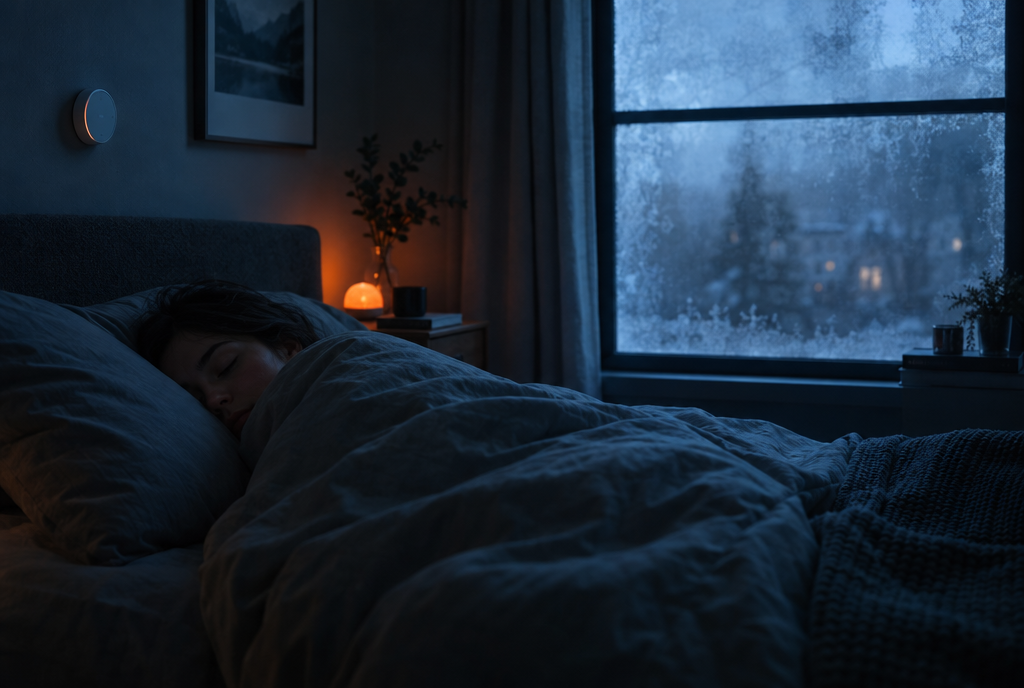
For most healthy adults, the best temperature for sleep is a cool room of about 60 to 68 degrees Fahrenheit (15 to 20 degrees Celsius), with 65 degrees a common starting point. A cool room supports the natural drop in core temperature that comes with sleep. Older adults often sleep better warmer, and babies have their own safe range.
What is the best temperature for sleep?
Sleep experts converge on a cool room, though the exact numbers vary by source. Cleveland Clinic cites 60 to 67 degrees Fahrenheit (15 to 19 degrees Celsius). The Sleep Foundation recommends 65 to 68 degrees Fahrenheit (about 18 to 20 degrees Celsius) and calls 65 degrees roughly ideal for most people.
Read these as a starting range rather than a rule. Bedding, sleepwear, humidity, body size, a partner's body heat and your own health all move the right number. The best setting is the one at which you fall asleep easily and do not wake hot or cold.
Why does a cool room help you sleep?
Core body temperature follows a daily rhythm and dips at night. The Sleep Foundation explains that about two hours before sleep, the circadian clock signals more blood flow to the hands and feet, letting heat escape through the skin. That drop in core temperature is part of how sleep begins.
A cool room makes that heat loss easy. A warm room works against it, so the body struggles to shed heat and sleep becomes lighter and more broken. For the physiology behind this rhythm, see our guide to normal body temperature and thermoregulation.
Is it worse to sleep too hot or too cold?
In real bedrooms, heat is usually the bigger problem for sleep quality. A review in the Journal of Physiological Anthropology found that with bedding and clothing in use, heat exposure increases wakefulness and reduces slow wave sleep and REM sleep, and humid heat adds to the thermal load.
Cold is not harmless, though. The same review notes that cold exposure can affect the heart's autonomic responses during sleep without changing sleep stages or how cold people say they feel, and its authors suggest the impact of cold may be greater than that of heat in real life. That matters most for older adults and anyone with heart disease.
What is the best bedroom temperature for older adults?
Often warmer than the standard advice. A study in Science of the Total Environment followed 50 community-dwelling older adults over 10,903 nights and found sleep was most efficient and restful when the nighttime room temperature was 20 to 25 degrees Celsius (68 to 77 degrees Fahrenheit). Sleep efficiency fell by a clinically relevant 5 to 10% as the room warmed from 25 to 30 degrees Celsius (77 to 86 degrees Fahrenheit).
Public health advice points the same way for safety. The NHS recommends heating the rooms you use regularly, including the bedroom, to at least 18 degrees Celsius (64 degrees Fahrenheit) where possible, and notes that people aged 65 and older are more vulnerable to the effects of cold. An older person who feels cold in bed should not be told to tough it out at 62 degrees.
What room temperature is safe for a sleeping baby?
The NHS states that a room temperature of 16 to 20 degrees Celsius (about 61 to 68 degrees Fahrenheit) is comfortable and safe for sleeping babies, and that overheating a baby increases the chances of SIDS.
Follow safe sleep guidance exactly. The NHS advises removing hats and extra clothing as soon as you are indoors, and taking off some clothing or bedding if a baby is sweating or their tummy feels hot to the touch. Call your pediatrician or emergency services if a baby seems unwell, has trouble breathing, or is unusually hot or cold.
Bedroom temperature at a glance
These are the ranges the sources above cite. Use them as starting points, then adjust by a degree or two and see how you sleep.
| Who | Commonly cited range | Source |
|---|---|---|
| Most healthy adults | 60 to 67 F (15 to 19 C) | Cleveland Clinic |
| Most healthy adults | 65 to 68 F (about 18 to 20 C) | Sleep Foundation |
| Older adults, best sleep in one study | 68 to 77 F (20 to 25 C) | Science of the Total Environment study |
| Bedrooms in cold weather, especially 65 and older | At least 64 F (18 C) where possible | NHS |
| Sleeping babies | About 61 to 68 F (16 to 20 C) | NHS |
How do you find your best sleep temperature?
Change one thing at a time and give each setting a few nights.
Start near 65 degrees Fahrenheit if you are a healthy adult, then move up or down by one or two degrees.
Adjust bedding before the thermostat: a lighter comforter with a blanket you can add or remove gives finer control.
Keep your feet warm with loose bed socks even in a cool room; cold feet can delay sleep.
Watch humidity in summer, since humid heat disrupts sleep more than dry heat.
If you share a bed and run at different temperatures, use separate blankets.
For an older relative, err warmer, and ask their clinician if they often wake cold or feel unwell in the cold.
Key takeaways
Most adults sleep best in a cool room, roughly 60 to 68 degrees Fahrenheit, with 65 a common starting point.
A cool room supports the natural drop in core temperature at sleep onset; heat fragments sleep.
Cold is not risk-free: it can affect heart responses during sleep, which matters for older adults.
Older adults often sleep better at 68 to 77 degrees Fahrenheit, and the NHS advises at least 64 in bedrooms.
For babies, the NHS cites 61 to 68 degrees Fahrenheit and warns that overheating raises SIDS risk.
Frequently asked questions
Is 65 degrees too cold to sleep?
For most healthy adults, no. The Sleep Foundation calls 65 degrees Fahrenheit about ideal with suitable bedding. Older adults, and anyone who wakes cold, may do better a few degrees warmer.
Is 72 degrees too hot to sleep?
It is above the range most sleep sources suggest for younger adults, and many people will sleep more lightly. Some older adults sleep well in the low 70s, so judge by how you feel and how often you wake.
What temperature should I set my thermostat at night in winter?
A cool setting in the mid 60s suits many adults. The NHS advises keeping bedrooms at 18 degrees Celsius (64 degrees Fahrenheit) or more where possible, especially for people 65 and older.
Why do I wake up hot in the middle of the night?
A warm room, heavy bedding, a partner's body heat or humid air can all stop you shedding heat. Hormonal changes and some medicines can play a part. If night sweats are frequent or new, talk to a clinician.
Should a baby's room be warmer than an adult's?
The NHS range for babies, 16 to 20 degrees Celsius, overlaps with typical adult advice rather than being warmer. The bigger risk for babies is overheating, so avoid extra layers, hats indoors and loose bedding.
From HEATJAC
We design low-profile thermal garments: a heat-reflective vest and a thermal harness with pockets for warmers or cold packs.
Choosing gear? What actually helps someone who is always cold · Warm, safe gifts for an older parent
Related reading
Sources
The Best Temperature for Sleep, Sleep Foundation
What's the Best Temperature for Sleep?, Cleveland Clinic
Effects of thermal environment on sleep and circadian rhythm, Journal of Physiological Anthropology (Springer Nature)
Nighttime ambient temperature and sleep in community-dwelling older adults, Science of the Total Environment (ScienceDirect)
Keep warm, keep well, NHS
How to dress a newborn baby, NHS Best Start in Life
About HEATJAC. HEATJAC is a thermal architecture company founded by an anesthesiologist. We design patented garment systems that capture, conduct and broaden warmth across the body, and we publish this knowledge hub because the science of staying warm should be public. HEATJAC products are not medical devices and are not intended to diagnose, treat, cure or prevent any disease.