
How to dress a baby for cold weather, outdoors and at night
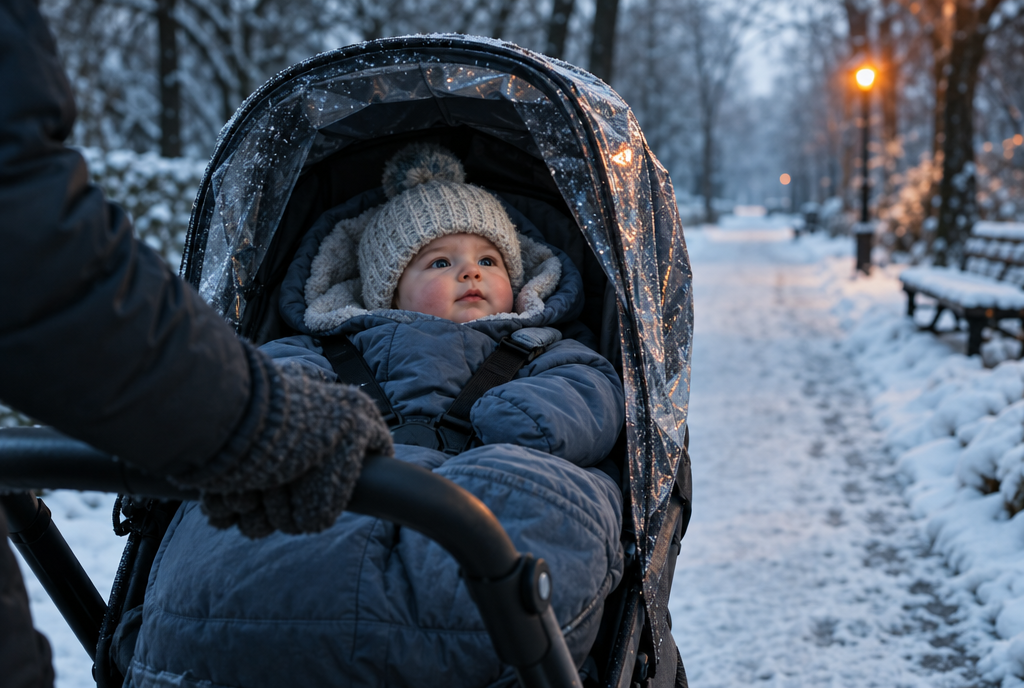
The American Academy of Pediatrics (AAP) says a baby only needs one more layer than you would wear in the same environment. Outdoors, add a hat, mittens and booties. For sleep, use layers or a wearable blanket instead of loose blankets, and do not put a hat on your baby indoors. Watch for sweating, a hot chest or flushed skin, which signal overheating.
How many layers should a baby wear in cold weather?
The AAP's safe sleep guidance puts it simply: your baby only needs one more layer than you would wear in the same environment to be comfortable. The AAP's cold weather page gives the same rule of thumb for older babies and young children, and its car seat advice calls it the plus-one layering rule.
The rule works in both directions. If you are comfortable indoors in a long-sleeved shirt, your baby needs that plus one more layer, not a snowsuit. If you are wearing a winter coat outside, your baby needs warm outdoor clothing plus one more layer.
| Situation | What the AAP and NICHD advise |
|---|---|
| Indoors, awake | One more layer than you are wearing; no hat once home from the hospital |
| Outdoors | One more layer than an adult, plus hat, mittens and booties |
| Car seat | Thin layers under a snug harness; blanket or coat over the buckled straps |
| Sleep | Layers or a wearable blanket; no loose blankets, no hat, no weighted products |
How do you dress a baby for going outside in winter?
Start with the plus-one rule, then cover the parts that lose heat fastest. The AAP lists warm boots, gloves or mittens, and a hat as essentials for children in the cold, and several thin layers rather than one bulky one.
Lurie Children's Hospital of Chicago suggests keeping extra hats, mittens and booties with you on outings and replacing them promptly if they get wet. Wet fabric draws heat away quickly, and a baby cannot tell you their feet are soaked.
How do you keep a baby warm in a stroller?
Dress your baby with the same outdoor layers, a hat and mittens, and keep spares in the stroller basket. Check your baby often, and swap anything that gets wet.
Strollers are for rides, not sleep. The AAP says that if your baby falls asleep in a car seat, stroller, swing, infant carrier or sling, you should move them to a firm sleep surface on their back as soon as possible. When you come inside, take off the hat and extra outdoor layers, because NICHD's Safe to Sleep campaign notes that hats indoors can make a baby too hot.
How should a baby be dressed for sleep in winter?
Warmth at night comes from clothing, not bedding. The AAP advises keeping blankets, quilts, pillows, bumpers, sheepskins and other loose bedding out of an infant's sleep environment, and using sleep clothing such as one-piece sleepers or wearable blankets instead. Soft objects and loose bedding increase the risk of entrapment, suffocation or strangulation.
The AAP also says not to put a hat on your baby while indoors once you are home from the hospital, and not to use weighted blankets, sleepers, swaddles or other weighted objects on or near your baby. Always place your baby on their back to sleep.
Use a one-piece sleeper, adding a wearable blanket if the room is cool.
Keep the crib free of soft objects and loose bedding.
No hat, no loose blanket, no weighted sleep products.
Stop swaddling when your baby looks like they are trying to roll over, per the AAP.
What room temperature is best for a baby?
The AAP's parent guide to safe sleep does not set a specific room temperature. Its focus is on avoiding overheating, which it says can increase the risk of SIDS. NICHD's Safe to Sleep campaign advises dressing your baby in clothes suitable for the temperature of the room, and warns that too many layers of clothes and bedding for the room temperature, sometimes called overbundling, can overheat a baby.
In practice, that means setting the room to a temperature you find comfortable, dressing yourself for it, and adding one layer for your baby. Be cautious with numbers you see online; they are not part of the AAP guidance.
How can you tell if a baby is too cold or too hot?
The AAP and Safe to Sleep both describe the signs of overheating: sweating, flushed or red skin, and a chest that feels hot to the touch. If you see them, remove a layer.
On the cold side, Lurie Children's notes that cold hands and feet might indicate the need for an additional layer. The CDC lists bright red, cold skin and very low energy as warning signs of hypothermia in infants, and says a person with a body temperature below 95°F needs medical attention immediately.
| Sign | What it may mean | What to do |
|---|---|---|
| Sweating, flushed skin, hot chest | Too warm | Remove a layer; take off any hat indoors |
| Cold hands and feet, otherwise alert | May need a layer | Add a layer and recheck |
| Bright red, cold skin with very low energy | Possible hypothermia | Call 911 or your pediatrician now |
When should you call a pediatrician or 911?
Call 911 for a baby who has bright red, cold skin with very low energy after cold exposure; the AAP calls hypothermia a medical emergency. Call your pediatrician for any other worry about warmth, sleep or breathing. The AAP encourages parents not to hesitate to talk with their pediatrician about the safety of a baby's sleep environment; talk to your pediatrician or another clinician about any symptoms.
Key takeaways
A baby needs one more layer than you would wear in the same environment.
Outdoors, add a hat, mittens and booties, and carry dry spares.
For sleep, use a sleeper or wearable blanket; no loose blankets, hats or weighted products.
Overheating signs are sweating, flushed skin and a hot chest; remove a layer.
Bright red, cold skin with very low energy is an emergency; call 911.
Frequently asked questions
Should a baby wear a hat to sleep in winter?
No. The AAP says not to put a hat on your baby while indoors once you are home from the hospital. Hats can make a baby too hot, and the head and face should stay uncovered during sleep.
Can I use a blanket if my baby's room is cold?
The AAP advises keeping loose blankets out of the sleep area. Dress your baby in layers or a wearable blanket instead. These keep your baby warm without adding items to the crib.
What should a baby wear to sleep in winter?
A one-piece sleeper, with a wearable blanket over it if the room is cool, is the approach the AAP describes. Follow the one-more-layer-than-you rule. Check for sweating or a hot chest, which mean your baby is too warm.
Are a baby's cold hands a sign they are too cold?
Cold hands and feet might mean your baby needs another layer, according to Lurie Children's. Feel your baby's chest as well, since a hot chest signals overheating. Bright red, cold skin with very low energy is a warning sign of hypothermia and needs urgent care.
Is a snowsuit safe in a car seat?
No. The AAP explains that bulky padding flattens in a crash and leaves the harness loose. Use thin layers under a snug harness and put a blanket or the coat over the buckled straps.
From HEATJAC
We design low-profile thermal garments: a heat-reflective vest and a thermal harness with pockets for warmers or cold packs.
Choosing gear? What actually helps someone who is always cold · Warm, safe gifts for an older parent
Related reading
Sources
Safe Sleep Information for Babies (A Parent's Guide to Safe Sleep), HealthyChildren.org (American Academy of Pediatrics)
Cold Weather Safety for Children: Preventing Frostbite and Hypothermia, HealthyChildren.org (American Academy of Pediatrics)
Winter Car Seat Safety Tips: Keeping Kids Safe and Warm, HealthyChildren.org (American Academy of Pediatrics)
Ways To Reduce the Risk of SIDS and Other Sleep-Related Causes of Infant Death, Safe to Sleep, NICHD (NIH)
Preventing Hypothermia, Centers for Disease Control and Prevention
Bundling Babies Safely in Winter, Lurie Children's Hospital of Chicago
About HEATJAC. HEATJAC is a thermal architecture company founded by an anesthesiologist. We design patented garment systems that capture, conduct and broaden warmth across the body, and we publish this knowledge hub because the science of staying warm should be public. HEATJAC products are not medical devices and are not intended to diagnose, treat, cure or prevent any disease.