
Keeping kids warm outdoors: layers, limits and warning signs
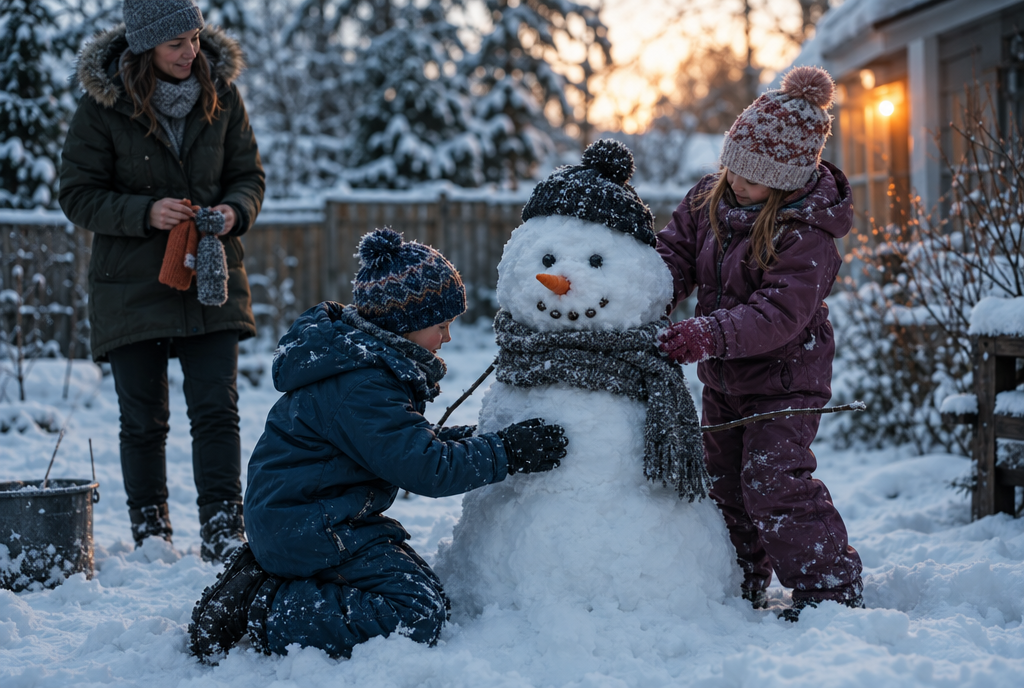
To dress kids for cold weather, the American Academy of Pediatrics (AAP) recommends several thin layers plus insulated boots, mittens or gloves, and a hat. Young children usually need one more layer than an adult in the same conditions. Change wet clothing right away, limit outdoor time with regular indoor breaks, and avoid outdoor play when temperatures or wind chills fall below -15°F.
How should you dress kids for cold weather?
The AAP's advice is short: several thin layers keep kids warm and dry, and insulated boots, mittens or gloves, and a hat are essential. For older babies and young children, the AAP's rule of thumb is one more layer of clothing than an adult would wear in the same conditions.
Thin layers beat one bulky layer because each traps warm air and each can come off when a child gets hot from running around. Nemours KidsHealth adds that wool is often warmer than cotton and that waterproof pants and jackets help keep kids dry.
A simple way to build the outfit is from the skin out, as in the table below. Check the fit of boots over winter socks; a boot that squeezes the foot leaves less room for warm air.
| Layer | Its job | Good choices for kids |
|---|---|---|
| Base layer | Stay close to skin and dry | Long underwear or leggings in wool or synthetic fabric |
| Middle layer | Trap body heat | Fleece top, wool sweater, fleece pants |
| Outer layer | Block wind, snow and wet | Waterproof jacket and snow pants |
| Head | Cover ears | Warm hat that stays on during play |
| Hands | Keep fingers dry and warm | Mittens or gloves, plus a spare pair |
| Feet | Stay dry and warm | Warm socks and insulated waterproof boots with some room |
Are mittens or gloves better for kids?
The National Weather Service says mittens are better than gloves, because fingers share warmth inside one pocket of air. Gloves still make sense for older kids who need to grip a sled rope or ski pole, and the AAP lists either as acceptable.
Snow gets into cuffs quickly. Nemours KidsHealth suggests putting an extra pair of gloves or mittens in a child's pockets for a longer outing, which is often the simplest fix for a wet, unhappy child. A hat matters just as much: the AAP notes that fingers, toes, ears and noses are the parts most likely to get frostbite.
Why do wet clothes make kids cold so fast?
Wet fabric pulls heat away from the body. Nemours KidsHealth advises removing all wet clothing because it draws heat from the body, and the AAP recommends changing children out of wet clothing immediately.
Snow play is the usual culprit: kneeling, rolling and digging soak knees, cuffs and mittens even when the outer shell is waterproof. Sweat counts too, so a child who has been running hard and then stands still at a bus stop can chill quickly.
Tuck mitten cuffs under or over jacket sleeves so snow cannot slide in.
Pack spare socks, mittens and a dry base layer for long outings.
Swap damp layers at every indoor break, not just at the end of the day.
How cold is too cold for kids to play outside?
The AAP's general guidance is to avoid outdoor play when temperatures or wind chills are below -15°F, because at those levels exposed skin begins to freeze within minutes. Check the wind chill, not just the thermometer, since wind strips heat from skin much faster.
Above that line, the AAP recommends setting reasonable limits on time outside and making sure kids have a place for regular indoor breaks to warm up. Nemours KidsHealth offers a practical cue: when being cold becomes unpleasant, it is time to go inside. Young children often keep playing long after they are chilled, so an adult should decide when the break happens.
What are the signs of frostnip and frostbite in kids?
Frostnip is the early warning. Nemours KidsHealth describes skin that is red and numb or tingly, and advises bringing the child inside and placing the chilled areas in warm, not hot, water for about 20 to 30 minutes.
Frostbite is more serious. The AAP says frostbitten skin may hurt or feel like it is burning, then quickly go numb, turn white or pale gray, and form blisters. Do not rub the area or put hot objects on it; soak it in warm water for 20 to 30 minutes. The AAP advises calling your pediatrician if pain or numbness lasts more than a few minutes, and Nemours KidsHealth advises taking a child with frostbite to the nearest emergency room right away.
Hypothermia is a medical emergency. A child may shiver, then become sluggish, clumsy or slur their words. Call 911, remove wet clothing and wrap the child in blankets while you wait.
| What you see | What it may be | What to do |
|---|---|---|
| Red, numb or tingly skin | Frostnip | Go inside; warm (not hot) water, 20 to 30 minutes |
| Burning pain, then numb, white or gray skin, blisters | Frostbite | Do not rub; warm water soak; call pediatrician or go to the ER |
| Shivering, then sluggish, clumsy or slurred speech | Hypothermia | Call 911; remove wet clothes; wrap in blankets |
Are hand warmers safe for kids?
Air-activated hand warmers can be used with care for older children, but they need adult oversight. The maker of HotHands notes that some people, especially young children, may have reduced sensation to heat, and tells users to read the instructions for each product.
Keep the warmer inside a mitten pocket or coat pocket rather than against bare skin, check hands often, and take warmers away before naps, bedtime or any time a child will be unsupervised. The packets are also a chewing hazard. The Missouri Poison Center advises calling Poison Help at 1-800-222-1222 right away if a child chews on or swallows any part of a hand warmer.
When should you call a pediatrician or 911?
Most cold days end with nothing worse than pink cheeks. Call your pediatrician if numbness or pain lasts more than a few minutes after rewarming, and call 911 or go to an emergency room for signs of frostbite or hypothermia listed above. If you are unsure, call; that is what pediatric offices and nurse lines are for. Talk to your child's pediatrician or another clinician about any symptoms that worry you.
Key takeaways
Dress kids in several thin layers with insulated boots, mittens or gloves, and a hat.
Young children usually need one more layer than an adult in the same conditions.
Change wet clothing right away and carry spare mittens and socks.
Set time limits with indoor breaks, and avoid play below -15°F temperature or wind chill.
Know frostnip, frostbite and hypothermia signs, and call a pediatrician or 911 when you see them.
Frequently asked questions
How many layers should a child wear in the snow?
Usually a base layer, a warm middle layer and a waterproof outer layer, plus hat, mittens and boots. The AAP's rule of thumb for young children is one more layer than an adult would wear in the same conditions. Remove a layer if your child is sweating.
At what temperature should kids not play outside?
The AAP advises avoiding outdoor play when the temperature or wind chill is below -15°F. At those levels, exposed skin begins to freeze within minutes. Above that, set time limits and take regular indoor breaks.
How often should kids come inside to warm up?
The AAP does not set a fixed interval. It recommends reasonable limits on outdoor time and a place for regular indoor breaks. Bring kids in sooner if they are wet, shivering or complaining of cold.
Can kids wear cotton in cold weather?
Cotton is fine for a short trip between the car and a building. For snow play, wool or synthetic layers are a better choice, since Nemours KidsHealth notes wool is often warmer than cotton and wet clothing draws heat from the body.
What should I do if my child's fingers are numb after playing in the snow?
Bring your child inside, remove wet clothing and place the fingers in warm, not hot, water without rubbing them. If the pain or numbness continues for more than a few minutes, the AAP says to call your pediatrician. Go to an emergency room if the skin is white, gray or blistered.
From HEATJAC
We design low-profile thermal garments: a heat-reflective vest and a thermal harness with pockets for warmers or cold packs.
Choosing gear? What actually helps someone who is always cold · Warm, safe gifts for an older parent
Related reading
Sources
Playing Outside in Winter: Tips to Keep Kids Warm and Safe, HealthyChildren.org (American Academy of Pediatrics)
Cold Weather Safety for Children: Preventing Frostbite and Hypothermia, HealthyChildren.org (American Academy of Pediatrics)
Cold, Ice, and Snow Safety, Nemours KidsHealth
Extreme Cold: During, National Weather Service (NOAA)
HotHands FAQs, Kobayashi Americas
What Happens If Your Child Chews On A Hand Warmer?, Missouri Poison Center
About HEATJAC. HEATJAC is a thermal architecture company founded by an anesthesiologist. We design patented garment systems that capture, conduct and broaden warmth across the body, and we publish this knowledge hub because the science of staying warm should be public. HEATJAC products are not medical devices and are not intended to diagnose, treat, cure or prevent any disease.