
Battery heat vs air-activated warmers: cost and runtime compared
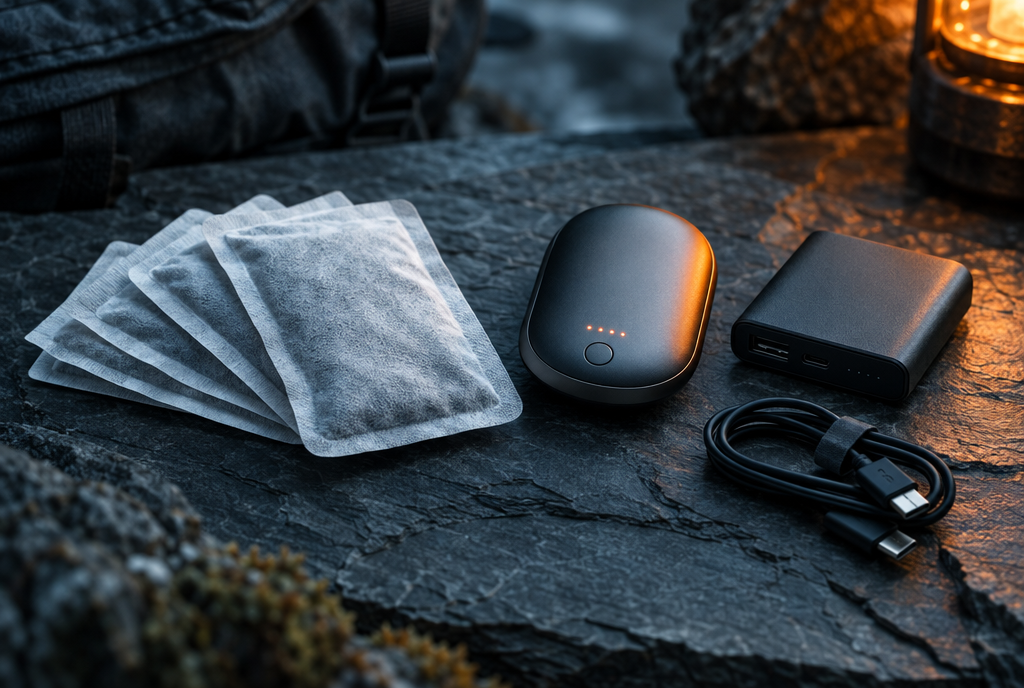
If you use warmers only a few days a year, air-activated packs cost less and need no charging. If you use them most days of the season, rechargeable battery warmers usually pay for themselves within about 50 to 100 days of use, because a charge costs under a cent. The trade-offs are shorter runtime per charge, cold-weather battery loss and battery disposal.
What does a disposable hand warmer cost per use?
In September 2026, a major retailer listed a 40-pair value pack of a leading brand of air-activated hand warmers at $25.60, or about 64 cents per pair. The maker rates those hand warmers at up to 10 hours each and body warmers at up to 18 hours.
That makes the cost easy to predict: one pair per cold day, roughly 64 cents a day at that price. Prices vary by store, brand and season, so recheck with your own numbers. How the chemistry works and why packs fall short of their rated time are covered in our pages on how hand warmers work and how long they last.
How long do rechargeable hand warmers actually run?
Less than a disposable pack on high. In Outdoor Life's hands-on testing of five rechargeable models, runtimes on the high setting ranged from 2 to 6.1 hours, and on low from 3.5 to 10.7 hours. Tested prices ran from about $15 to $30 per unit.
Cold shortens this further. Battery University notes that a lithium-ion battery giving full capacity at 27°C (80°F) typically delivers about 50% at minus 18°C (0°F). Keep the warmer in an inside pocket between uses, and plan on low settings for a full shift.
What does a season cost with each option?
The table uses clearly stated assumptions: 40 cold days, one pair of warmers a day, the retail and test prices above, and US residential electricity at 18.2 cents per kWh, the Energy Information Administration's 2026 forecast average. The charging figure uses an illustrative 37 Wh pack; your device may be smaller.
Charging cost is almost negligible. A 37 Wh charge is 0.037 kWh, about 0.7 cents of electricity, and a little more after charger losses.
| Season cost item (40 days) | Air-activated warmers | Rechargeable warmers (two units) |
|---|---|---|
| Up-front purchase | None | About $30 to $60 at tested prices |
| Daily running cost | About 64 cents per pair | Under 1 cent per charge (illustrative) |
| Season total | About $26 (one 40-pair box) | About $30 to $61 |
| Second season | About $26 again | Under $1 of electricity |
| Runtime per use | Up to 10 hours rated | About 2 to 6 hours high, 3.5 to 10.7 hours low (tested) |
| Waste | One spent pouch per warmer | Battery at end of life |
How do you calculate your own break-even point?
Divide what the rechargeable setup costs by what it saves each day. Break-even days = device cost ÷ (disposable cost per day minus charging cost per day).
Using the figures above, a $30 pair of rechargeable units breaks even after about 47 days of use at 64 cents a day. A $60 pair takes about 94 days. If you use warmers 10 days a year, that is several seasons; if you use them every workday in winter, it is a few months.
The same formula works for heated vests against air-activated body warmers. As an illustrative example only, a $150 heated vest replacing a $1 body warmer each day would break even after about 150 days of use, before any spare battery.
Which is better for the environment?
It depends on how often you use them. Outdoor Life's reviewers concluded that occasional users likely have less impact with disposables, while people who rely on warmers all season produce less waste with rechargeable ones.
The end of life differs too. The maker of one leading air-activated brand lists iron powder, water, salt, activated charcoal and vermiculite as ingredients and says used warmers can go in household garbage. The EPA says lithium-ion batteries should not go in household garbage or recycling bins, and should go to separate battery recycling or household hazardous waste points.
Which is more convenient day to day?
Each option asks for a different habit. Pick the one you will actually keep up.
Air-activated: no charging, long rated runtime, works after months in a glove box, but takes time to warm up and cannot be turned off
Rechargeable: instant heat and adjustable settings, but needs charging every night and loses runtime in deep cold
Air-activated packs have no lithium battery to declare when flying; rechargeable units follow airline battery rules
Neither kind should rest directly on bare skin; keep fabric between the warmer and your body
Where HEATJAC fits
HEATJAC CORE is a low-profile thermal harness platform with integrated heat-reflective thermal inserts and pockets that accept supplemental warming elements such as air-activated warmers (sold separately). It has no built-in battery, so it pairs with the disposable column above and keeps the warmer off bare skin.
Key takeaways
Air-activated warmers cost about 64 cents a pair at one major retailer in September 2026 and are rated up to 10 hours.
Rechargeable hand warmers tested at about 2 to 6 hours on high and 3.5 to 10.7 hours on low, at $15 to $30 each.
A charge costs under a cent, so daily users usually break even within about 50 to 100 days of use.
Occasional users spend less, and likely waste less, with disposables.
Recycle lithium-ion batteries at a collection point; spent iron warmers can go in household trash per one maker.
Frequently asked questions
Are rechargeable hand warmers worth it?
If you use warmers most cold days, usually yes, because each charge costs under a cent. If you use them a handful of times a year, disposable packs are cheaper and simpler.
Do rechargeable hand warmers last as long as disposable ones?
Usually not on high. In one hands-on test, high settings ran about 2 to 6 hours, while a leading disposable hand warmer is rated at up to 10 hours. Low settings close much of the gap.
How much electricity does charging a hand warmer use?
Very little. At EIA's forecast 2026 average of 18.2 cents per kWh, an illustrative 37 Wh charge costs well under a cent, even allowing for charger losses.
Are disposable hand warmers bad for the environment?
They create one spent pouch per use, which adds up over a season. One major maker says the contents are iron, water, salt, charcoal and vermiculite and the pouches can go in household trash.
Can I use both?
Yes. Many people keep disposable packs as backup for long days and use a rechargeable warmer for short outings. Carry the pack you are not using in a warm inside pocket.
Related reading
Sources
FAQ, HotHands
The Best Rechargeable Hand Warmers, Tested and Reviewed, Outdoor Life
Short-Term Energy Outlook, Table 7c: US Regional Electricity Prices, US Energy Information Administration
Used Lithium-Ion Batteries, US Environmental Protection Agency
BU-502: Discharging at High and Low Temperatures, Battery University
About HEATJAC. HEATJAC is a thermal architecture company founded by an anesthesiologist. We design patented garment systems that capture, conduct and broaden warmth across the body, and we publish this knowledge hub because the science of staying warm should be public. HEATJAC products are not medical devices and are not intended to diagnose, treat, cure or prevent any disease.