
What to wear by temperature, wind and activity
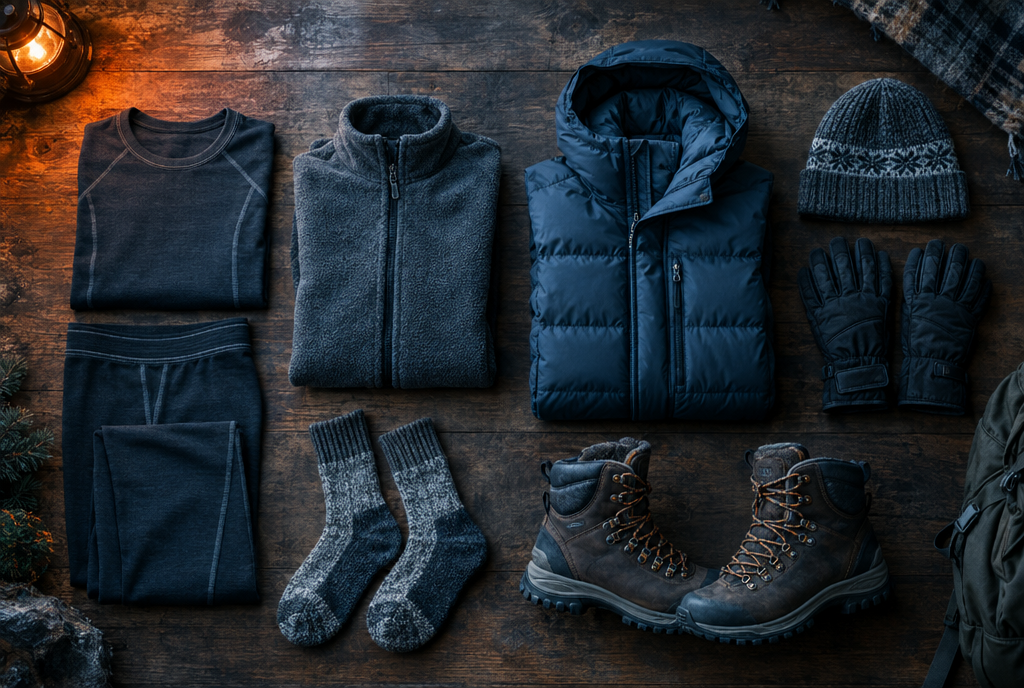
Dress in three loose layers: a wicking base layer (wool or synthetic, not cotton), an insulating middle layer, and an outer layer that blocks wind and water. Add a hat and gloves around 40°F (4°C) and switch to mittens near 0°F (-18°C). Add a windproof shell when windy, dress warmer when standing still, and about 20°F lighter when running.
What to wear by temperature, wind and activity
General guidance for healthy adults, built on NIOSH, CCOHS, CDC and National Weather Service layering advice. Adjust for sun, rain, your own tolerance and how long you will be out.
Rules that always apply:
- Wear several loose layers rather than one heavy garment: a wicking base layer, an insulating middle layer, and an outer layer that blocks wind and water.
- Avoid cotton next to the skin. It gets wet quickly and loses its insulating properties; wool and synthetics keep more warmth when damp.
- For high activity such as running, dress as if it were about 20°F (11°C) warmer than the actual temperature and feel slightly cool when you start.
- Remove layers before you sweat, then put them back on when you slow down or stop. CCOHS order: gloves (unless protection from snow or ice is needed), then hat and scarf, then open the jacket at waist and wrists, then remove outer layers.
- When windy, add a windproof shell and cover exposed skin. Frostbite on exposed skin needs an air temperature below freezing, and wind shortens the time it takes.
- In rain, wet snow or spray, the outer layer should be waterproof, and carry a dry change of clothes; wet clothing loses much of its insulation.
- Cover the head, ears, face, hands and feet; mittens are warmer than gloves. Use gloves below about 4°C (39°F) for light work and mittens below about -17°C (1°F).
The outfits are our editorial synthesis of the cited guidance, not a standard. People with conditions that affect circulation, sensation or temperature control should ask a clinician what is right for them.
How do you use the what-to-wear tool?
Enter the air temperature in °F or °C, pick how active you will be, and choose calm or windy. The tool returns a base layer, middle layer, outer layer, and head, hand and foot coverage, plus notes for your conditions.
Activity has three settings. Still or standing covers waiting, spectating and light tasks. Moderate covers walking and light or moderate work. High covers running, heavy work and uphill skiing. The tool counts wind of about 10 mph (16 km/h) or more as windy; that cutoff is our practical choice, not an official standard.
Pick the activity you will do most of the time, and plan a layer for the part you will not. A runner who stops to walk home needs the layer the still setting suggests.
What rules is the tool based on?
The core rules come from occupational safety and weather agencies. The Canadian Centre for Occupational Health and Safety (CCOHS) calls for an inner layer that wicks moisture, such as wool, polyester or polypropylene, removable middle layers, and a waterproof outer layer in wet conditions. It says cotton is not recommended because it gets damp quickly and loses its insulating properties. CDC and the National Weather Service (NWS) advise several loose layers, a hat, face and mouth covering, and mittens, which NWS notes are warmer than gloves.
Hands: CCOHS advises gloves below 4°C (39°F) for light work, below -7°C (19°F) for moderate work, and mittens below -17°C (1°F).
Running: University of Michigan Health-West advises dressing as if it were about 20 degrees warmer and feeling slightly cool at the start, with gloves or mittens and a hat below about 40 degrees.
Wind: CCOHS advises an easily removable windbreak when you cannot shelter from the wind.
Sweat: remove layers before you sweat and put them back on when you stop, as Mayo Clinic and CCOHS advise.
How do temperature, wind and activity change what you wear?
The tool uses seven temperature bands and seven outfit steps, from a light shirt and shell up to expedition layers with no exposed skin. Moderate activity sets the starting step for each band. Standing still moves you one step warmer, high activity moves you two steps lighter, and wind adds one step and a windproof shell. In milder bands, still and windy do not stack.
These band-by-band outfits are our synthesis of the cited guidance, not a quoted standard. Every general rule the tool displays is sourced; the specific garments in each cell are practical, conservative suggestions.
| Band | Moderate activity, calm | Hands |
|---|---|---|
| Above 50°F (10°C) | Light wicking shirt; carry a shell | None needed |
| 40 to 50°F (4 to 10°C) | Long-sleeve wicking layer, light fleece, light shell | Light gloves to carry |
| 32 to 40°F (0 to 4°C) | Wicking top, fleece, wind- and water-resistant jacket, hat | Warm gloves |
| 20 to 32°F (-7 to 0°C) | Midweight thermals, fleece, insulated coat, hat and scarf | Warm gloves |
| 0 to 20°F (-18 to -7°C) | Thermals, heavy insulation, windproof parka, face covering | Insulated gloves or mittens |
| -15 to 0°F (-26 to -18°C) | Heavyweight thermals, two insulating layers, heavy parka, balaclava | Mittens over liners |
| Below -15°F (-26°C) | Expedition layers, goggles, no exposed skin | Mittens over liners |
What should you wear in 40, 30, 20 and 0 degree weather? Worked examples
These examples show the tool's output for common situations.
| Situation | Tool result |
|---|---|
| 35°F (2°C), calm, walking the dog | Long-sleeve wicking top, fleece, wind- and water-resistant jacket, hat over the ears, warm gloves, wool socks |
| 25°F (-4°C), windy, waiting for a bus | Midweight to heavyweight thermals, insulated layer, insulated windproof parka, hat plus scarf or gaiter over the face, warm gloves, insulated boots |
| 25°F (-4°C), calm, running | Long-sleeve wicking layer, light removable mid layer, wind-resistant shell, hat or headband over the ears, light gloves |
| 10°F (-12°C), windy, shoveling or site work | Heavyweight thermals, two insulating layers, insulated windproof parka and pants, balaclava, insulated gloves or mittens with a spare pair, boots rated for severe cold |
How should you dress for wind and wet conditions?
Wind strips away the warm air trapped in your layers, so a windproof outer layer matters more than extra insulation underneath it. NWS explains that at 0°F with a 15 mph wind, the wind chill is -19°F and exposed skin can freeze in 30 minutes. Frostbite needs an air temperature below freezing, so in windy, subfreezing weather, cover your face and ears.
Water is the other threat. CCOHS calls for a waterproof outer layer in wet work, and NWS advises carrying a dry change of clothes if you may get wet. Sweat counts too: open vents or shed a layer before your base layer soaks through.
What are the limits of any what-to-wear guide?
People differ. Body size, age, fitness, sun, humidity and how long you will be out all change what feels right, and children and older adults lose heat differently. Mayo Clinic suggests considering indoor exercise when it is below 0°F (-18°C) or the wind chill is extreme.
If you have a condition that affects circulation, sensation or temperature control, such as diabetes or Raynaud's, ask a clinician how to adjust these suggestions. Numbness, pain or skin color changes in the fingers or toes are reasons to get inside and warm up.
Key takeaways
Use three loose layers: wicking base, insulating middle, wind- and water-blocking outer.
Skip cotton next to the skin; wool and synthetics keep more warmth when damp.
Add a hat and gloves around 40°F (4°C) and switch to mittens near 0°F (-18°C).
Dress warmer to stand still and about 20°F lighter to run.
In windy, subfreezing weather, add a windproof shell and cover exposed skin.
Frequently asked questions
What should I wear in 30 degree weather?
For walking at 30°F (about -1°C), wear a midweight thermal base layer, a fleece or light insulated layer, an insulated water-resistant coat, a hat that covers your ears, a scarf and warm gloves. If you are running, drop to a wicking layer, a light mid layer and a wind shell. Standing still or wind calls for one step warmer.
What should I wear in 20 degree weather?
At 20°F (about -7°C) you are at the point where CCOHS advises gloves even for moderate work. The tool places 20°F in the colder 0 to 20°F band. For walking, wear midweight to heavyweight thermals, a heavy fleece or insulated layer, an insulated windproof parka, a hat plus a scarf or gaiter over the face, insulated gloves or mittens and insulated, waterproof boots. In wind, step up to heavyweight thermals, two insulating layers and a balaclava.
Is it better to wear one thick coat or layers?
Layers. NWS advises several layers of loose, lightweight, warm clothing rather than one heavy layer, because layers trap air and let you adjust. You can shed a layer before you sweat and add it back when you stop.
Should you wear cotton in cold weather?
Not next to the skin. CCOHS says cotton gets damp quickly and loses its insulating properties, and Mayo Clinic notes it stays wet against the skin. Wool and synthetic fabrics are better choices for base layers and socks.
When is it too cold to go outside?
There is no single cutoff, but Mayo Clinic suggests considering indoor exercise below 0°F (-18°C) or in extreme wind chill. Check local wind chill or extreme cold alerts, cover all skin and limit time outside. People with health conditions should ask a clinician about their own limits.
What temperature is a midweight jacket for?
In this guide's bands, a midweight wind- and water-resistant jacket over a fleece fits the 32 to 40°F (0 to 4°C) band for walking, and into the 40s °F with a lighter layer underneath. Below about 32°F (0°C) an insulated coat is the better choice. These bands are our synthesis of CCOHS, CDC and NWS guidance, not an official standard, and wind or standing still calls for one step warmer.
At what temperature should you wear gloves and a scarf?
CCOHS advises gloves below 4°C (39°F) for light work, and this guide adds a hat and gloves around 40°F (4°C). A scarf or gaiter over the face makes sense from about 32°F (0°C) down, and sooner in wind, since NWS notes wind makes exposed skin lose heat faster. Switch to mittens near 0°F (minus 18°C).
How do I choose a lightweight jacket for windy fall days?
Choose a windproof or wind-resistant shell that fits over a fleece or sweater, because blocking wind matters more than extra insulation. CCOHS advises an easily removable windbreak when you cannot shelter from the wind. A hood and a water-resistant finish help when fall rain is likely.
What should I wear in 40 degree weather?
At 40°F (4°C) wear a long-sleeve wicking base layer, a fleece or sweater and a wind- and water-resistant jacket, plus a hat and light gloves. Add a layer if you will be standing still or it is windy. Avoid cotton next to the skin, as CCOHS advises.
From HEATJAC
We design low-profile thermal garments: a heat-reflective vest and a thermal harness with pockets for warmers or cold packs.
Choosing gear? The thermal gear buying, safety and care guide · What warmth costs per shift
Related reading
Sources
Cold Environments: Working in the Cold, Canadian Centre for Occupational Health and Safety
Preventing Hypothermia, Centers for Disease Control and Prevention
Winter Weather Safety, National Weather Service, Des Moines
Understanding Wind Chill, National Weather Service
Exercising outdoors in winter, Mayo Clinic Orthopedics and Sports Medicine
Running in Cold Weather, University of Michigan Health-West
About HEATJAC. HEATJAC is a thermal architecture company founded by an anesthesiologist. We design patented garment systems that capture, conduct and broaden warmth across the body, and we publish this knowledge hub because the science of staying warm should be public. HEATJAC products are not medical devices and are not intended to diagnose, treat, cure or prevent any disease.