
Winter car emergency kit: what to keep in your car
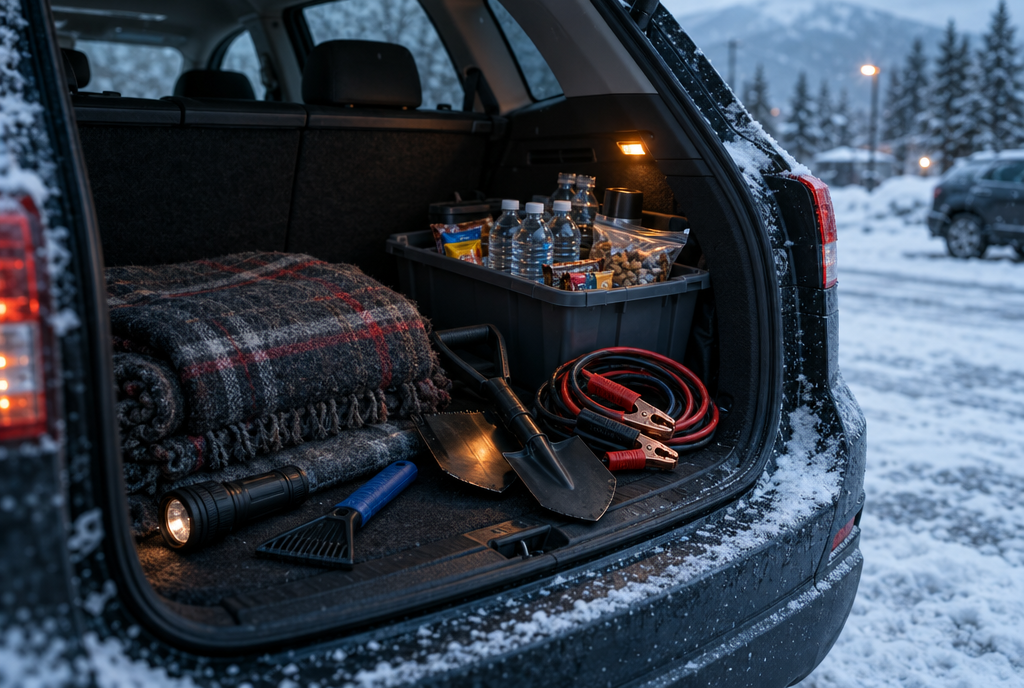
A winter car emergency kit should keep you warm, visible and able to get moving: blankets or a sleeping bag, extra hats, mittens and boots, water and snacks, a flashlight, a phone charger, a first aid kit, a shovel, an ice scraper, sand or kitty litter, jumper cables and flares or reflective triangles. If stranded, stay with the car and keep the tailpipe clear.
What should be in a winter car emergency kit?
The checklist below combines the lists from Ready.gov, the National Highway Traffic Safety Administration (NHTSA) and the National Weather Service (NWS). The items fall into three jobs: staying warm, being seen and reached, and getting the car moving again.
| Item | Why it matters | Tip |
|---|---|---|
| Blankets or a sleeping bag | Your main heat source if the engine is off | One per regular passenger |
| Extra hats, mittens, coat and boots | You may be dressed for the car, not for waiting | Pack sizes for children too |
| Water and non-perishable food | Energy helps your body make heat | Granola bars, dried nuts; replace yearly |
| Flashlight and extra batteries | Light for signaling and working at night | Store batteries outside the flashlight |
| Cell phone and charger | Your link to help | Keep a car charger or charged power bank |
| First aid kit and any needed medicines | Covers minor injuries and daily medications | NHTSA suggests including a tourniquet |
| Snow shovel, broom and ice scraper with brush | Clear the car, windows and tailpipe | A compact folding shovel fits most trunks |
| Sand or kitty litter | Traction under spinning tires | Keep it in a sealed container |
| Jumper cables | Cold weakens batteries | Know how to use them before you need them |
| Flares, reflective triangles and a bright cloth | Makes a stopped car visible | A red cloth tied to the antenna or door |
| Map | Works when phone service does not | A paper state road map |
How do you prepare your car for winter driving?
A kit is the backup plan. Ready.gov and NHTSA also stress the car itself: winter tires with enough tread, or chains where required, working heater and defroster, and antifreeze at the right level. Have a mechanic check the exhaust system every year, as the CDC advises, because a small leak can let carbon monoxide build up inside the car.
Keep the gas tank close to full through winter. It gives you fuel to run the heater in short bursts if you are stuck, and it lets you avoid stopping in bad conditions. Charge your phone before you set off, and tell someone your route and expected arrival time on long trips.
What should you do if you are stranded in your car in winter?
Stay with the car. The NWS warns that if you leave your vehicle you can quickly become disoriented in wind-driven snow and cold, and NHTSA advises staying with your car and not overexerting yourself. A car is shelter, and it is far easier for rescuers to find than a person on foot.
Call for help if you have service, and give your location as precisely as you can.
Clear snow from the exhaust pipe before running the engine, and check it again during heavy snow.
Run the engine about 10 minutes each hour for heat, as the NWS advises, and open a window slightly while it runs.
Turn on the dome light at night when the engine is running so the car can be seen.
Tie a bright cloth, preferably red, to the antenna or door, and raise the hood once snow stops falling to show you need help.
Put on the extra layers and wrap up in blankets. Share body heat with passengers and keep children close.
Move your arms and legs and shift position regularly to help your body make heat, without working up a sweat.
Sip water and eat small snacks to keep your energy up.
How do you avoid carbon monoxide poisoning in a stranded car?
Carbon monoxide (CO) is the most serious hidden danger in a snowbound car. A tailpipe buried in snow can push exhaust into the cabin. NHTSA advises making sure the exhaust pipe is clear and running the car only sporadically, just long enough to stay warm, and never for long periods with the windows up or in an enclosed space. The CDC warns never to run a car inside a garage attached to a house, even with the garage door open.
CO has no color or smell. The CDC lists headache, dizziness, weakness, upset stomach, vomiting, chest pain and confusion as the most common symptoms, and warns that people who are sleeping or drunk can die from CO poisoning before they have symptoms. Do not fall asleep with the engine running. If anyone develops these symptoms, turn off the engine, get fresh air and call 911.
How do you keep kids warm in the car in winter?
NHTSA notes that heavy coats can interfere with the harness fit on a child in a car seat. Dress children in thin, warm layers, buckle the harness snugly, and then place a blanket or their coat over them. Keep spare hats, mittens and a blanket for each child in the kit.
If a child becomes very cold, drowsy, hard to wake or confused, or shows any sign of CO poisoning, call 911. Call your pediatrician about any symptoms that concern you after a cold exposure.
Where should you store the kit, and how often should you check it?
Keep warm items and water in the cabin or a spot you can reach without getting out, since a jammed trunk in a drift is a real possibility. Tools like the shovel and cables can live in the trunk.
Check the kit at the start of each winter: swap out food and water, test the flashlight, replace batteries, and make sure clothes still fit growing children. Air-activated hand and foot warmers are a useful addition; check their expiry dates and keep them off bare skin.
Key takeaways
Pack for warmth, visibility and getting unstuck: blankets, extra clothing, water, food, light, phone power, first aid, shovel, scraper, traction and signals.
Keep the gas tank close to full and have the exhaust system checked every year.
If stranded, stay with the car, call for help and make the car visible.
Clear the tailpipe, run the engine about 10 minutes an hour with a window cracked, and never sleep with it running.
Headache, dizziness or confusion in a stranded car can mean carbon monoxide: engine off, fresh air, call 911.
Frequently asked questions
How long can you survive in a car in the cold?
It depends on the temperature, wind, clothing and supplies, so there is no single answer. A kit with blankets, extra clothing, water and food, plus careful use of the engine for heat, greatly extends how long you can wait safely. Call for help as early as you can.
Should you run your car to stay warm if stranded?
Yes, in short bursts. The National Weather Service advises about 10 minutes each hour, with the exhaust pipe cleared of snow and a window opened slightly for fresh air.
Is it safe to sleep in your car with the engine running?
No. Carbon monoxide can build up without warning, and the CDC notes that people who are asleep can die from CO poisoning before they have symptoms. Turn the engine off before anyone sleeps.
Should kids wear winter coats in car seats?
No. NHTSA says bulky coats can interfere with harness fit. Use thin layers, tighten the harness, then put a coat or blanket over the child.
Why keep kitty litter in your car in winter?
Sand or kitty litter spread in front of and behind the drive wheels can give tires enough grip to get out of snow or off ice. Ready.gov, NHTSA and the NWS all list it.
From HEATJAC
We design low-profile thermal garments: a heat-reflective vest and a thermal harness with pockets for warmers or cold packs.
Choosing gear? What actually helps someone who is always cold · Warm, safe gifts for an older parent
Related reading
Sources
Car Safety, Ready.gov (FEMA)
Winter Weather Driving Tips: Prepare Your Vehicle, National Highway Traffic Safety Administration (NHTSA)
What To Do If You're Caught in a Winter Storm, National Weather Service (NOAA)
Car Winter Survival Kit Checklist, National Weather Service, Des Moines
Carbon Monoxide Poisoning: About, Centers for Disease Control and Prevention (CDC)
About HEATJAC. HEATJAC is a thermal architecture company founded by an anesthesiologist. We design patented garment systems that capture, conduct and broaden warmth across the body, and we publish this knowledge hub because the science of staying warm should be public. HEATJAC products are not medical devices and are not intended to diagnose, treat, cure or prevent any disease.