
Why you feel cold after surgery, and shivering after anesthesia
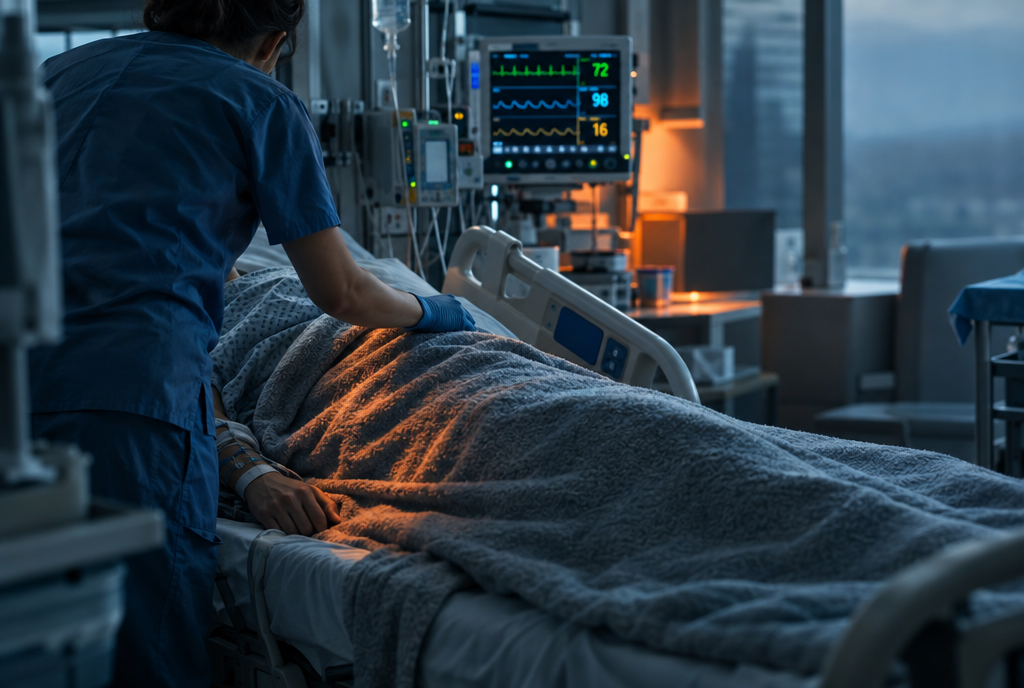
Feeling cold after surgery is common. Anesthesia blunts the body's temperature control, heat shifts from the core to the skin within the first hour, and operating rooms are cool, so unwarmed patients typically lose 1 to 2°C of core temperature. Shivering after anesthesia is uncomfortable but usually not dangerous, and it normally settles within 20 to 30 minutes with warming.
How long does feeling cold after surgery last?
For most people the worst of it passes within hours. The Royal College of Anaesthetists says shivering after an operation usually stops within 20 to 30 minutes with warming. Feeling a little chilly for days, or even a few weeks, while you recover can also be normal, and it should ease as you eat, move and sleep more like yourself.
Why am I so cold weeks after surgery? By then the anesthetic is long gone, so the usual reasons come from recovery itself. NHLBI notes that bleeding from surgery can lead to anemia, and lists chills, tiredness and paleness among its symptoms. Eating less means less fuel for heat, and lying still means your muscles make less heat. Opioid pain medicines often cause drowsiness, and poor sleep and pain add to the fatigue.
Cold that lingers or keeps getting worse is worth a call. MedlinePlus lists anemia and general poor health among the causes of cold intolerance, and a simple blood test can check for anemia. Talk to your clinician about any symptom that worries you.
| When | Common, usually normal reasons | When to call a clinician |
|---|---|---|
| First hours after anesthesia | Core temperature has dropped, often by about 1.8 to 3.6 °F (1 to 2 °C) without warming; shivering usually settles within 20 to 30 minutes | Tell the nurse if shivering does not settle with blankets |
| First days at home | More rest, less food and fluid, broken sleep and drowsy pain medicines | Temperature above 100 °F (37.7 °C) for more than 4 hours, or more redness, pain, swelling, bleeding or pus at the incision |
| Weeks later | Anemia from blood loss, eating less than usual, low activity and fatigue | Cold that is not improving, especially with tiredness, paleness, dizziness or getting short of breath |
| Any time | Not expected | Call emergency services for trouble breathing or pain when breathing, chest pain, heavy bleeding or confusion |
Why am I so cold after surgery?
Your body normally holds its core temperature in a narrow band by narrowing skin blood vessels and, if that is not enough, shivering. OpenAnesthesia, an education resource of the International Anesthesia Research Society, explains that general anesthesia lowers the point at which blood vessels narrow to about 34.5°C and the shivering point a further 1°C, so the body tolerates much more cooling than usual.
At the same time, heat moves out of the core. In the first hour after general anesthesia or a spinal or epidural block, core temperature falls rapidly by 1 to 1.5°C as warm blood redistributes to the arms and legs. Add a cool operating room, exposed skin and evaporation from skin prep, and unwarmed patients typically become 1 to 2°C colder. Most heat is lost by radiation, followed by convection.
The Royal College of Anaesthetists adds that spinal and epidural anesthetics increase blood flow to the skin, which raises heat loss.
Why do people shiver after anesthesia?
Shivering is the body's way of making heat as the anesthetic wears off and temperature control switches back on. The Royal College of Anaesthetists notes that it can follow general, spinal and epidural anesthesia, and that anesthetic medicines and gases can affect the signals that control temperature.
It is not always about temperature. The college notes that shivering can happen without a drop in body temperature, particularly when pain is present. The American Society of Anesthesiologists says the exact cause is not fully known and that shivering can occur in up to half of patients.
Estimates vary with the type of surgery and how well patients are warmed. A UK study cited by the Royal College of Anaesthetists found moderate shivering in just over 1 in 7 patients after a general anesthetic, with higher risk in younger patients, long operations and orthopedic surgery.
Is shivering after surgery dangerous?
Usually not, but it matters. The Royal College of Anaesthetists describes it as distressing and uncomfortable rather than dangerous, and says it should stop within 20 to 30 minutes. It does raise the body's need for oxygen, so you may be given extra oxygen through a mask.
The American Society of Anesthesiologists notes that shivering can cause significant pain and discomfort and can strain the cardiovascular system, which is why teams take it seriously in people with heart or lung risk factors. Having shivered once does not mean you are more likely to shiver after a future anesthetic.
How do hospitals keep you warm, and what can you do?
Warming is a routine part of anesthesia care. The table combines what the Royal College of Anaesthetists and OpenAnesthesia describe.
| Stage | What the team may do | What you can do |
|---|---|---|
| Before surgery | Warm you in the preoperative area with forced-air or radiant warming | Stay warm, and bring a robe, warm clothing and slippers |
| During surgery | Monitor temperature, use a heated air blanket and warm intravenous fluids | Nothing; the anesthesia team manages this |
| Recovery room | Check your temperature, add warm blankets, and sometimes give oxygen or medicine for shivering | Tell the nurse as soon as you feel cold or start to shake |
| On the ward | Provide extra blankets when you say you are cold | Keep layering and tell staff if you feel cold at any point |
Why do I still feel cold at home after surgery?
Many people feel chilly for a while after going home, especially while they are resting more than usual and moving less. Layers, socks, a warm hat and a blanket over the legs are the simplest fixes, and they hold in your own heat without adding risk.
Take special care with heat if part of your body is numb. After a nerve block, the Royal College of Anaesthetists warns that numbness can last up to 48 hours and that you will not feel heat, so fires, radiators, kettles and irons can burn you. The same applies to heating pads, electric blankets, hot water bottles and air-activated warmers: keep them off numb skin and away from the surgical area, use low settings and a timer, never sleep with them on, and check the skin afterward.
When to call a clinician or emergency services
Feeling cold in the recovery room is expected. Feeling cold days later with fever or chills can be different: Johns Hopkins Medicine notes that a surgical site infection typically appears within 30 days and can cause fever, redness, pain, warmth or swelling. Talk to your clinician about anything that worries you.
Call your surgeon or clinician: fever, or pus, redness, heat, pain or tenderness near the wound (Johns Hopkins Medicine).
Tell the nurse right away: shivering in hospital that does not settle with blankets.
Call your clinician: a blister or burn on skin that was numb from a nerve block.
Call emergency services: chest pain, trouble breathing, or confusion.
Key takeaways
Anesthesia widens the range of temperatures the body tolerates, so core heat drains away before shivering or vessel narrowing kick in.
Core temperature falls 1 to 1.5°C in the first hour from redistribution alone, and unwarmed patients typically lose 1 to 2°C.
Shivering after anesthesia is uncomfortable, raises oxygen demand, and usually stops within 20 to 30 minutes.
Bring warm clothing to the hospital and tell staff whenever you feel cold.
At home, fever or wound changes need a call, and numb skin needs protection from heat.
Frequently asked questions
How long does shivering last after anesthesia?
The Royal College of Anaesthetists says shivering after an operation usually stops within 20 to 30 minutes. Warm blankets are usually enough, and the team may add warm fluids, oxygen or medicine if needed.
Why do I shake after a spinal or epidural?
Spinal and epidural anesthetics widen blood vessels in the skin, which increases heat loss, and they also affect temperature control. Shivering is common after them, as it is after general anesthesia.
Is it normal to feel cold for days after surgery?
Feeling a bit chilly while you rest and recover is common. Feeling cold with fever, shaking chills, or wound redness or discharge is not something to wait out; call your surgeon or clinician.
Can I use a heating pad after surgery?
Ask your surgical team first, especially near the incision. Never use heat on skin that is numb from a nerve block, because you will not feel a burn developing.
Will I shiver again with my next anesthetic?
Not necessarily. The Royal College of Anaesthetists says having shivered once does not make you more likely to shiver after a future anesthetic.
Why am I so cold weeks after surgery?
The most common reasons are part of recovery: anemia from blood lost during surgery, eating less than usual, moving less and poor sleep. NHLBI lists chills among anemia symptoms, so ask your clinician whether a blood count makes sense. Cold with fever, wound changes or breathlessness needs a prompt call.
Is it normal to have chills after surgery with no fever?
Feeling chilly without a fever is common while you rest, eat less and recover, and it usually eases over days to weeks. Check your temperature with a thermometer rather than guessing. MedlinePlus advises contacting your surgeon if your temperature stays above 100 °F (37.7 °C) for more than 4 hours.
Why does anesthesia make you cold?
Anesthesia lets the body tolerate a much lower temperature before it narrows skin vessels or shivers, and it moves warm blood from the core out to the arms and legs. In a cool operating room, unwarmed patients typically lose about 1.8 to 3.6 °F (1 to 2 °C) of core temperature. That is why teams warm patients during and after surgery.
How long does it take to feel normal after anesthesia?
Shivering usually stops within 20 to 30 minutes, but feeling tired, chilly or not quite yourself can last days to weeks, depending on the operation and your health. Steady improvement is the usual pattern. If you are getting worse instead of better, call your surgical team.
From HEATJAC
We design low-profile thermal garments: a heat-reflective vest and a thermal harness with pockets for warmers or cold packs.
Choosing gear? What nurses and OR staff should look for in thermal gear · Getting a thermal vest approved for clinical areas
Related reading
Sources
Risks associated with your anaesthetic, Section 3: Shivering, Royal College of Anaesthetists
Your nerve block, Royal College of Anaesthetists
Acetaminophen may help reduce postoperative shivering, American Society of Anesthesiologists
Intraoperative Hypothermia, OpenAnesthesia, International Anesthesia Research Society
Surgical Site Infections, Johns Hopkins Medicine
Anemia: Symptoms, National Heart, Lung, and Blood Institute
Anemia: Causes and Risk Factors, National Heart, Lung, and Blood Institute
Cold intolerance, MedlinePlus, National Library of Medicine
Surgical wound care: closed, MedlinePlus, National Library of Medicine
Pain medications: narcotics, MedlinePlus, National Library of Medicine
Venous Thromboembolism: Symptoms, National Heart, Lung, and Blood Institute
About HEATJAC. HEATJAC is a thermal architecture company founded by an anesthesiologist. We design patented garment systems that capture, conduct and broaden warmth across the body, and we publish this knowledge hub because the science of staying warm should be public. HEATJAC products are not medical devices and are not intended to diagnose, treat, cure or prevent any disease.