
Staying warm as a mail carrier or delivery driver
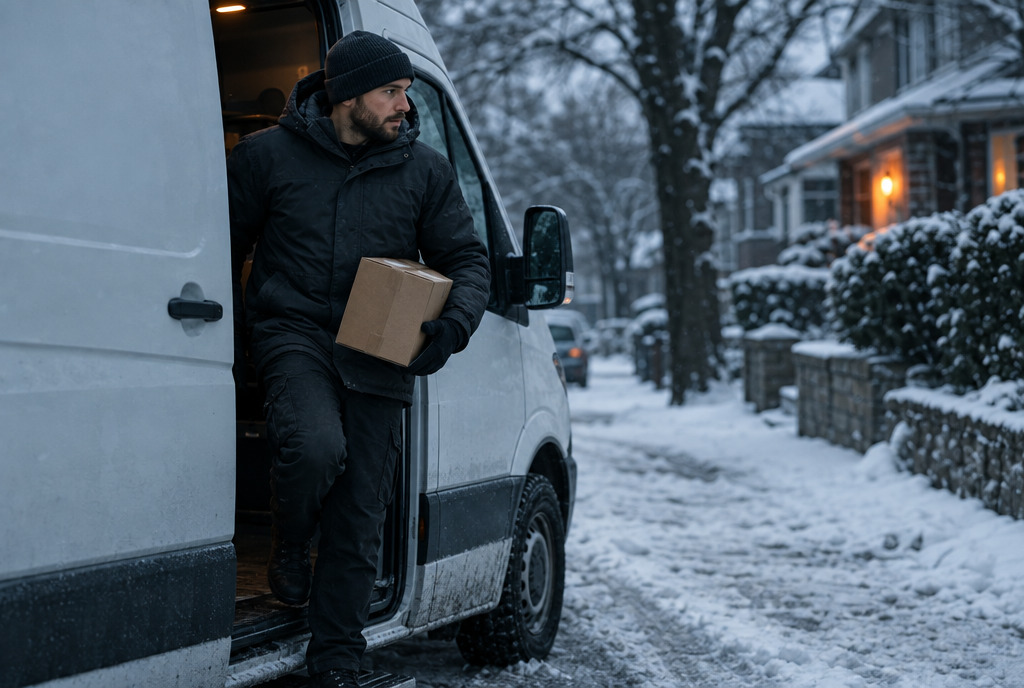
To stay warm as a mail carrier or delivery driver, dress for the walk rather than the cab: thin, loose layers you can open between stops, a dry base layer that moves sweat away, a hat, waterproof insulated boots with good tread, and gloves you can work in. Change damp layers early, and never idle the vehicle in an enclosed space.
Why is in-and-out delivery work so hard on body heat?
A delivery route swings between two climates dozens of times a shift. You climb out of a heated cab, walk or jog to a door, carry a load and climb back in. Each leg is short, but the switches never stop, and clothing that is right for one is wrong for the other.
The walking half makes heat, and heat under insulation turns into sweat. NIOSH notes that highly insulating gear worn during heavy work creates a warm microclimate that can cause sweating, and once activity stops the sweat begins to evaporate and cools you further. That is the classic carrier pattern: warm and damp on the walk, then chilled in the cab or at the next long stop.
How should mail carriers dress for winter?
Think in layers you can adjust in seconds. NIOSH recommends several layers of loose clothing because layering insulates better and lets you remove layers before you overheat. CCOHS adds that outer jackets should be able to open and close at the waist, neck and wrists so you can control how much heat you hold in.
The base layer matters most on a route. The Canadian Centre for Occupational Health and Safety advises an inner layer that wicks sweat away from your skin. CCOHS warns that when the layer next to the skin gets wet, the insulation value of the clothing drops dramatically, so avoid cotton against the skin.
Step 1: Wear a thin wicking base layer, not cotton.
Step 2: Add a light insulating layer rather than one heavy coat.
Step 3: Choose a wind and water resistant outer layer with a front zip you can open in the cab.
Step 4: Wear a hat that covers the ears; NIOSH notes a hat reduces heat escaping from the head.
Step 5: Carry a spare base layer, socks and gloves in a sealed bag.
How do you keep your hands warm and still handle mail and scanners?
Hands take the worst of the route: bare fingers on a scanner, cold metal mailboxes, wet packages. CCOHS guidance is that where fine dexterity is not needed, gloves should be worn below 4°C (39°F) for light work and mittens below minus 17°C (about 1°F). Carriers usually do need dexterity, so a practical compromise is a thin liner glove worn all the time with an insulated shell or mitten pulled over it between stops.
Rotate gloves when they get damp, since wet gloves conduct heat away fast. Warm your hands on the cab heater vents rather than on anything hot enough to burn, and keep a second pair drying on the dash.
How do you avoid slips on icy walks and steps?
Footing is a cold-weather hazard in its own right. NALC points members to an OSHA citation issued after a letter carrier in Buffalo died following a slip and fall on ice. OSHA advises insulated, water resistant boots with good rubber treads, short steps and a slower pace so you can react to a change in traction.
NIOSH adds that boots should be waterproof, insulated and in good condition, because cracks and tears let in water and cold. Traction cleats that slip over boots help on packed snow but should come off on hard floors. It helps when customers clear walkways, steps and overhangs of snow and ice and leave a light on.
Is it safe to warm up with the vehicle heater?
Using the heater while driving is normal, and short warm-ups in the cab are one of the carrier's best tools. The risk comes from idling. CDC warns never to run a car or truck inside a garage attached to a house, even with the door open, and to open vents or windows when the tailgate is open so air keeps moving.
If you are stuck and waiting, OSHA advises running the engine for about 10 minutes each hour for heat, keeping the exhaust pipe clear of snow and opening a downwind window slightly. CDC lists carbon monoxide symptoms as headache, dizziness, weakness, upset stomach, vomiting, chest pain and confusion. If they appear, get to fresh air and call for help.
What else keeps a route warm through the shift?
Fuel and fluids matter. CCOHS suggests warm, non-alcoholic drinks or soup, advises against alcohol in the cold and notes that caffeine increases blood flow at the skin surface, which can increase heat loss. It also recommends a buddy system so workers can spot early signs of cold injury in one another; on a solo route, that can mean a check-in call with the station.
What are the warning signs of cold stress, and when should you get help?
Know the signs NIOSH lists and act early. If a coworker shows late signs of hypothermia, alert a supervisor and request medical help right away. Talk to a clinician about any numbness, skin color change or pain that does not settle after warming.
| Condition | Warning signs (NIOSH) | What to do |
|---|---|---|
| Hypothermia, early | Shivering, fatigue, loss of coordination, confusion | Get to a warm vehicle or building, change wet clothing, warm non-alcoholic drink only if fully alert |
| Hypothermia, late | No shivering, blue skin, slowed pulse and breathing, loss of consciousness | Call 911 or emergency services now |
| Frostbite | Numbness, tingling or stinging, aching, bluish or pale waxy skin | Get warm, do not rub, use warm (not hot) water, seek medical care |
| Trench foot | Red skin, numbness, cramps, swelling, blisters | Remove wet boots and socks, dry feet, seek medical care |
| Carbon monoxide (CDC) | Headache, dizziness, weakness, nausea, confusion | Get to fresh air and call 911 |
Key takeaways
Dress for the walk, not the cab: thin adjustable layers you can open between stops.
Sweat is the main enemy on a route; a wicking base layer and spare dry layers keep you from chilling.
Pair thin liner gloves with an over-mitten to keep dexterity and warmth.
Insulated, waterproof boots with good tread and short steps reduce slips on ice.
Never idle in an enclosed space, and keep the exhaust clear if you wait in the vehicle.
Frequently asked questions
How do mail carriers keep their feet warm?
Waterproof, insulated boots in good repair keep feet dry, and dry feet stay warmer. Wool or synthetic socks with a spare pair in the vehicle help, since damp socks lose insulation quickly. Make sure boots are not so tight over thick socks that they squeeze the insulation.
Should delivery drivers keep the cab heater on high?
A very hot cab makes the next stop feel colder and encourages sweating. A moderate cab temperature, with your outer layer unzipped while driving, usually works better. Warm hands and feet at the vents, then close up your jacket before stepping out.
Can I leave the truck idling while I make a delivery?
Follow your employer's policy and local rules on idling. Carbon monoxide builds up in enclosed or partly enclosed spaces, so never idle in a garage or loading bay without ventilation, and keep the exhaust clear of snow.
What gloves work best for delivery drivers in winter?
Most drivers do well with a thin liner glove for scanning and handling, plus an insulated shell or mitten on top between stops. Carry a spare dry pair. Wet gloves pull heat from your hands fast.
When is it too cold to deliver mail?
There is no single temperature cutoff in federal rules. Employers should plan breaks and warm-up time in extreme cold. If you notice signs of cold stress, stop and warm up.
From HEATJAC
We design low-profile thermal garments: a heat-reflective vest and a thermal harness with pockets for warmers or cold packs.
Choosing gear? Cold storage and freezer gear by zone · Winter gear for construction and utility crews
Related reading
Sources
Cold Stress: Related Illnesses, CDC / NIOSH
Cold Weather PPE (NIOSH Science Blog), CDC / NIOSH
Cold Environments: Working in the Cold, Canadian Centre for Occupational Health and Safety
Winter Weather: Hazards, OSHA
Extreme Weather (with Dressing for Cold Weather safety talk), National Association of Letter Carriers
About HEATJAC. HEATJAC is a thermal architecture company founded by an anesthesiologist. We design patented garment systems that capture, conduct and broaden warmth across the body, and we publish this knowledge hub because the science of staying warm should be public. HEATJAC products are not medical devices and are not intended to diagnose, treat, cure or prevent any disease.